
Details
Artist
Styles
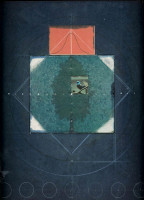
Mixed Media Collage, glass, wood, sand, metal and paper in wooden box construction - Signed on reverse // Untitled (Black Sand Box) by Joseph Cornell, created around 1950, is a mixed media assemblage that reflects Cornell’s unique approach to sculpture and his fascination with memory, nostalgia, and the passage of time. This work, constructed within a shallow wooden box, features a meticulously arranged composition of materials such as sand, glass, metal, and paper. The dominant red background inside the box has a radiating pattern, which seems to emanate from a small metal ring positioned near the bottom edge, adding a sense of depth and contemplation to the piece. The weathered black frame enhances the mysterious and evocative quality of the artwork.Cornell, known for his shadow boxes and use of found objects, often transformed simple materials into poetic and dreamlike assemblages. The abstract simplicity of this piece invites reflection on themes of impermanence and introspection. Signed on the reverse, this piece exemplifies Cornell's ability to create intimate, enigmatic worlds within small, confined spaces, merging the tangible with the imaginary.
Untitled (Black Sand Box), c. 1950
form
Medium
Size
29.8 x 21.6 cm
- Inches
- Centimeters
Edition
Price
Details
Artist
Styles
Mixed Media Collage, glass, wood, sand, metal and paper in wooden box construction - Signed on reverse // Untitled (Black Sand Box) by Joseph Cornell, created around 1950, is a mixed media assemblage that reflects Cornell’s unique approach to sculpture and his fascination with memory, nostalgia, and the passage of time. This work, constructed within a shallow wooden box, features a meticulously arranged composition of materials such as sand, glass, metal, and paper. The dominant red background inside the box has a radiating pattern, which seems to emanate from a small metal ring positioned near the bottom edge, adding a sense of depth and contemplation to the piece. The weathered black frame enhances the mysterious and evocative quality of the artwork.Cornell, known for his shadow boxes and use of found objects, often transformed simple materials into poetic and dreamlike assemblages. The abstract simplicity of this piece invites reflection on themes of impermanence and introspection. Signed on the reverse, this piece exemplifies Cornell's ability to create intimate, enigmatic worlds within small, confined spaces, merging the tangible with the imaginary.
- Recently Added
- Price (low-high )
- Price (high-low )
- Year (low-high )
- Year (high-low )
Joseph Cornell
Untitled (2C-38E), 1969
Drawing / Watercolor
Collage
Inquire For Price
Related Artists



Related Articles
Art Movements - November 21, 2022
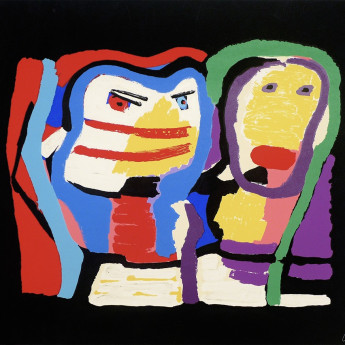
Botch, Blotch and Splotch: The Exuberant Maelstrom of the Cobra Art Movement.
Explore the CoBrA movement’s bold creativity, blending raw expression and experimentation. Discover its impact on post-war art and avant-garde traditions. Read More


What is Surrealism?
Surrealism began in the 1920s as an art and literary movement with the goal of revealing the unconscious mind and unleashing the imagination by exploring unusual and dream-like imagery. Influenced by Sigmund Freud’s theories of psychoanalysis, Surrealist artists and writers sought to bring the unconscious into rational life, blurring the lines between reality and dreams. The movement aimed to challenge conventional perceptions and express the irrational aspects of the human experience.