Details
Artist
Styles
1. Karl Lagerfeld: 20-color screenprint (40 × 30 5/8 in; 101.6 × 77.8 cm) 2. Fall Line: 3-color screenprint (48 × 19 in; 121.9 × 48.3 cm) 3. Valentine: 16-color screenprint (38 × 34 in; 96.5 × 86.4 cm) 4. Numbered Legs: 20-color screenprint (21 × 43 1/2 in; 53.3 × 110.5 cm) — Published by Gemini GEL LLC, Los Angeles, California. © 2015 John Baldessari and Gemini GEL LLC. // Front Row Suite by John Baldessari is a dynamic limited edition silkscreen series from 2015 that plays on the visual language of fashion, celebrity culture, and anonymity. This four-part work includes strikingly colorful compositions with iconic figures and abstracted forms. In one segment, fashion icon Karl Lagerfeld is depicted riding in a shopping cart, adding humor and irony to the consumerist aspects of fashion. Another segment showcases faceless figures with vibrant blocks of color replacing their heads, reflecting Baldessari's interest in removing identity and focusing on form and color. The inclusion of Numbered Legs highlights the absurdity of objectifying and quantifying beauty, particularly in the fashion world’s “front row” culture. Through his use of layered colors and minimalist shapes, Baldessari critiques the glamorization of image and identity in contemporary culture. Published by Gemini GEL LLC, this suite captures Baldessari’s conceptual artistry and wit.
Front Row Suite, 2015
form
Medium
Size
101.6 x 77.8 cm
- Inches
- Centimeters
Edition
Range
- USD
- EUR
- GBP
Details
Artist
Styles
1. Karl Lagerfeld: 20-color screenprint (40 × 30 5/8 in; 101.6 × 77.8 cm) 2. Fall Line: 3-color screenprint (48 × 19 in; 121.9 × 48.3 cm) 3. Valentine: 16-color screenprint (38 × 34 in; 96.5 × 86.4 cm) 4. Numbered Legs: 20-color screenprint (21 × 43 1/2 in; 53.3 × 110.5 cm) — Published by Gemini GEL LLC, Los Angeles, California. © 2015 John Baldessari and Gemini GEL LLC. // Front Row Suite by John Baldessari is a dynamic limited edition silkscreen series from 2015 that plays on the visual language of fashion, celebrity culture, and anonymity. This four-part work includes strikingly colorful compositions with iconic figures and abstracted forms. In one segment, fashion icon Karl Lagerfeld is depicted riding in a shopping cart, adding humor and irony to the consumerist aspects of fashion. Another segment showcases faceless figures with vibrant blocks of color replacing their heads, reflecting Baldessari's interest in removing identity and focusing on form and color. The inclusion of Numbered Legs highlights the absurdity of objectifying and quantifying beauty, particularly in the fashion world’s “front row” culture. Through his use of layered colors and minimalist shapes, Baldessari critiques the glamorization of image and identity in contemporary culture. Published by Gemini GEL LLC, this suite captures Baldessari’s conceptual artistry and wit.
- Recently Added
- Price (low-high )
- Price (high-low )
- Year (low-high )
- Year (high-low )

John Baldessari
Throwing Three Balls In The Air To Get A Straight Line (Best Of Thirty-Six Attempts), 1973
Photography
Offset Print
EUR 7,200

John Baldessari
The First $100,000 I Ever Made, 2012
Limited Edition Print
Lithograph
USD 5,500

John Baldessari
Triad, 2017
Limited Edition Print
Screen-print
USD 6,600

John Baldessari
Adam Wasn't Into It, 2017
Limited Edition Print
Screen-print
USD 6,600

John Baldessari
Yogurt, 2017
Limited Edition Print
Screen-print
USD 6,600

John Baldessari
I Have An Elephant, 2017
Limited Edition Print
Screen-print
USD 6,600

John Baldessari
Truffle Butter, 2017
Limited Edition Print
Screen-print
USD 6,600

John Baldessari
Black Dice 9, 1982
Limited Edition Print
Etching And Aquatint
Inquire For Price

John Baldessari
Black Dice 8, 1982
Limited Edition Print
Etching And Aquatint
Inquire For Price

John Baldessari
Black Dice 7, 1982
Limited Edition Print
Etching And Aquatint
Inquire For Price

John Baldessari
Black Dice 6, 1982
Limited Edition Print
Etching And Aquatint
Inquire For Price

John Baldessari
Black Dice 5, 1982
Limited Edition Print
Etching And Aquatint
Inquire For Price

John Baldessari
Black Dice 4, 1982
Limited Edition Print
Etching And Aquatint
Inquire For Price

John Baldessari
Black Dice 3, 1982
Limited Edition Print
Etching And Aquatint
Inquire For Price

John Baldessari
Black Dice 2, 1982
Limited Edition Print
Etching And Aquatint
Inquire For Price

John Baldessari
Black Dice 1, 1982
Limited Edition Print
Etching And Aquatint
Inquire For Price

John Baldessari
Snigger, From Engravings With Sounds, 2015
Limited Edition Print
Inkjet Print
USD 5,625

John Baldessari
Raised Eyebrows/Furrowed Foreheads (Red, White And Blue) From The Artist For Obama Portfolio, 2008
Limited Edition Print
Screen-print
USD 1,950

John Baldessari
Falling Star, 1989-90
Limited Edition Print
Mixed Media
Inquire For Price

John Baldessari
Two Hands (With Distant Figure), 1989-1990
Limited Edition Print
Mixed Media
USD 5,500

John Baldessari
Two Figures (One With Shadow), 1986
Limited Edition Print
Etching And Aquatint
USD 2,500

John Baldessari
Seeds, 1986
Limited Edition Print
Etching And Aquatint
USD 2,250

John Baldessari
Deer And Octopus, 1986
Limited Edition Print
Etching And Aquatint
USD 2,250

John Baldessari
Girl With Teddy Bear, 1988
Limited Edition Print
Mixed Media
USD 14,000

John Baldessari
Red Slipper, 2015
Limited Edition Print
Lithograph
USD 6,600

John Baldessari
Front Row Suite, 2015
Limited Edition Print
Silkscreen
USD 83,000 - 90,000
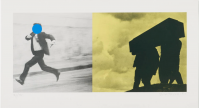
John Baldessari
The Life And Opinions Of Tristam Shandy 5, 1988
Limited Edition Print
Lithograph
Currently Not Available
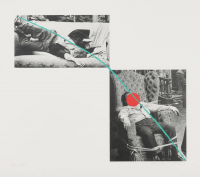
John Baldessari
The Life And Opinions Of Tristam Shandy 2 (Man Collapsed On Sofa; Man Tied To Chair), 1988
Limited Edition Print
Lithograph
Currently Not Available

John Baldessari
Dustin Hoffman, 2018
Limited Edition Print
Embossing
Currently Not Available
Related Artists


Related Articles

Popular, Art Movements - May 01, 2022
Understanding Conceptual Art and how to appraise it
Explore the essence of Conceptual Art, its origins, and its focus on ideas over objects. Learn how to appreciate and appraise this transformative art movement. Read More


What is Lettrism?
Lettrism is an art form that uses letters, words, and symbols to create artwork. The movement was established in Paris in the 1940s and later gained popularity in the 1950s in America. Lettrisme is the French spelling of the movement's name, derived from the French word for letter.