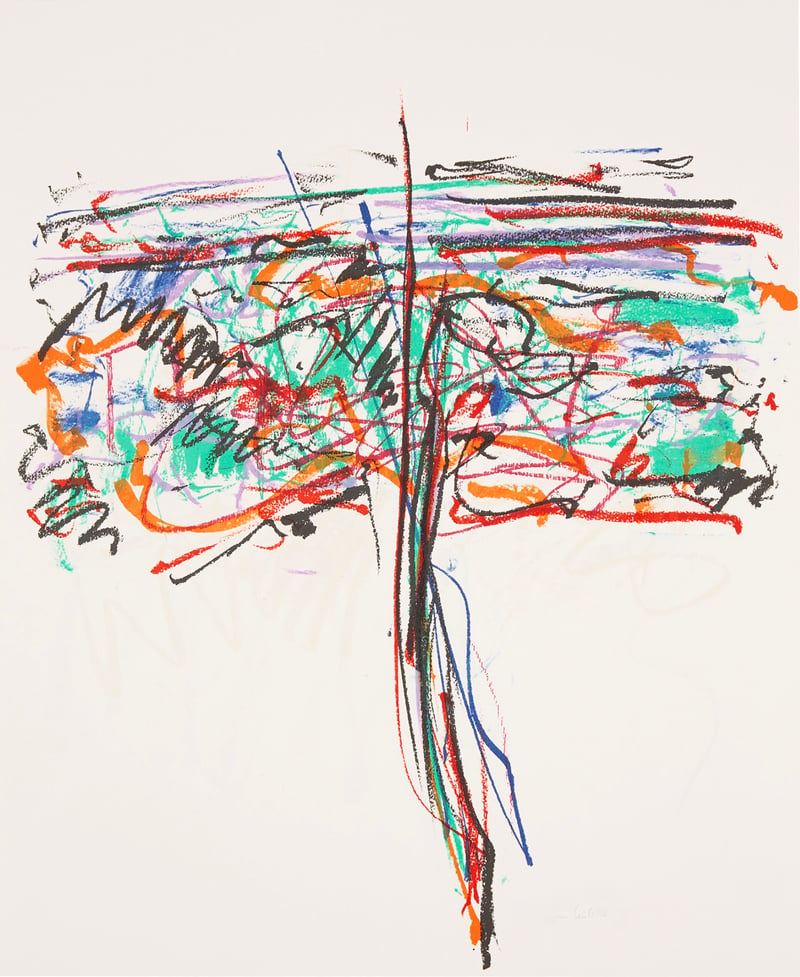
Original lithograph in colors. Signed in pencil, and numbered
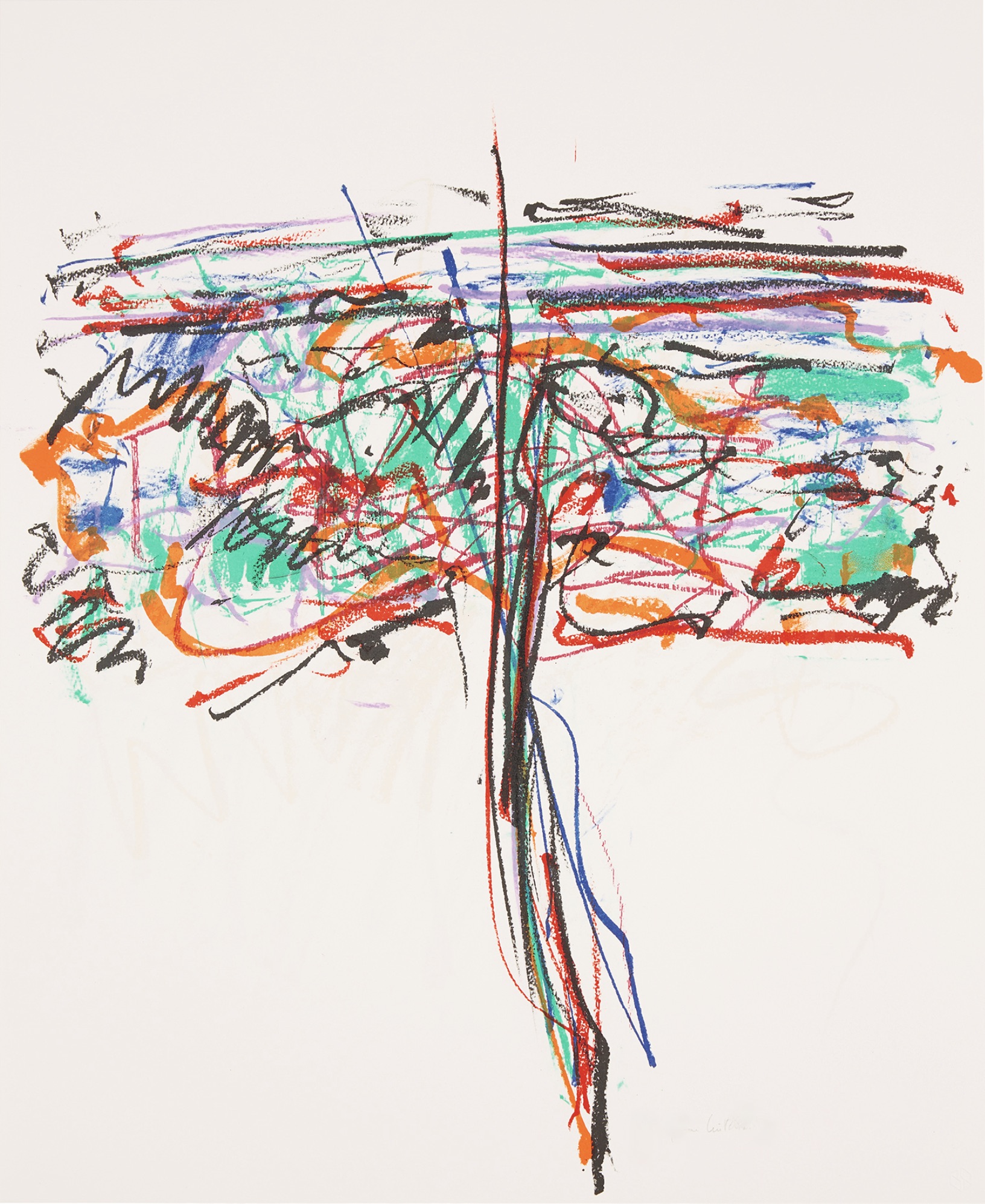
Tree I by Joan Mitchell, a limited edition lithograph from 1990, is an abstract exploration of natural form through vibrant color and expressive linework. This piece is characterized by its dense, overlapping strokes in shades of orange, green, purple, and blue, converging around a central vertical axis that resembles the trunk of a tree. Mitchell’s energetic, gestural marks evoke the movement and vitality of a tree swaying in the wind, capturing the essence of nature with a raw, almost primal intensity. Her signature abstract style shines through in the layered, chaotic harmony of colors and lines, inviting viewers to immerse themselves in an emotional response to form and color. Part of an edition of 94, this lithograph showcases Mitchell’s mastery in conveying both structure and spontaneity, reflecting her deep connection to nature and abstract expressionism.
Tree I, 1990
Form
Medium
Size
- Inches
- Centimeters
Edition
Price
- Authenticity Guaranteed
- Insured Shipping
- Online Since 2005
Original lithograph in colors. Signed in pencil, and numbered
Tree I by Joan Mitchell, a limited edition lithograph from 1990, is an abstract exploration of natural form through vibrant color and expressive linework. This piece is characterized by its dense, overlapping strokes in shades of orange, green, purple, and blue, converging around a central vertical axis that resembles the trunk of a tree. Mitchell’s energetic, gestural marks evoke the movement and vitality of a tree swaying in the wind, capturing the essence of nature with a raw, almost primal intensity. Her signature abstract style shines through in the layered, chaotic harmony of colors and lines, inviting viewers to immerse themselves in an emotional response to form and color. Part of an edition of 94, this lithograph showcases Mitchell’s mastery in conveying both structure and spontaneity, reflecting her deep connection to nature and abstract expressionism.
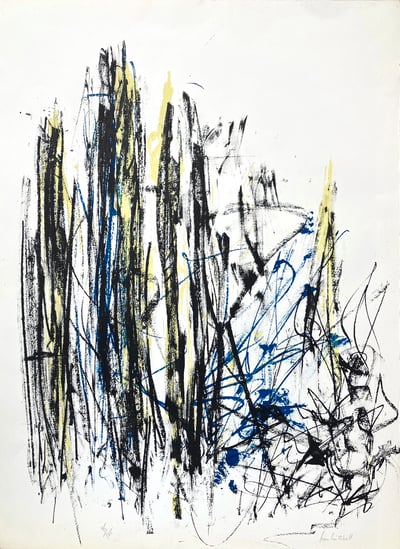
Joan Mitchell
Trees (black, yellow and blue), c. 1990/1991
Limited Edition Print
Lithograph
EUR 10,800
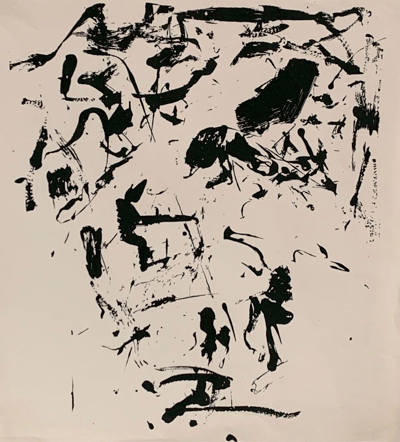
Joan Mitchell
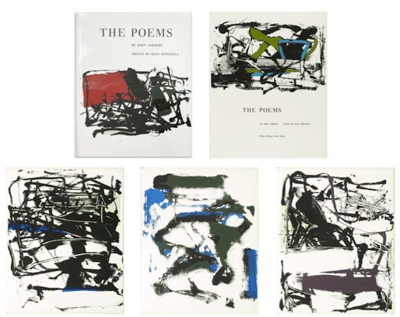
Untitled (The Poems), ca. 1959
Limited Edition Print
Screen-print
USD 7,000
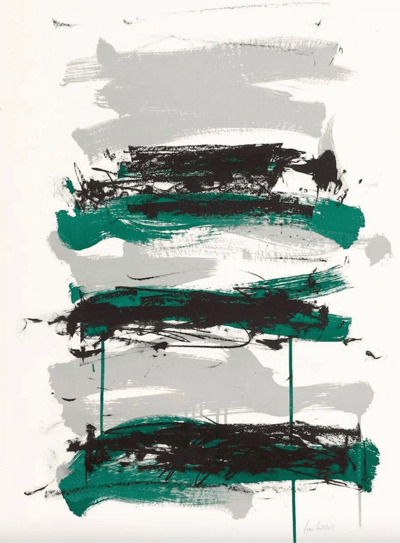
Joan Mitchell
Champs - Black, Grey and Green, 1991
Limited Edition Print
Lithograph
USD 17,000
Joan Mitchell
The New York School, 1960
Limited Edition Print
Screen-print
USD 12,000

Joan Mitchell
Tree I, 1990
Limited Edition Print
Lithograph
Currently Not Available
Related Artists

Related Articles
Popular, Artists - October 9, 2025
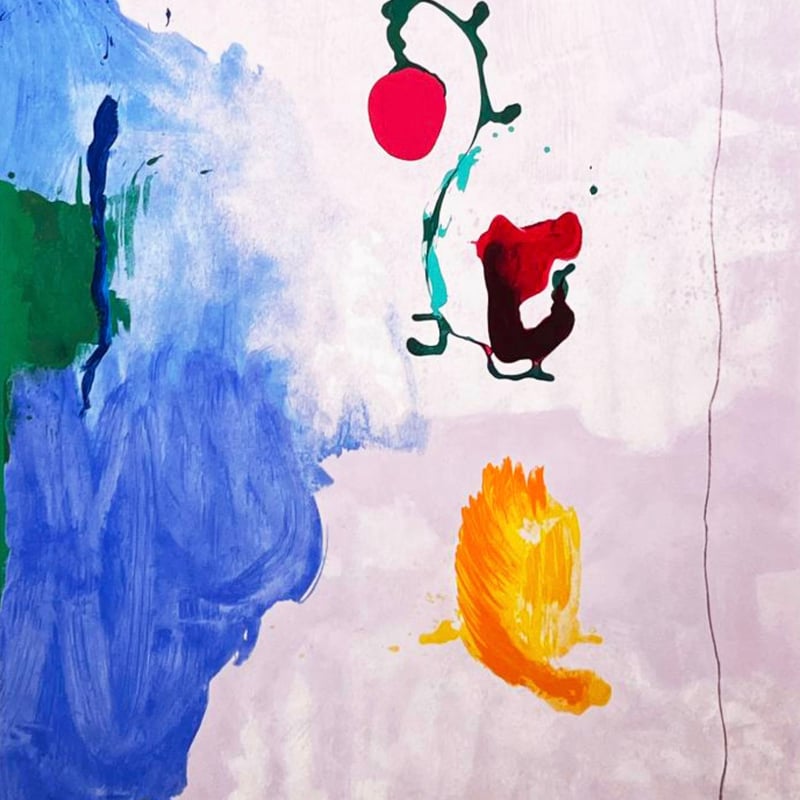
How Helen Frankenthaler Taught Color to Speak
Discover how Helen Frankenthaler transformed modern art with her soak-stain technique—bridging Abstract Expressionism and Color Field painting.Read More
What is late modernism?
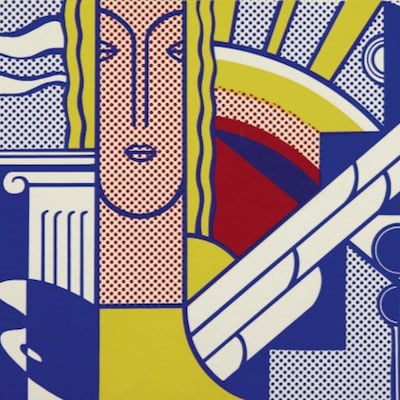
Late Modernism refers to the continuation and evolution of Modernist principles in art, architecture, and literature from the mid-20th century into the late 20th century. This movement maintains a focus on form, abstraction, and the rejection of traditional styles, but it often incorporates more complexity and ambiguity compared to early Modernism. Late Modernism explores themes such as alienation, identity, and the fragmentation of reality, reflecting the social and cultural shifts of the post-war period. It is seen in the works of architects like Louis Kahn and artists like Francis Bacon, who pushed the boundaries of Modernism while responding to the changing world around them.
Joan Mitchell
Tree I, 1990
56.5 x 49.5 cm


