Details
Artist
Styles
Mini Electric LED Sign with Diodes in Colors // Truism 4 (Mother & Child) by Jenny Holzer, created in 1990, is a mixed media sculpture that utilizes a mini electric LED sign with colored diodes. The LED grid, composed of yellow lights arranged in columns against a dark background, carries Holzer’s typical exploration of language, communication, and societal commentary. The compact format (10.2 x 12.1 x 3.8 cm) focuses the viewer's attention on the repetition and rhythm of light patterns, evoking both the technological precision and emotional resonance Holzer often embeds in her works. The minimalist black frame emphasizes the bright, methodical LED display, inviting reflection on the theme of motherhood within the broader context of Holzer’s provocative art.
Truism 4 (Mother & Child), 1990
form
Medium
Size
10.2 x 12.1 X 3.8 cm
- Inches
- Centimeters
Edition
Range
- USD
- EUR
- GBP
Details
Artist
Styles
Mini Electric LED Sign with Diodes in Colors // Truism 4 (Mother & Child) by Jenny Holzer, created in 1990, is a mixed media sculpture that utilizes a mini electric LED sign with colored diodes. The LED grid, composed of yellow lights arranged in columns against a dark background, carries Holzer’s typical exploration of language, communication, and societal commentary. The compact format (10.2 x 12.1 x 3.8 cm) focuses the viewer's attention on the repetition and rhythm of light patterns, evoking both the technological precision and emotional resonance Holzer often embeds in her works. The minimalist black frame emphasizes the bright, methodical LED display, inviting reflection on the theme of motherhood within the broader context of Holzer’s provocative art.
- Recently Added
- Price (low-high )
- Price (high-low )
- Year (low-high )
- Year (high-low )

Jenny Holzer
Inflammatory Essays 5, 1979-82
Sculpture / Object
Mixed Media
USD 5,000 - 7,000

Jenny Holzer
War, 1992
Sculpture / Object
Mixed Media
USD 5,000 - 7,000

Jenny Holzer
Truism 4 (Mother & Child), 1990
Sculpture / Object
Mixed Media
USD 5,000 - 7,000

Jenny Holzer
Truism 2, 1977-79
Sculpture / Object
Mixed Media
USD 5,000 - 7,000

Jenny Holzer
Living 2, 1980-82
Sculpture / Object
Mixed Media
USD 5,000 - 7,000

Jenny Holzer
Olympian Sign, 1986
Sculpture / Object
Mixed Media
Currently Not Available
Related Artists


Related Articles

Art Movements - June 23, 2023
Graffiti Time Lines on Urban Murals: Uncovering a Street Art Makeover
Explore the evolution of graffiti and street art, from urban murals to mainstream galleries. Discover artists and works reshaping public spaces worldwide. Read More

What is site specific art?
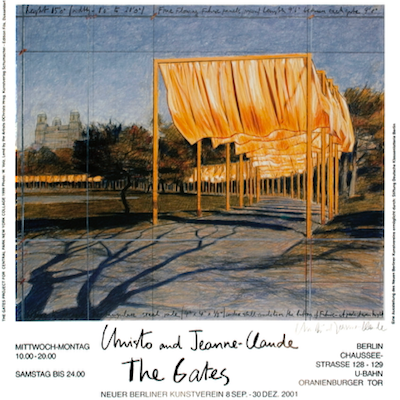
Site-Specific Art is a form of artwork created to exist in a particular location, with the artist considering the site as an integral part of the creative process. Robert Irwin was a key figure in promoting this art form in California. Site-Specific Art emerged as a reaction against modernist objects, which were often portable, commodified, and confined to museum spaces. In contrast, Site-Specific Art is inherently tied to its location, challenging the traditional notions of art as a transportable and marketable commodity.