Details
Artist
Styles
Edition of 150 - Colour lithograph - In excellent condition // Europe and the Bull by Hugo Claus, created in 1992, is a color lithograph that reinterprets the classical myth of Europa and the bull. The composition combines abstract and figurative elements: a bold, black and red depiction of the bull dominates the upper part of the print, with splashes of red resembling blood or motion, adding a sense of intensity and drama. Below, a reclining nude figure, representing Europa, is outlined in a simple, expressive black line, contrasting with the vibrant, chaotic rendering of the bull. The background includes faint text elements, perhaps hinting at the myth’s narrative or adding a layer of literary context. Claus’s use of minimalistic line work and dynamic colors captures both the mythological and emotional complexity of the story. This piece, limited to an edition of 150, exemplifies Claus’s ability to blend mythology with modern artistic expression.
Europe and the bull, 1992
form
Medium
Size
79.7 x 59.7 cm
- Inches
- Centimeters
Edition
Price
Details
Artist
Styles
Edition of 150 - Colour lithograph - In excellent condition // Europe and the Bull by Hugo Claus, created in 1992, is a color lithograph that reinterprets the classical myth of Europa and the bull. The composition combines abstract and figurative elements: a bold, black and red depiction of the bull dominates the upper part of the print, with splashes of red resembling blood or motion, adding a sense of intensity and drama. Below, a reclining nude figure, representing Europa, is outlined in a simple, expressive black line, contrasting with the vibrant, chaotic rendering of the bull. The background includes faint text elements, perhaps hinting at the myth’s narrative or adding a layer of literary context. Claus’s use of minimalistic line work and dynamic colors captures both the mythological and emotional complexity of the story. This piece, limited to an edition of 150, exemplifies Claus’s ability to blend mythology with modern artistic expression.
- Recently Added
- Price (low-high )
- Price (high-low )
- Year (low-high )
- Year (high-low )

Hugo Claus
Europe And The Bull, 1992
Limited Edition Print
Lithograph
Currently Not Available
Related Artists


Related Articles
Art Movements - November 21, 2022
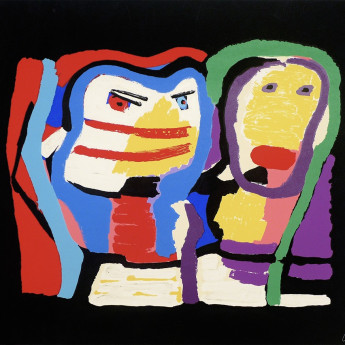
Botch, Blotch and Splotch: The Exuberant Maelstrom of the Cobra Art Movement.
Explore the CoBrA movement’s bold creativity, blending raw expression and experimentation. Discover its impact on post-war art and avant-garde traditions. Read More


What is Surrealism?
Surrealism began in the 1920s as an art and literary movement with the goal of revealing the unconscious mind and unleashing the imagination by exploring unusual and dream-like imagery. Influenced by Sigmund Freud’s theories of psychoanalysis, Surrealist artists and writers sought to bring the unconscious into rational life, blurring the lines between reality and dreams. The movement aimed to challenge conventional perceptions and express the irrational aspects of the human experience.