
Details
Artist
Styles
// Mother and Child (Statue) by Henry Moore, created in 1980, is a small bronze sculpture that captures the essence of the maternal bond in a simplified, abstract form. This piece, standing at just over 5 inches, is part of a limited edition of nine and showcases Moore’s characteristic style, with rounded and organic shapes that suggest the figures of a mother and child. The sculpture's surface is textured, adding depth and a sense of warmth to the bronze material. Moore’s abstraction evokes intimacy and protection, with the mother figure slightly taller and enveloping the child in a gentle, unified form. This compact yet emotionally resonant piece reflects Moore's enduring exploration of human relationships and the nurturing aspects of family.
Mother and child (statue), 1980
form
Medium
Size
13.7 x 11.5 X 11.5 cm
- Inches
- Centimeters
Edition
Price
Details
Artist
Styles
// Mother and Child (Statue) by Henry Moore, created in 1980, is a small bronze sculpture that captures the essence of the maternal bond in a simplified, abstract form. This piece, standing at just over 5 inches, is part of a limited edition of nine and showcases Moore’s characteristic style, with rounded and organic shapes that suggest the figures of a mother and child. The sculpture's surface is textured, adding depth and a sense of warmth to the bronze material. Moore’s abstraction evokes intimacy and protection, with the mother figure slightly taller and enveloping the child in a gentle, unified form. This compact yet emotionally resonant piece reflects Moore's enduring exploration of human relationships and the nurturing aspects of family.
- Recently Added
- Price (low-high )
- Price (high-low )
- Year (low-high )
- Year (high-low )

Henry Moore
Reclining Figure Pointed C. 543, 1979
Limited Edition Print
Lithograph
USD 6,790

Henry Moore
Album Internacional, 1973
Limited Edition Print
Lithograph
EUR 1,150

Henry Moore
Fjord, 1974
Limited Edition Print
Lithograph
Inquire For Price

Henry Moore
Elephant Skull (Plate A), 1969
Limited Edition Print
Etching And Aquatint
EUR 1,550

Henry Moore
Two Heads, 1973
Limited Edition Print
Lithograph
USD 1,100

Henry Moore
Head, 1975
Limited Edition Print
Lithograph
USD 1,100

Henry Moore
Reclining Figure With Red Stripes, 1973
Limited Edition Print
Lithograph
USD 1,350

Henry Moore
Girl Doing Homework II, 1974
Limited Edition Print
Etching
USD 3,700

Henry Moore
Two Women Seated, 1967
Limited Edition Print
Lithograph
USD 7,200

Henry Moore
Girl Seated At Desk IV, 1974
Limited Edition Print
Lithograph
USD 4,250

Henry Moore
Mother And Child XV, 1983
Limited Edition Print
Mixed Media
EUR 2,200

Henry Moore
Recling Mother And Child II, 1979
Limited Edition Print
Mixed Media
EUR 1,750

Henry Moore
Seated Figure IV - Reverse Lighting, 1974
Limited Edition Print
Lithograph
EUR 2,250

Henry Moore
Shipwreck II, 1973
Limited Edition Print
Lithograph
EUR 2,300

Henry Moore
Male Figure In Landscape C.470, 1977
Limited Edition Print
Lithograph
USD 4,860

Henry Moore
Ideas For Sculptures C. 365
Limited Edition Print
Lithograph
USD 3,650

Henry Moore
Group In Industrial Landscape C. 418, 1975
Limited Edition Print
Lithograph
USD 3,650

Henry Moore
Figures In A Forest, 1976
Limited Edition Print
Lithograph
EUR 1,650
Related Artists


Related Articles

Collecting - March 25, 2025
Understanding Editioned Sculptures: What Collectors Need to Know
Explore the value of editioned sculptures, from bronze to electric art. Learn how edition size, material, and artist impact collectability. Read More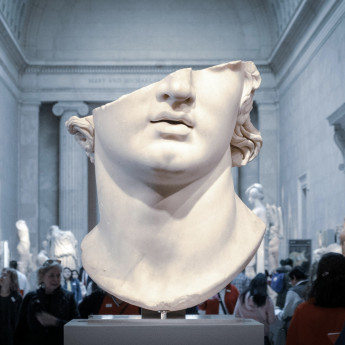


What is abstract art?
Abstract art uses form, shape, line, and color to create a visual experience without attempting to represent external reality. The composition exists independently of the world's visual references, focusing on expressing ideas and emotions through non-representational means.