Details
Artist
Styles
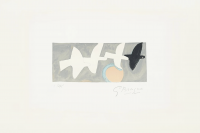
Color lithograph on Arches paper; signed and numbered in pencil. Published by Maeght, Paris. Reference: Vallier 119. Georges Braque’s Les Oiseaux Blancs (1958) is a color lithograph on Arches paper that reflects his late exploration of simplified forms and poetic symbolism. White, abstracted birds emerge from a dark, earthy background, their contours loosely defined with gestural brush-like lines. The composition balances solidity and openness, with the birds appearing both as figures and as negative space. Published by Maeght in Paris in an edition of 75, the work relates to Braque’s enduring fascination with flight as a symbol of freedom and transcendence. The muted palette and tactile surface lend the image a quiet, meditative quality.
Les Oiseaux Blancs, 1958
form
Medium
Size
72.4 x 48.9 cm
- Inches
- Centimeters
Edition
Price
- USD
- EUR
- GBP
Details
Artist
Styles
Color lithograph on Arches paper; signed and numbered in pencil. Published by Maeght, Paris. Reference: Vallier 119. Georges Braque’s Les Oiseaux Blancs (1958) is a color lithograph on Arches paper that reflects his late exploration of simplified forms and poetic symbolism. White, abstracted birds emerge from a dark, earthy background, their contours loosely defined with gestural brush-like lines. The composition balances solidity and openness, with the birds appearing both as figures and as negative space. Published by Maeght in Paris in an edition of 75, the work relates to Braque’s enduring fascination with flight as a symbol of freedom and transcendence. The muted palette and tactile surface lend the image a quiet, meditative quality.
- Recently Added
- Price (low-high )
- Price (high-low )
- Year (low-high )
- Year (high-low )

Georges Braque
Les Oiseaux Blancs, 1958
Limited Edition Print
Lithograph
USD 8,000
Georges Braque
Quatre Oiseaux, 1959
Limited Edition Print
Lithograph
Inquire For Price

Georges Braque
Le Trèfle, From Lettera Amorosa, 1963
Limited Edition Print
Lithograph
USD 20,000 - 25,000

Georges Braque
Vase De Fleurs Jaunes, c. 1955
Limited Edition Print
Aquatint
EUR 1,900

Georges Braque
La Charrue (The Plow), 1960
Limited Edition Print
Lithograph
EUR 3,900

Georges Braque
Nature Morte, 1933
Limited Edition Print
Lithograph
Inquire For Price

Georges Braque
Oiseaux #178, 1962
Limited Edition Print
Lithograph
USD 4,200

Georges Braque
Les Champs M#1045, 1962
Limited Edition Print
Lithograph
USD 4,850

Georges Braque
L'envol
Limited Edition Print
Lithograph
USD 6,000

Georges Braque
Le Lierre #99 , 1955
Limited Edition Print
Etching
USD 4,200

Georges Braque
La Liberte Des Mers (Vallier 143), 1959
Limited Edition Print
Lithograph
USD 4,250

Georges Braque
La Chaise M #1046 , 1962
Limited Edition Print
Lithograph
USD 4,850

Georges Braque
Aréion (Horse), 1971
Limited Edition Print
Embossing
USD 1,150

Georges Braque
Greek Profile M. 76 – 146, 1960
Limited Edition Print
Lithograph
USD 3,650
Related Artists



Related Articles

Art Movements - June 27, 2023
Art, Rock, Paper, Scissors and Various Materials: A Brief History of the Art of Collage
Explore the rich history of collage art, from its 20th-century pioneers to contemporary innovators. Discover how diverse materials shape artistic expression. Read More
What is Cubism?
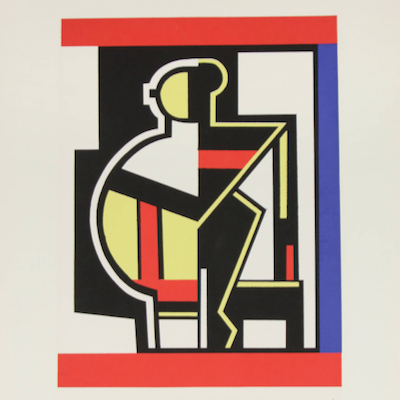
Cubism is an art movement that aimed to depict multiple perspectives of objects or figures within a single picture. Artists Georges Braque and Pablo Picasso pioneered this style around 1907. The name Cubism emerged from their use of geometric shapes and outlines that often resembled cubes, breaking objects down into abstracted forms.