Details
Artist
Styles
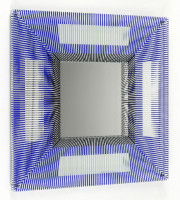
Wooden installation with Neon lamps – comes with an electrical installation. Signed in marker // Cercle Rouge et Noir by Geneviève Claisse, created between 1968 and 1972, is a mixed-media sculpture that exemplifies her exploration of geometric abstraction. This piece features overlapping circular forms in neutral tones set against a bold red square panel, with black accents framing the inner circles. Neon lighting integrated into the design adds a warm glow, enhancing the contrast and depth of the composition. The interplay of light and shadow, combined with the intense red background, emphasizes the circular shapes, creating a dynamic yet balanced visual experience. This artwork, signed by Claisse, combines her minimalist aesthetic with a captivating use of color and light.
Cercle Rouge et Noir, 1968-1972
form
Medium
Size
40 x 40 X 4 cm
- Inches
- Centimeters
Edition
Price
- USD
- EUR
- GBP
Details
Artist
Styles
Wooden installation with Neon lamps – comes with an electrical installation. Signed in marker // Cercle Rouge et Noir by Geneviève Claisse, created between 1968 and 1972, is a mixed-media sculpture that exemplifies her exploration of geometric abstraction. This piece features overlapping circular forms in neutral tones set against a bold red square panel, with black accents framing the inner circles. Neon lighting integrated into the design adds a warm glow, enhancing the contrast and depth of the composition. The interplay of light and shadow, combined with the intense red background, emphasizes the circular shapes, creating a dynamic yet balanced visual experience. This artwork, signed by Claisse, combines her minimalist aesthetic with a captivating use of color and light.
- Recently Added
- Price (low-high )
- Price (high-low )
- Year (low-high )
- Year (high-low )

Geneviève Claisse
Lignes, 2000
Painting
Acrylic On Canvas
EUR 3,500

Geneviève Claisse
Cercle Noir Et Vert, 2016
Sculpture / Object
Mixed Media
EUR 2,500

Geneviève Claisse
Cercle Rouge Et Noir, 1968-1972
Sculpture / Object
Mixed Media
EUR 2,500

Geneviève Claisse
Cercle Blanc Et Bleu, 1968-1972
Sculpture / Object
Mixed Media
EUR 2,500

Geneviève Claisse
Cercles Blancs, 1968/2014
Sculpture / Object
Mixed Media
EUR 2,000

Geneviève Claisse
Linear Sculpture, 1982
Sculpture / Object
Mixed Media
EUR 3,000

Geneviève Claisse
Cercles Jaune, 1968-2014
Sculpture / Object
Mixed Media
EUR 2,500

Geneviève Claisse
Cercles Vert, 1968-2014
Sculpture / Object
Mixed Media
EUR 2,500

Geneviève Claisse
Ryph, 1966
Sculpture / Object
Mixed Media
EUR 2,500

Geneviève Claisse
Jazz, 1966
Sculpture / Object
Mixed Media
EUR 2,500

Geneviève Claisse
Cercle Rouge, 1968-2014
Sculpture / Object
Mixed Media
Currently Not Available

Geneviève Claisse
ADN Jaune, 1972-2016
Sculpture / Object
Wood
Currently Not Available
Related Artists



Related Articles

Collecting - February 13, 2025
How to Start an Art Collection on a Budget: A Practical Guide for New Collectors
Start your art collection on a budget! Discover practical tips, affordable artworks, and expert advice to build a meaningful collection without overspending. Read More

What is Hard Edge Art?
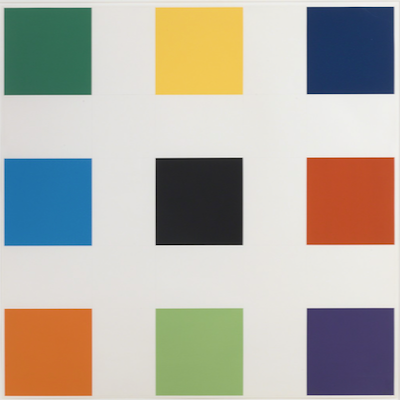
Hard Edge art is a style of abstract painting that became popular in the 1960s. It features areas of color separated by crisp, sharp edges that are painted with geometric precision. The term hard-edge painting was coined by art critic Jules Langsner to describe this approach, which contrasts with the softer, more fluid forms of other abstract styles.