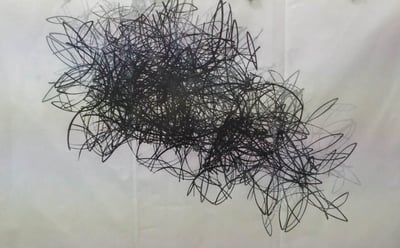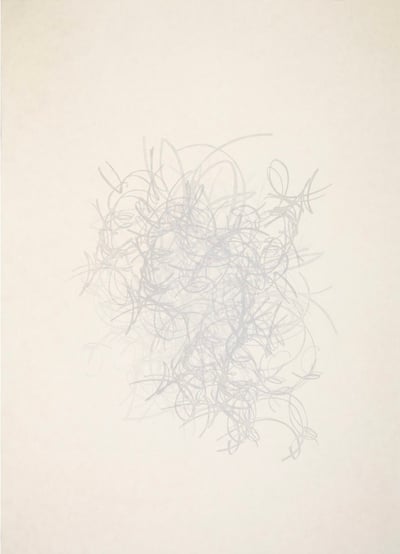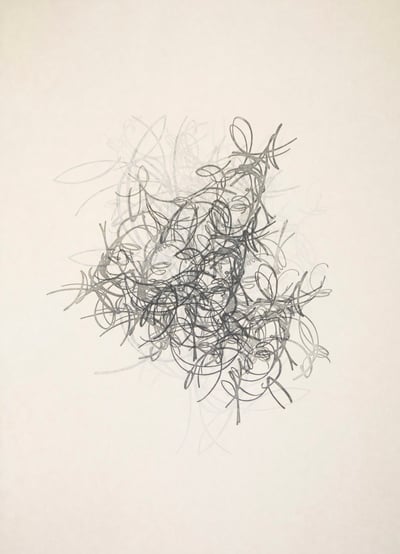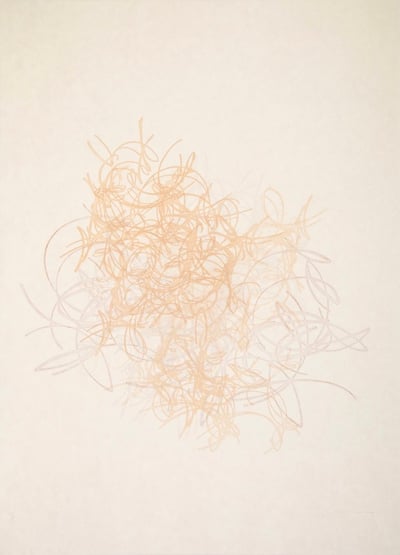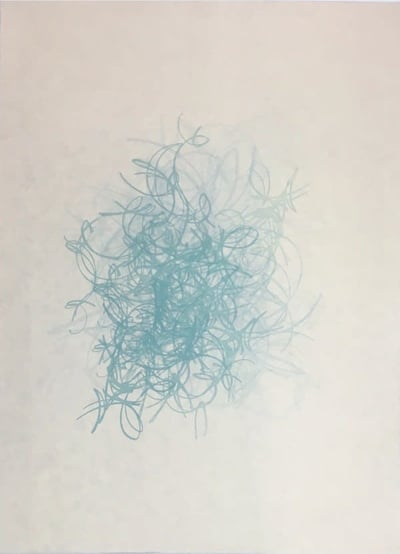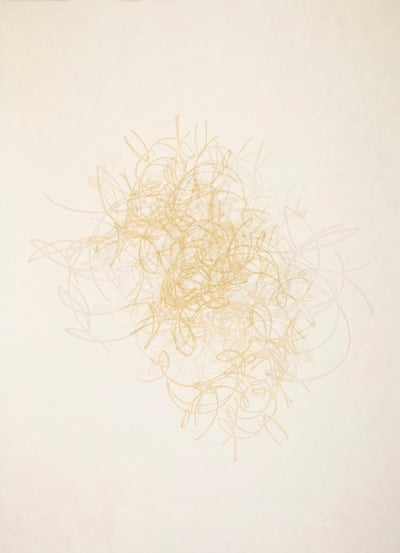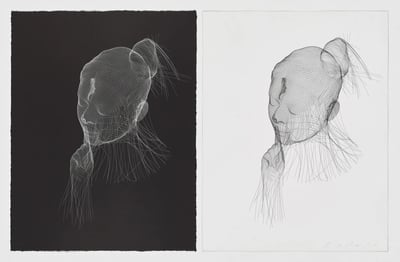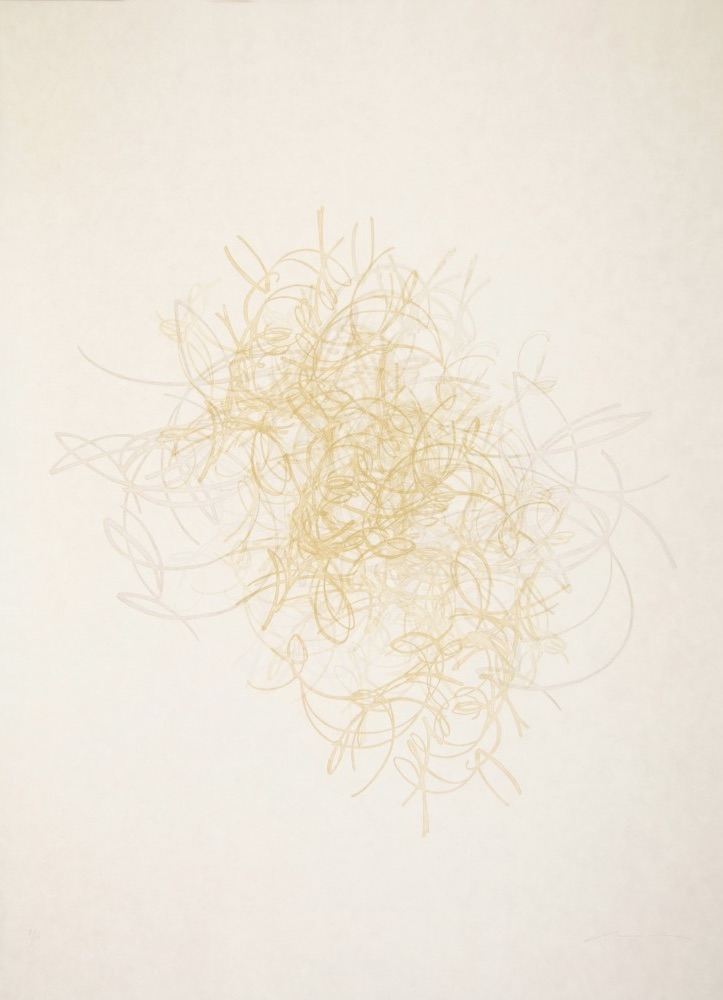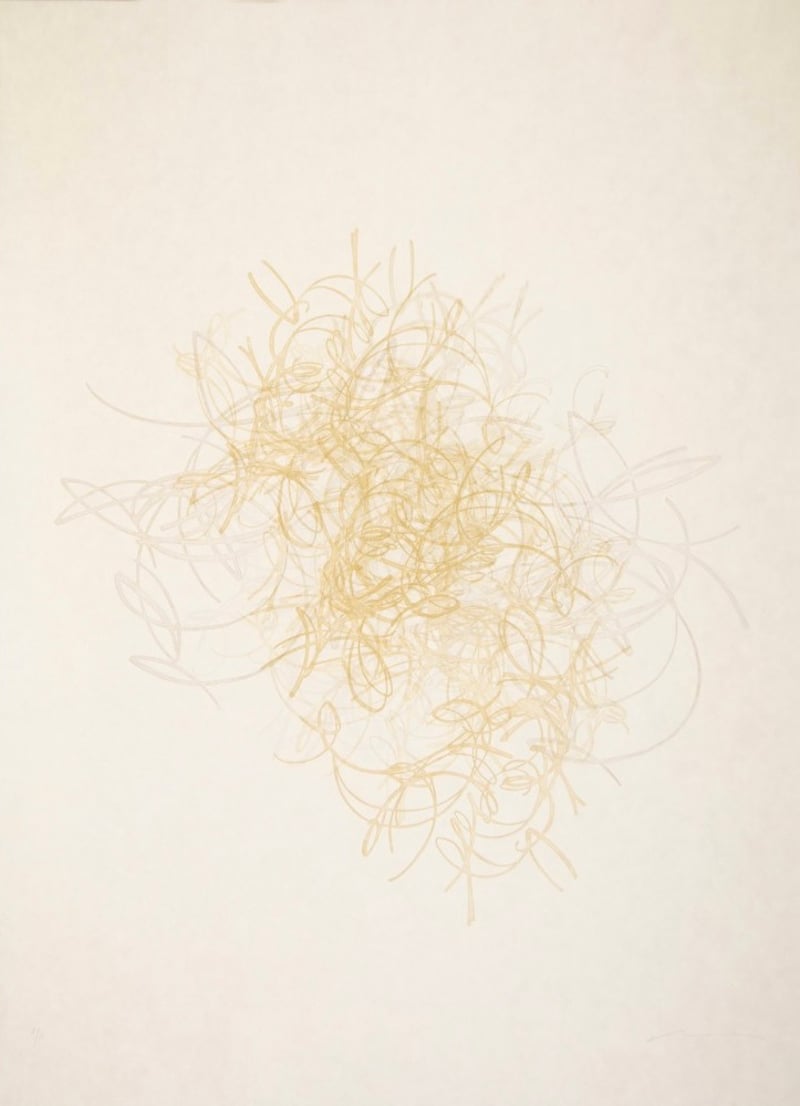
06.Octubre.2017 by David Rodríguez Caballero, created in 2017, is a limited edition etching and aquatint that exemplifies the artist's refined use of delicate lines and minimalistic composition. This artwork features a soft, intricate web of looping lines, rendered in light, almost translucent tones that merge seamlessly with the background. The drawing conveys a sense of weightlessness and fluidity, inviting viewers into a meditative exploration of form and space. The organic arrangement of lines evokes themes of transience and the fleeting nature of moments, showcasing Rodríguez Caballero’s unique ability to capture movement and subtle textures in a minimalistic manner.
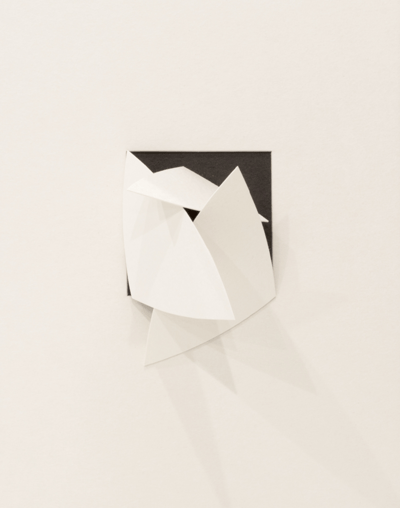
David Rodríguez Caballero (Spain, 1970) is a contemporary sculptor known for his abstract works that explore the interplay of light and geometry. Utilizing materials such as aluminum, brass, and copper, he creates folded and curved forms that engage with their surroundings. His sculptures have been exhibited internationally, including at the Moscow Museum of Modern Art and the Museo Würth in Spain.
Etching and AquatintEtching and aquatint are printmaking techniques. In aquatint, the printing plate is etched with a pattern of tiny pits and cracks to create a wide range of tonal gradations. This technique allows artists to replicate the broad, flat tones found in watercolor paintings and ink washes.
06.Octubre.2017 by David Rodríguez Caballero, created in 2017, is a limited edition etching and aquatint that exemplifies the artist's refined use of delicate lines and minimalistic composition. This artwork features a soft, intricate web of looping lines, rendered in light, almost translucent tones that merge seamlessly with the background. The drawing conveys a sense of weightlessness and fluidity, inviting viewers into a meditative exploration of form and space. The organic arrangement of lines evokes themes of transience and the fleeting nature of moments, showcasing Rodríguez Caballero’s unique ability to capture movement and subtle textures in a minimalistic manner.
David Rodríguez Caballero (Spain, 1970) is a contemporary sculptor known for his abstract works that explore the interplay of light and geometry. Utilizing materials such as aluminum, brass, and copper, he creates folded and curved forms that engage with their surroundings. His sculptures have been exhibited internationally, including at the Moscow Museum of Modern Art and the Museo Würth in Spain.
The structural merging of spatial forms with the consistent exploration of tactile surfaces, are the two major propositions at work in David Rodriguez Caballero's work. These ideas are communicated through an effective use of space, which gives a crucial significance to the substance of light in his paintings. Caballero aims to explore the ramifications which the sensory effect of colour and paint can convey to the viewer. Early works, mainly influenced from Paul Klee, gradually gave way to masterful, large scale sculptures. Narrow curves, along with immaculate steel plates and sheets, are soldered together, spliced and hung from high beams and cables in his installations. Caballero uses the smallest amount of tools and techniques to create the maximum effect that can be produced from them. He wants to coordinate that which transcends the mere purposefulness of ordinary objects with infectious inclination to see poetry in the mundane. Born in Spain in 1970, Caballero studied art at the University of the Basque Country, and has been living in the US for over a decade. He has successfully re-articulated several directions explored by the school of abstractconstructivism, without compromising his sense of elegance and configurational articulation. In the presence of Caballero's work, the viewer is subtly encouraged to see a multiplicity of layouts constructed out of light, carefully balanced by the symmetry of texture and movement, ever present in his compositions. (Artist website)
Abstract art uses form, shape, line, and color to create a visual experience without attempting to represent external reality. The composition exists independently of the world's visual references, focusing on expressing ideas and emotions through non-representational means.