Signed and numbered on the back
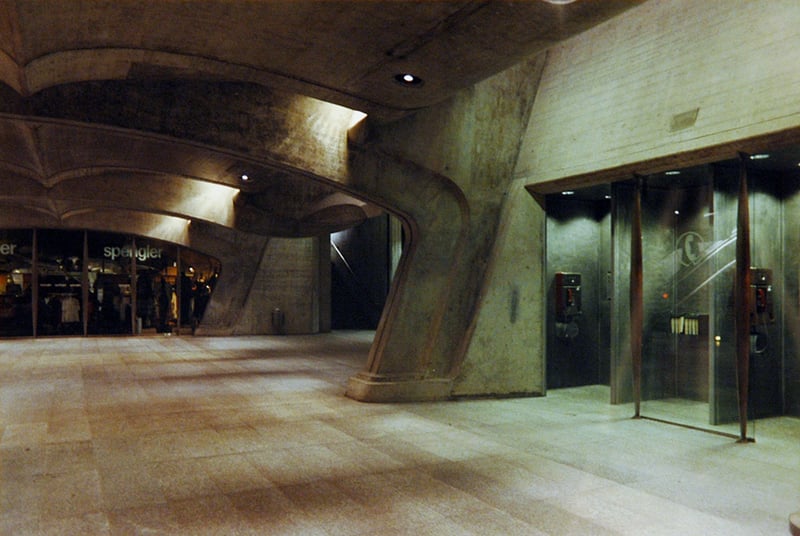
Bahnhof Stadelhofen Zurich by Candida Höfer, captured in 1991, is a striking architectural photograph showcasing the unique, flowing concrete forms of Zurich’s Stadelhofen train station. The image captures the station’s modernist, almost sculptural architecture, with its sweeping curves and structural elements that convey both strength and elegance. Höfer’s composition emphasizes symmetry and spatial depth, drawing attention to the play of light and shadow on the smooth concrete surfaces. The subdued lighting and empty space add an atmosphere of quiet introspection, characteristic of Höfer’s work, which often explores the interaction between architecture and the absence of human presence. This photograph invites viewers to appreciate the beauty in urban infrastructure and the artistry within functional spaces.
Artwork Copyright © Candida HoferCandida Höfer (Germany, 1944) is a German photographer renowned for her large-scale color images of empty interiors. Her work focuses on symmetry, the architecture's sense of scale, and proportion. Höfer studied at the Kunstakademie Düsseldorf from 1973 to 1982, first in film with the Danish filmmaker Ole John, then in photography with Bernd and Hilla Becher.
Artwork Copyright © Candida HoferBahnhof Stadelhofen Zurich, 1991
Form
Medium
Size
- Inches
- Centimeters
Edition
Price
- USD
- EUR
- GBP
- CHF
- Authenticity Guaranteed
- Insured Shipping
- Online Since 2005
●Inventory 4711
●Signed
●Comes with gallery invoice and certificate
●Sell Us a Similar Artwork. Learn more.
Signed and numbered on the back
Bahnhof Stadelhofen Zurich by Candida Höfer, captured in 1991, is a striking architectural photograph showcasing the unique, flowing concrete forms of Zurich’s Stadelhofen train station. The image captures the station’s modernist, almost sculptural architecture, with its sweeping curves and structural elements that convey both strength and elegance. Höfer’s composition emphasizes symmetry and spatial depth, drawing attention to the play of light and shadow on the smooth concrete surfaces. The subdued lighting and empty space add an atmosphere of quiet introspection, characteristic of Höfer’s work, which often explores the interaction between architecture and the absence of human presence. This photograph invites viewers to appreciate the beauty in urban infrastructure and the artistry within functional spaces.
Artwork Copyright © Candida HoferCandida Höfer (Germany, 1944) is a German photographer renowned for her large-scale color images of empty interiors. Her work focuses on symmetry, the architecture's sense of scale, and proportion. Höfer studied at the Kunstakademie Düsseldorf from 1973 to 1982, first in film with the Danish filmmaker Ole John, then in photography with Bernd and Hilla Becher.
Artwork Copyright © Candida Hofer- Recently Added
- Price (Low-High)
- Price (High-Low)
- Year (Low-High)
- Year (High-Low)
Candida Hofer
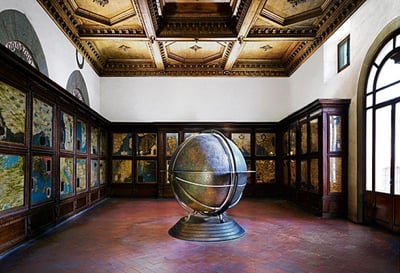
Historisch-Geographischer Schul-Atlas, 2009
Photography
C-Print
EUR 1,350
Candida Hofer
Bahnhof Stadelhofen Zurich, 1991
Photography
Photograph
EUR 5,800
Related Artists


Related Articles

Art Movements - May 5, 2022
The Dusseldorf School and the birth of modern photography
Discover the Düsseldorf School of Photography, its roots in objectivity, and its legacy in modern art. Explore works by Gursky, Höfer, and the Bechers.Read More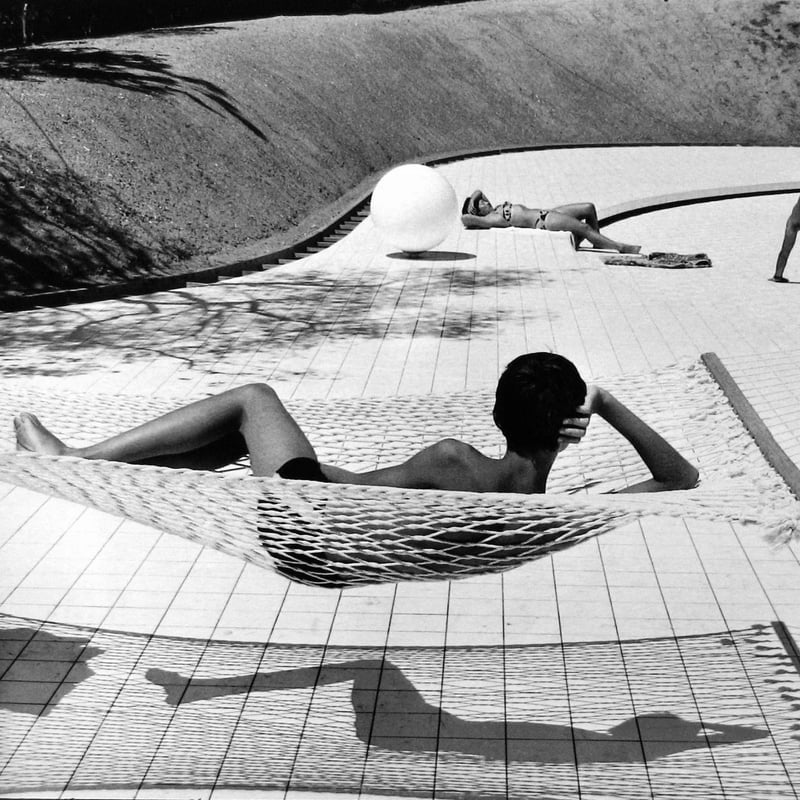

Artwork by James Turrell
What is ‘light and space’?
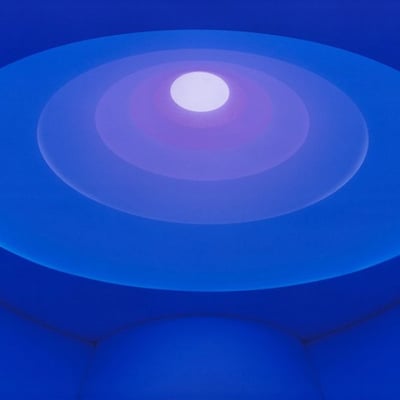
The Light and Space Movement refers to loosely affiliated art movements connected to minimalism, geometric abstraction, and op art that originated in Southern California in the 1960s. Greatly influenced by artist John McLaughlin, these artists focused on sensory phenomena such as light, perception, and space as central elements of their work. They also incorporated cutting-edge technologies from the aerospace and engineering industries to develop light-filled and sensuous objects, creating immersive experiences that emphasize the viewer's perception.
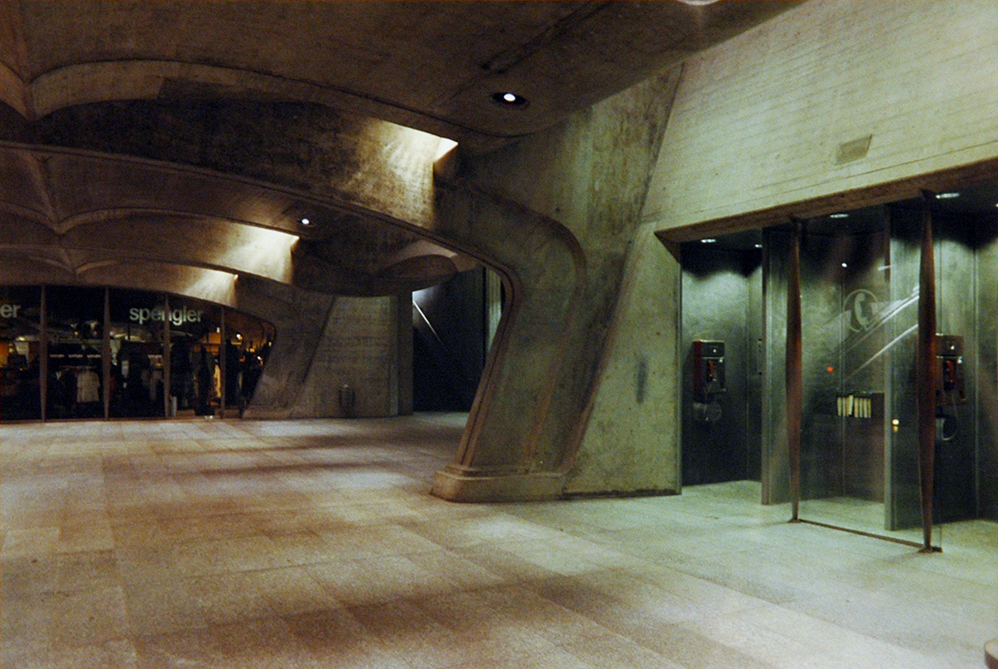
Candida Hofer
Bahnhof Stadelhofen Zurich, 1991
35.5 x 60.9 cm


