Details
Artist
Styles
Screenprint in colours. Hand-signed, numbered, and blind stamped.// I Fought The Law captures Banksy at the height of his subversive powers, a boldly political screenprint that inverts the visual language of law enforcement to challenge institutional authority. Two policemen crouch in poses of devotion, not over weapons or evidence, but over a small cluster of flowers growing from the pavement — an inversion so complete and so perfectly executed that it carries devastating philosophical force. The composition is anchored by blazing orange text reading 'I FOUGHT THE LAW AND I W...' (the phrase cutting off mid-word, invoking the song by The Clash while suggesting that language itself is truncated, incomplete), rendered in a colour that burns against the muted black-and-white palette of the figures and their urban context. Banksy's logic here is deceptively simple: if police officers — symbols of institutional power, coercion, and control — are depicted with absolute seriousness and reverence focussed on nature and beauty, then perhaps the true law, the true authority worth defending, is the organic world and not the machinery of state. The work was created in 2004, during Banksy's peak period of street-level productivity and political conviction, when his transition to the gallery system was still contested and his work retained maximum provocative power. This signed and numbered edition of 150 remains a cornerstone of his printed oeuvre, representing the marriage of graphic sophistication with political clarity. The bold orange against black and white is also technically masterful, demonstrating complete command of the screenprint medium.
Details
Artist
Styles
Screenprint in colours. Hand-signed, numbered, and blind stamped.// I Fought The Law captures Banksy at the height of his subversive powers, a boldly political screenprint that inverts the visual language of law enforcement to challenge institutional authority. Two policemen crouch in poses of devotion, not over weapons or evidence, but over a small cluster of flowers growing from the pavement — an inversion so complete and so perfectly executed that it carries devastating philosophical force. The composition is anchored by blazing orange text reading 'I FOUGHT THE LAW AND I W...' (the phrase cutting off mid-word, invoking the song by The Clash while suggesting that language itself is truncated, incomplete), rendered in a colour that burns against the muted black-and-white palette of the figures and their urban context. Banksy's logic here is deceptively simple: if police officers — symbols of institutional power, coercion, and control — are depicted with absolute seriousness and reverence focussed on nature and beauty, then perhaps the true law, the true authority worth defending, is the organic world and not the machinery of state. The work was created in 2004, during Banksy's peak period of street-level productivity and political conviction, when his transition to the gallery system was still contested and his work retained maximum provocative power. This signed and numbered edition of 150 remains a cornerstone of his printed oeuvre, representing the marriage of graphic sophistication with political clarity. The bold orange against black and white is also technically masterful, demonstrating complete command of the screenprint medium.
- Recently Added
- Price (low-high )
- Price (high-low )
- Year (low-high )
- Year (high-low )

Banksy
Barcode (unsigned), 2004
Limited Edition Print
Screen-print
EUR 25,000 - 30,000

Banksy
Trolleys, 2007
Limited Edition Print
Screen-print
Inquire For Price

Banksy
Golf Sale (Unsigned), 2003
Limited Edition Print
Screen-print
GBP 13,150

Banksy
Trolleys (Black & White Unsigned), 2007
Limited Edition Print
Screen-print
GBP 14,870

Banksy
I Fought The Law, 2004, 2004
Limited Edition Print
Screen-print
Inquire For Price

Banksy
Love Is In The Air (Unsigned), 2003
Limited Edition Print
Screen-print
Inquire For Price
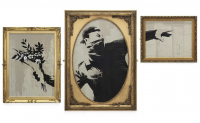
Banksy
Thrower Triptych (VIP), 2019
Limited Edition Print
Screen-print
Inquire For Price

Banksy
No Ball Games - Grey, 2009
Limited Edition Print
Screen-print
GBP 70,000 - 80,000

Banksy
Laugh Now (unsigned), 2003
Limited Edition Print
Screen-print
GBP 40,000 - 55,000

Banksy
Precision Bombing, 2000
Limited Edition Print
Mixed Media
GBP 250,000 - 280,000

Banksy
Girl With A Balloon, 2004
Limited Edition Print
Screen-print
GBP 240,000 - 270,000

Banksy
Trolley Hunters, 2007
Limited Edition Print
Screen-print
GBP 30,000 - 40,000

Banksy
Barcode, 2004
Limited Edition Print
Screen-print
GBP 70,000 - 90,000

Banksy
Sale Ends (v2), 2017
Limited Edition Print
Screen-print
GBP 28,000 - 35,000

Banksy
Four Soup Cans - Gold On Cream, 2005
Limited Edition Print
Screen-print
GBP 50,000 - 70,000

Banksy
Girl With A Balloon (unsigned), 2004
Limited Edition Print
Screen-print
GBP 90,000 - 110,000

Banksy
Heavy Weaponry, 2004
Limited Edition Print
Mixed Media
GBP 150,000 - 170,000

Banksy
Pulp Fiction (unsigned), 2004
Limited Edition Print
Screen-print
GBP 40,000 - 50,000

Banksy
Grannies, 2006
Limited Edition Print
Silkscreen
USD 32,000 - 38,000

Banksy
Morons (Sepia), 2007
Limited Edition Print
Screen-print
USD 80,000 - 95,000

Banksy
Turf War , 2003
Limited Edition Print
Screen-print
GBP 34,800

Banksy
Applause, 2006
Limited Edition Print
Screen-print
Currently Not Available
Related Artists


Related Articles

Art Movements - June 23, 2023
Graffiti Time Lines on Urban Murals: Uncovering a Street Art Makeover
Explore the evolution of graffiti and street art, from urban murals to mainstream galleries. Discover artists and works reshaping public spaces worldwide. Read More

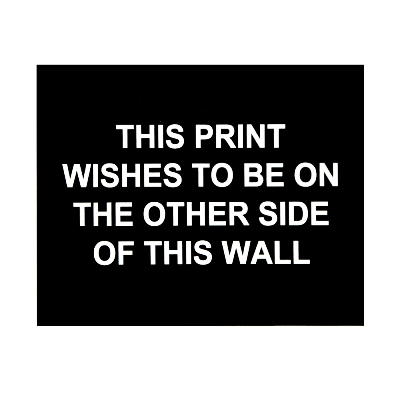
What is Lettrism?
Lettrism is an art form that uses letters, words, and symbols to create artwork. The movement was established in Paris in the 1940s and later gained popularity in the 1950s in America. Lettrisme is the French spelling of the movement's name, derived from the French word for letter.