
Details
Artist
Styles
Screenprint on paper - Signed, dated and numbered // Banksy’s Gangsta Rat (2004) is a limited edition screenprint, featuring one of the artist's iconic rats dressed as a stereotypical gangsta. The black and white rat wears a cap, a chunky chain around its neck, and holds a boombox, symbolizing the influence of hip-hop culture. Above the rat, bold red graffiti text reading POW drips down the wall, adding to the urban and rebellious aesthetic of the piece. Banksy’s use of rats, a common motif in his work, often serves as a metaphor for societal underdogs and the overlooked. The combination of street art style and the humorous twist on urban culture highlights Banksy’s signature satirical approach to contemporary issues. This screenprint is signed, dated, and numbered, and part of an edition of 350.
Details
Artist
Styles
Screenprint on paper - Signed, dated and numbered // Banksy’s Gangsta Rat (2004) is a limited edition screenprint, featuring one of the artist's iconic rats dressed as a stereotypical gangsta. The black and white rat wears a cap, a chunky chain around its neck, and holds a boombox, symbolizing the influence of hip-hop culture. Above the rat, bold red graffiti text reading POW drips down the wall, adding to the urban and rebellious aesthetic of the piece. Banksy’s use of rats, a common motif in his work, often serves as a metaphor for societal underdogs and the overlooked. The combination of street art style and the humorous twist on urban culture highlights Banksy’s signature satirical approach to contemporary issues. This screenprint is signed, dated, and numbered, and part of an edition of 350.
- Recently Added
- Price (low-high )
- Price (high-low )
- Year (low-high )
- Year (high-low )
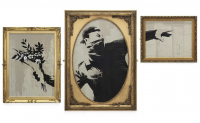
Banksy
Thrower Triptych (VIP), 2019
Limited Edition Print
Screen-print
Inquire For Price

Banksy
Barcode (unsigned), 2004
Limited Edition Print
Screen-print
GBP 40,000 - 50,000

Banksy
No Ball Games - Grey, 2009
Limited Edition Print
Screen-print
GBP 70,000 - 80,000

Banksy
Laugh Now (unsigned), 2003
Limited Edition Print
Screen-print
GBP 40,000 - 55,000

Banksy
Precision Bombing, 2000
Limited Edition Print
Mixed Media
GBP 250,000 - 280,000

Banksy
Girl With A Balloon, 2004
Limited Edition Print
Screen-print
GBP 240,000 - 270,000

Banksy
Trolley Hunters, 2007
Limited Edition Print
Screen-print
GBP 30,000 - 40,000

Banksy
Barcode, 2004
Limited Edition Print
Screen-print
GBP 70,000 - 90,000

Banksy
Sale Ends (v2), 2017
Limited Edition Print
Screen-print
GBP 28,000 - 35,000

Banksy
Four Soup Cans - Gold On Cream, 2005
Limited Edition Print
Screen-print
GBP 50,000 - 70,000

Banksy
Girl With A Balloon (unsigned), 2004
Limited Edition Print
Screen-print
GBP 90,000 - 110,000

Banksy
Heavy Weaponry, 2004
Limited Edition Print
Mixed Media
GBP 150,000 - 170,000

Banksy
Pulp Fiction (unsigned), 2004
Limited Edition Print
Screen-print
GBP 40,000 - 50,000

Banksy
Grannies, 2006
Limited Edition Print
Silkscreen
USD 32,000 - 38,000

Banksy
Morons (Sepia), 2007
Limited Edition Print
Screen-print
USD 80,000 - 95,000

Banksy
Turf War , 2003
Limited Edition Print
Screen-print
GBP 34,800

Banksy
Applause, 2006
Limited Edition Print
Screen-print
Currently Not Available
Related Artists


Related Articles

Popular, Artists - February 17, 2025
Decoding Contemporary Iconography: Uncovering Hidden Symbols in Modern Art
Uncover hidden meanings in contemporary art. Explore the symbolism in works by Ai Weiwei, Banksy, Koons, Hirst, Haring, Kusama, and Magritte. Read More

What is site specific art?
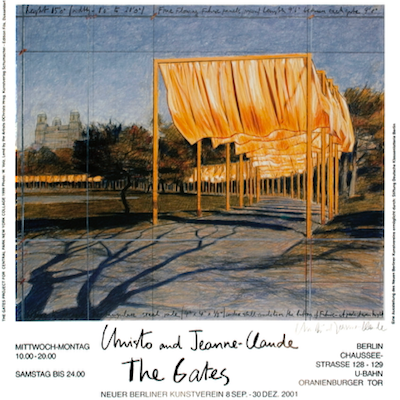
Site-Specific Art is a form of artwork created to exist in a particular location, with the artist considering the site as an integral part of the creative process. Robert Irwin was a key figure in promoting this art form in California. Site-Specific Art emerged as a reaction against modernist objects, which were often portable, commodified, and confined to museum spaces. In contrast, Site-Specific Art is inherently tied to its location, challenging the traditional notions of art as a transportable and marketable commodity.