Details
Artist
Styles
From Connections 1925-1983 - Screenprint on 150-gram Umbria paper - Signed, Dated and Numbered // Anni Albers’s Untitled 8 of 9 (from Connections), created between 1925 and 1983, is a limited edition lithograph that reflects her mastery in both textile design and geometric abstraction. Measuring 68.6 x 50.8 cm, the piece features a dense, intricate arrangement of abstract white lines on a black background. The labyrinthine design creates a visual tension between chaos and order, a recurring theme in Albers’s work. This interplay of positive and negative space evokes a sense of rhythm and structure, reminiscent of her influential weavings. The artwork exemplifies Albers’s ongoing exploration of form, line, and texture through minimalist, yet deeply engaging compositions.
Untitled 8 of 9 (from Connections), 1925/1983
form
Medium
Size
68.6 x 50.8 cm
- Inches
- Centimeters
Edition
Price
Details
Artist
Styles
From Connections 1925-1983 - Screenprint on 150-gram Umbria paper - Signed, Dated and Numbered // Anni Albers’s Untitled 8 of 9 (from Connections), created between 1925 and 1983, is a limited edition lithograph that reflects her mastery in both textile design and geometric abstraction. Measuring 68.6 x 50.8 cm, the piece features a dense, intricate arrangement of abstract white lines on a black background. The labyrinthine design creates a visual tension between chaos and order, a recurring theme in Albers’s work. This interplay of positive and negative space evokes a sense of rhythm and structure, reminiscent of her influential weavings. The artwork exemplifies Albers’s ongoing exploration of form, line, and texture through minimalist, yet deeply engaging compositions.
- Recently Added
- Price (low-high )
- Price (high-low )
- Year (low-high )
- Year (high-low )

Anni Albers
Untitled 8 Of 9 (from Connections), 1925/1983
Limited Edition Print
Lithograph
Inquire For Price

Anni Albers
Untitled 6 Of 9 (from Connections), 1925/1983
Limited Edition Print
Lithograph
USD 3,700

Anni Albers
Untitled 5 Of 9 (from Connections), 1925/1983
Limited Edition Print
Lithograph
Inquire For Price

Anni Albers
Untitled 4 Of 9 (from Connections), 1925/1983
Limited Edition Print
Lithograph
Inquire For Price

Anni Albers
Study For Hooked Rug (From Connections), 1983
Limited Edition Print
Silkscreen
USD 3,700

Anni Albers
Untitled (From Connections), 1983
Limited Edition Print
Silkscreen
USD 3,500 - 5,000

Anni Albers
DO. I - VI, 1973
Limited Edition Print
Screen-print
GBP 25,000
Related Artists


Related Articles
Popular, Artists - January 27, 2025
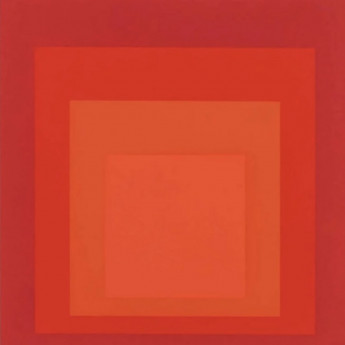
Josef Albers: Master of Color Interaction and Perception
Explore Josef Albers' groundbreaking work in color theory and perception. Discover how 'Homage to the Square' redefined art and continues to inspire today. Read More

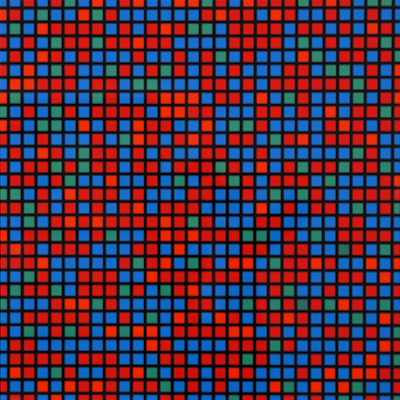
What is geometric abstract art?
Geometric abstraction is a form of abstract art that uses geometric shapes arranged in a non-illusionistic space (though not always) and combined into non-representational (non-objective) compositions. Based on years of artistic research, some artists have proposed that geometric abstraction offers a solution to modern challenges by rejecting traditional illusionistic practices in favor of clarity and simplicity.