Details
Artist
Styles
From Connections 1925-1983 - 9 Color Screenprint on 150-gram Umbria paper - Signed, Dated and Numbered // Anni Albers’s Untitled 4 of 9 (from Connections), created between 1925 and 1983, is a vibrant screen-print that exemplifies her mastery of geometric abstraction. Measuring 27 x 20 cm, this work features an arrangement of bold red, blue, and yellow shapes set against a stark black background. The geometric forms seem to float and shift in space, creating a dynamic visual rhythm. Albers’s use of primary colors and precise shapes reflects her Bauhaus training, emphasizing clarity, balance, and the interaction between color and form. The composition invites the viewer to explore the relationships between the shapes as they create a sense of movement and structure.
Untitled 4 of 9 (from Connections), 1925/1983
form
Medium
Size
68.6 x 50.8 cm
- Inches
- Centimeters
Edition
Price
Details
Artist
Styles
From Connections 1925-1983 - 9 Color Screenprint on 150-gram Umbria paper - Signed, Dated and Numbered // Anni Albers’s Untitled 4 of 9 (from Connections), created between 1925 and 1983, is a vibrant screen-print that exemplifies her mastery of geometric abstraction. Measuring 27 x 20 cm, this work features an arrangement of bold red, blue, and yellow shapes set against a stark black background. The geometric forms seem to float and shift in space, creating a dynamic visual rhythm. Albers’s use of primary colors and precise shapes reflects her Bauhaus training, emphasizing clarity, balance, and the interaction between color and form. The composition invites the viewer to explore the relationships between the shapes as they create a sense of movement and structure.
- Recently Added
- Price (low-high )
- Price (high-low )
- Year (low-high )
- Year (high-low )

Anni Albers
Untitled 8 Of 9 (from Connections), 1925/1983
Limited Edition Print
Lithograph
Inquire For Price

Anni Albers
Untitled 6 Of 9 (from Connections), 1925/1983
Limited Edition Print
Lithograph
USD 3,700

Anni Albers
Untitled 5 Of 9 (from Connections), 1925/1983
Limited Edition Print
Lithograph
Inquire For Price

Anni Albers
Untitled 4 Of 9 (from Connections), 1925/1983
Limited Edition Print
Lithograph
Inquire For Price

Anni Albers
Study For Hooked Rug (From Connections), 1983
Limited Edition Print
Silkscreen
USD 3,700

Anni Albers
Untitled (From Connections), 1983
Limited Edition Print
Silkscreen
USD 3,500 - 5,000

Anni Albers
DO. I - VI, 1973
Limited Edition Print
Screen-print
GBP 25,000
Related Artists


Related Articles
Popular, Artists - January 27, 2025
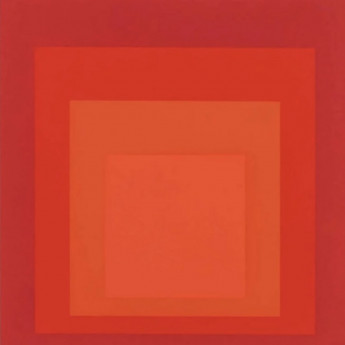
Josef Albers: Master of Color Interaction and Perception
Explore Josef Albers' groundbreaking work in color theory and perception. Discover how 'Homage to the Square' redefined art and continues to inspire today. Read More

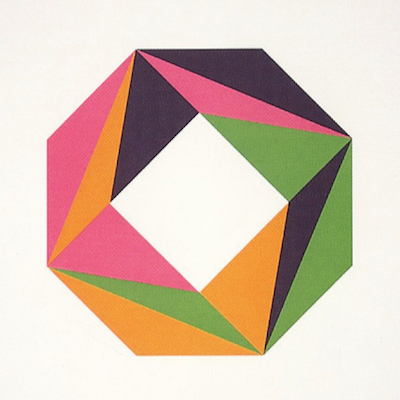
What is Bauhaus?
Bauhaus was a school of art, design and architecture established in Weimar, Germany. Architect Wlater Gropius established it in 1919. Bauhaus used a method for teaching within a community of artists working together and incorporating art in the fundamentals of daily life.