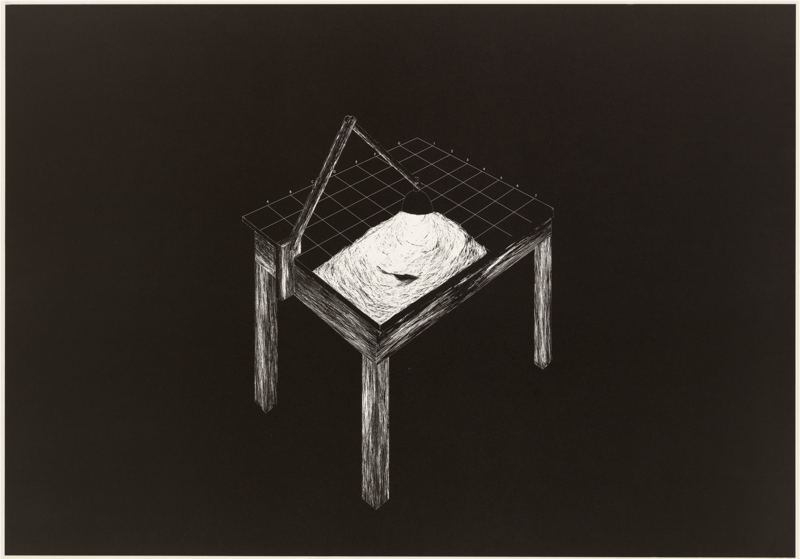
Desapropriaçâo 1 by André Komatsu is a limited edition lithograph from 2011 that presents a stark, surreal image. Against a solid black background, a lone table is depicted with precise white linework, bearing a grid pattern on its surface and a singular light source hanging above. The center of the table seems to dissolve into a mound or crater-like form, suggesting themes of absence, erosion, or destabilization. Komatsu’s work often delves into social and political commentary, exploring the fragility of structures and spaces. This piece, measuring 70 cm by 100 cm, evokes a sense of emptiness and uncertainty, inviting viewers to contemplate the concept of dispossession or displacement implied in the title, and challenging perceptions of stability in familiar objects.
Artwork Copyright © André KomatsuAndré Komatsu (Brazil, 1978) is a contemporary artist known for his sculptures and installations that critique social and urban systems. Using materials like concrete, bricks, and everyday objects, he examines power dynamics and societal constraints. His works invite reflection on the constructed nature of modern social structures.
Artwork Copyright © André KomatsuDesapropriaçâo 1, 2011
Form
Medium
Size
- Inches
- Centimeters
Edition
Price
- USD
- EUR
- GBP
- CHF
- Authenticity Guaranteed
- Insured Shipping
- Online Since 2005
●Inventory 6661
●Signed
●Comes with gallery invoice and certificate
●Sell Us a Similar Artwork. Learn more.
Desapropriaçâo 1 by André Komatsu is a limited edition lithograph from 2011 that presents a stark, surreal image. Against a solid black background, a lone table is depicted with precise white linework, bearing a grid pattern on its surface and a singular light source hanging above. The center of the table seems to dissolve into a mound or crater-like form, suggesting themes of absence, erosion, or destabilization. Komatsu’s work often delves into social and political commentary, exploring the fragility of structures and spaces. This piece, measuring 70 cm by 100 cm, evokes a sense of emptiness and uncertainty, inviting viewers to contemplate the concept of dispossession or displacement implied in the title, and challenging perceptions of stability in familiar objects.
Artwork Copyright © André KomatsuAndré Komatsu (Brazil, 1978) is a contemporary artist known for his sculptures and installations that critique social and urban systems. Using materials like concrete, bricks, and everyday objects, he examines power dynamics and societal constraints. His works invite reflection on the constructed nature of modern social structures.
Artwork Copyright © André Komatsu- Recently Added
- Price (Low-High)
- Price (High-Low)
- Year (Low-High)
- Year (High-Low)
André Komatsu
Desapropriaçâo 1, 2011
Limited Edition Print
Lithograph
EUR 700
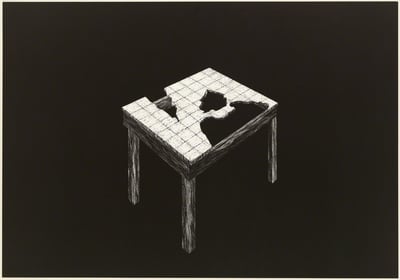
André Komatsu
Desapropriaçâo 2 , 2011
Limited Edition Print
Lithograph
EUR 700
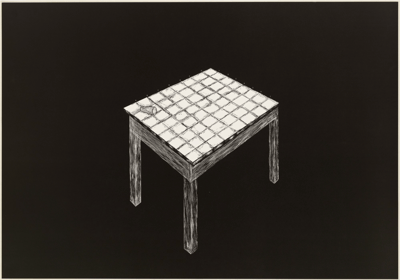
André Komatsu
Desapropriaçâo 3 , 2011
Limited Edition Print
Lithograph
EUR 700
Related Artists


Related Articles

Popular, Artists, Collecting - July 22, 2025
Investing in Emerging Artists: A Guide for Collectors
Learn how to invest wisely in emerging artists—spot talent early, manage risk, and build a meaningful, future-focused art collection.Read More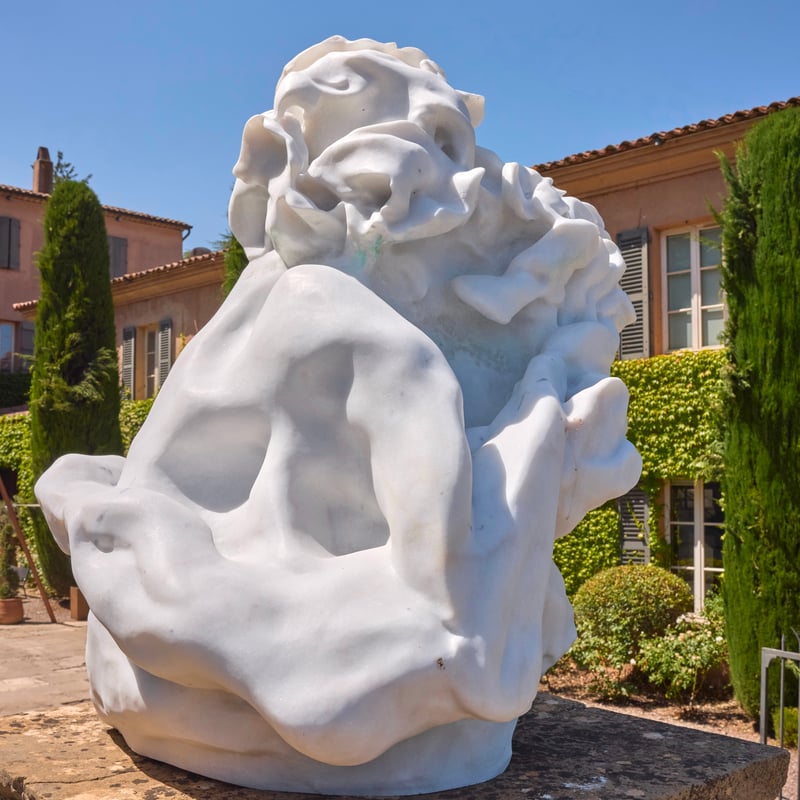
Popular, News, Artists, Collecting - August 12, 2026
In Minor Keys: Finding Intimacy and Identity at the 61st Venice Biennale — and in Your Collection
Explore how Koyo Kouoh’s 61st Venice Biennale vision, In Minor Keys, is shifting contemporary collecting toward quiet introspection, memory, and personal identity.Read More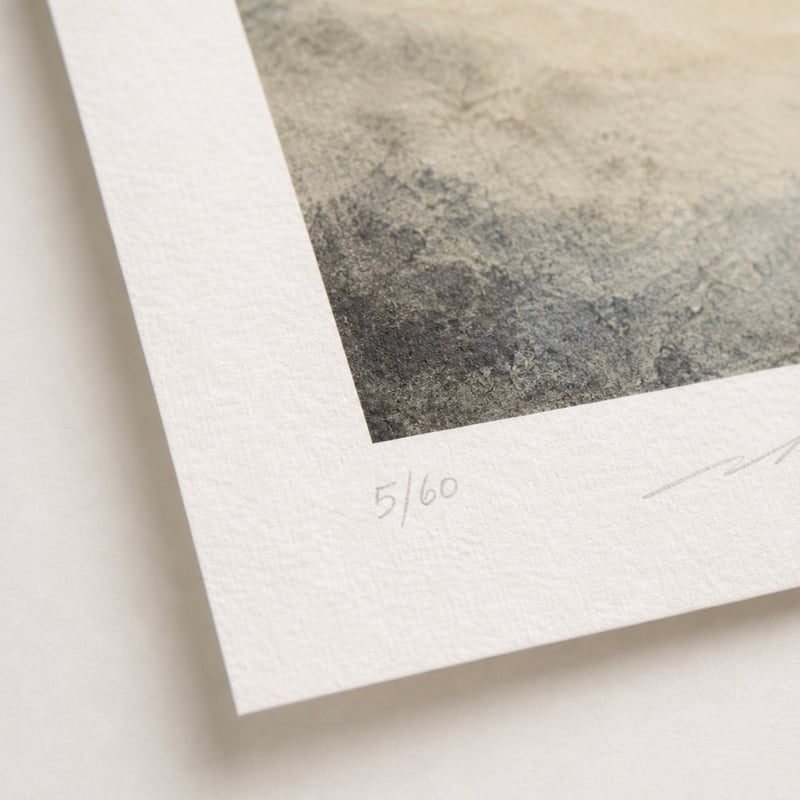

Artwork by Carlos Cruz-Diez
What is Latin American art?
Latin American Art is a style which takes inspiration from its culture, society, politics, native traditions, religions and landscape. Op-Art and Kinetic Art figure prominently in Latin artworks. Colors in Latin American compositions are often bold. Latin American artists work in all media and movements.

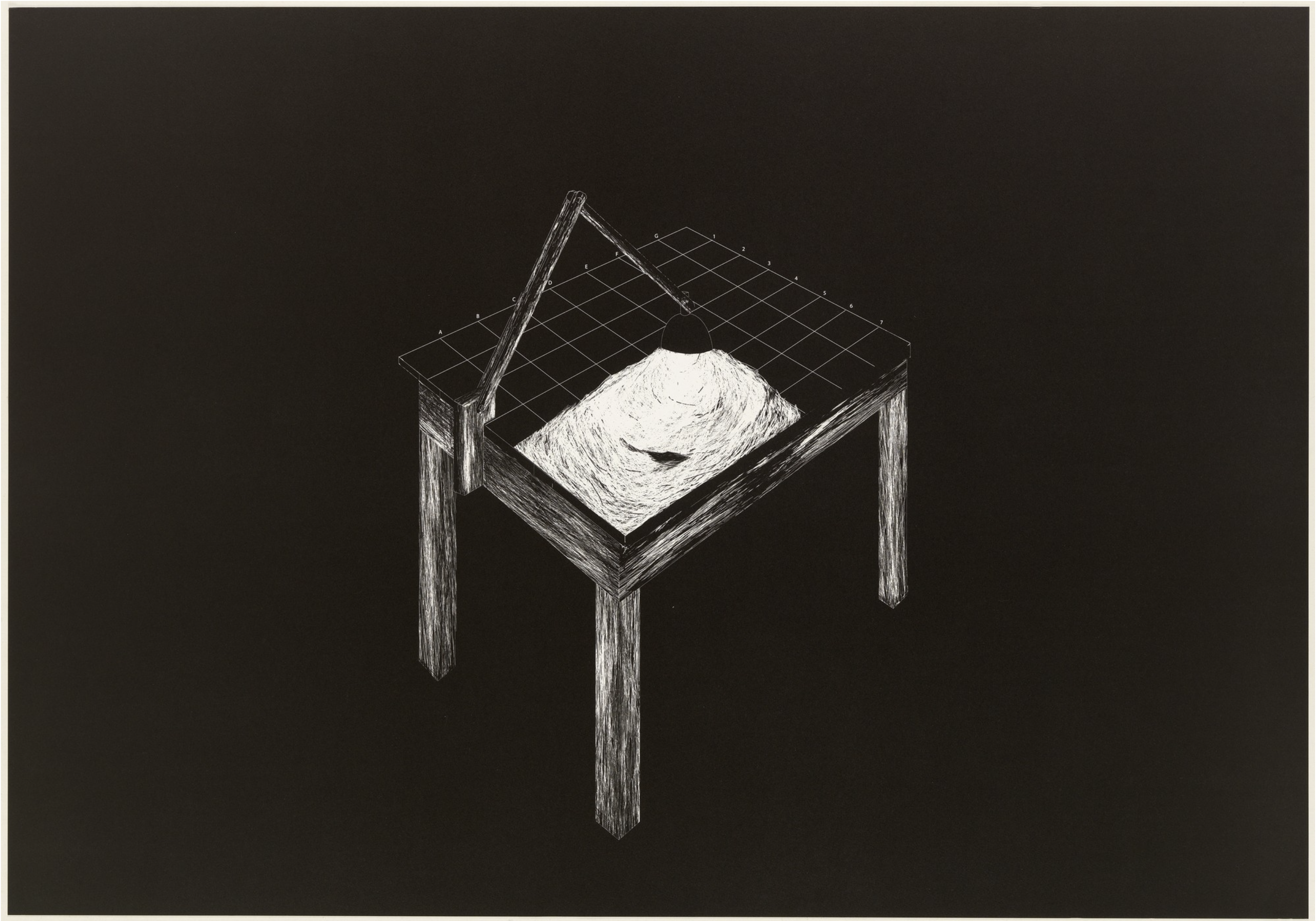
André Komatsu
Desapropriaçâo 1, 2011
70 x 100 cm


