

Trash to Treasure: Eco-Art and the Beauty of Recycled Materials

By Emilia Novak
From Waste to Art: The Rise of Eco-Art
Imagine walking into a gallery and spotting a shimmering sea turtle sculpture. Its shell gleams in greens and golds—until you come closer and realize it is crafted entirely from discarded circuit boards and wires. This surprising encounter captures the essence of eco-art, a creative movement in which artists transform the cast-offs of modern society into works that provoke thought and spark delight. In a world increasingly concerned with environmental impact, these artists look to dumps, shorelines, scrapyards and e-waste piles for materials, revealing unexpected beauty in what we usually overlook.
Repurposing discarded objects for art is not new—20th-century innovators like Louise Nevelson built immersive wooden assemblages from urban debris—but today’s eco-artists approach the practice with heightened urgency. They are responding to global issues of waste and overconsumption, yet their tone is often hopeful rather than alarmist. Through imagination and storytelling, they offer a fresh way to consider environmental issues: not as burdens but as opportunities for reinvention.

Circuit Boards and Electronic Trash as Art
Few artists embody this spirit more vividly than Steven Rodrig, who turns to e-waste as his palette. With a background in structural mechanics, Rodrig collects obsolete computer parts—motherboards, wires, fried circuit boards—and reshapes them into sculptural organisms. His 2010 work Sea Turtle Searching for Deep Data, made entirely from scrapped PCBs, required custom tools to bend the stiff material into organic curves. The result is a creature that feels both technological and alive, prompting viewers to reflect on the life cycle of gadgets we replace without thinking.
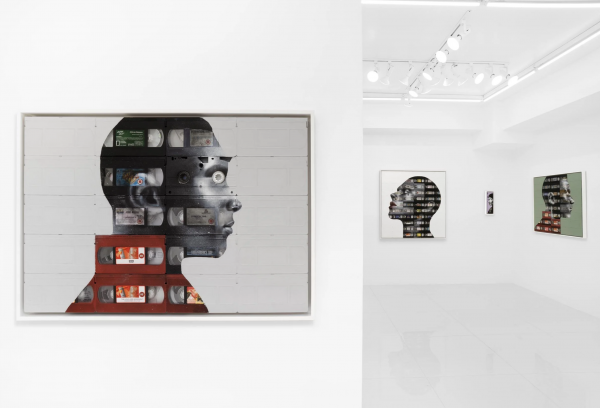
London artist Nick Gentry also explores the remnants of outdated technology, but through portraiture. He collects floppy disks, film negatives and VHS tapes, arranging them as the textured base for his painted faces. Labels, scratches and notes etched into the disks appear beneath the paint, turning each portrait into a meditation on memory, obsolescence and the pace of technological change.
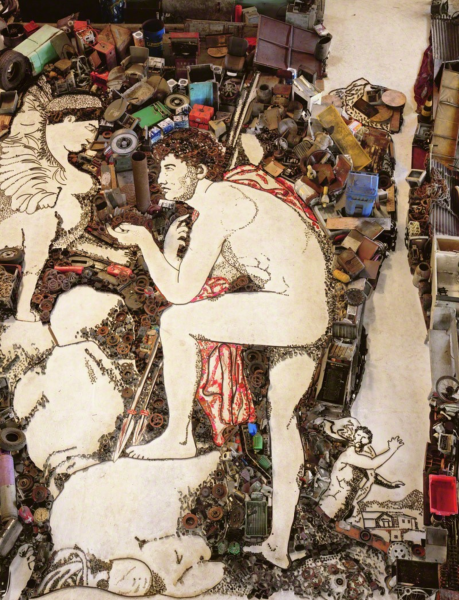
Brazilian artist Vik Muniz pushes this dialogue further. In the acclaimed project Waste Land, he collaborated with waste pickers at Rio’s Jardim Gramacho landfill, arranging recyclables into large-scale portraits photographed from above. When the resulting works sold at auction, Muniz donated the proceeds to the workers who helped create them. Through both imagery and action, he shows how discarded materials can become tools for social and environmental awareness.
Fashioning Discarded Clothes into Statements
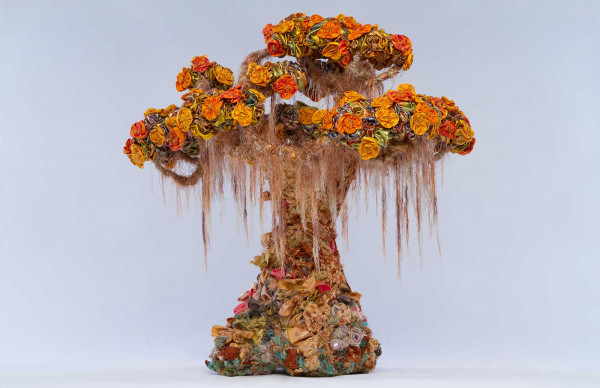
Textile waste—an enormous byproduct of fast fashion—has become a powerful medium for eco-art. The Miami-based duo Guerra de la Paz creates exuberant installations from mountains of discarded clothes. Their piece Indochine rises as a vibrant mushroom cloud of shirts, pants and dresses, transforming forgotten garments into an explosion of color and form. These playful yet pointed works challenge our casual relationship with clothing, questioning why we throw away so much that still holds value.
This lineage echoes the innovations of Louise Nevelson, who used abandoned wood to build sculptural environments. Today’s textile artists expand this tradition: some weave plastic bags into tapestries, others stitch worn denim into contemporary quilts. In all cases, discarded fibers become repositories of stories—past lives woven into new meaning.
Monumental Sculptures from Scrap Metal
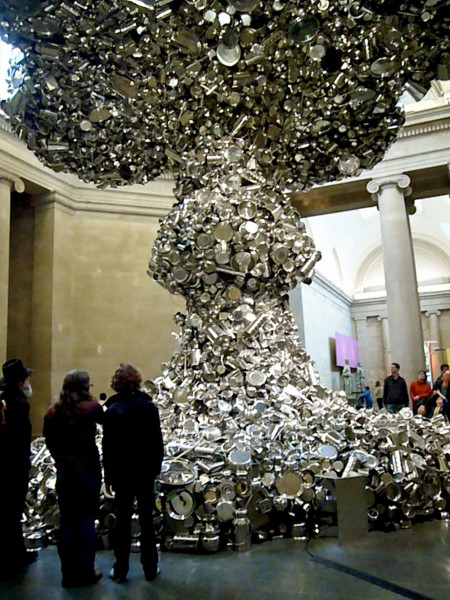
Some eco-artists work on a monumental scale, using scrap metal as their medium. Indian artist Subodh Gupta is famous for transforming everyday stainless steel kitchenware—pots, pans, buckets and tiffin boxes—into massive installations. His 26-ton sculpture Line of Control assembles thousands of utensils into the shape of a nuclear mushroom cloud, juxtaposing domestic familiarity with geopolitical dread. Gupta’s work highlights how the ordinary objects of daily life can become symbols of larger cultural tensions.
 Across the African continent, Ghanaian sculptor El Anatsui creates monumental wall hangings from tens of thousands of discarded bottle caps and metal seals. Flattened, twisted and stitched together with copper wire, these shimmering sheets drape like fabric yet reveal the refuse of global consumer culture upon closer inspection. Celebrated internationally—including with the Golden Lion for Lifetime Achievement at the Venice Biennale—Anatsui’s works connect local materials with worldwide narratives of trade, consumption and renewal.
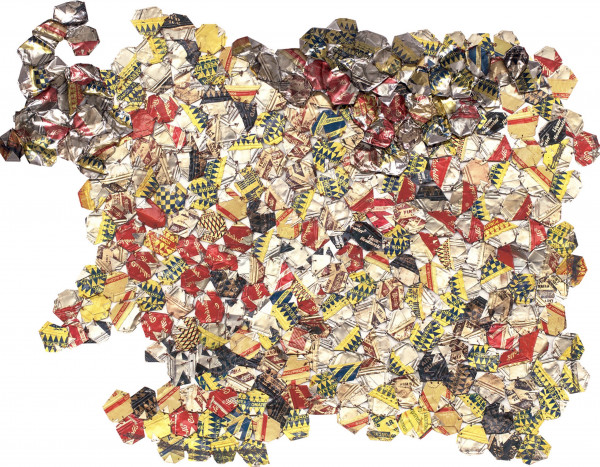 German conceptual artist HA Schult uses trash to embody humanity itself. His long-running series Trash People features life-sized human figures fashioned from crushed cans, bottles and broken appliances. Installed in locations from the Egyptian pyramids to Moscow’s Red Square, these ghostly silhouettes force viewers to confront the global scale of waste and our inescapable connection to it.
 Plastic pollution has inspired immersive works as well. Singaporean artist Tan Zi Xi’s installation Plastic Ocean suspends 26,000 pieces of plastic debris overhead, creating a haunting walk-through environment reminiscent of an underwater garbage patch. Visitors find themselves surrounded by floating waste, experiencing the enormity of pollution on an intimate human scale.
Playful Reimaginings of Everyday Junk
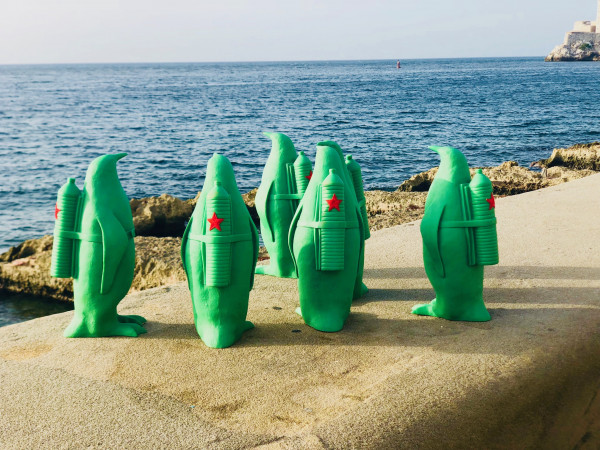
Not all eco-art is solemn. Belgian sculptor William Sweetlove approaches sustainability with humor, crafting oversized animals from recycled plastics. His neon-blue snails and brightly colored dogs, often wearing boots or carrying water bottles, charm viewers with playful absurdity while hinting at a future shaped by climate change. Sweetlove’s work shows how ecological messaging can be inviting rather than intimidating.
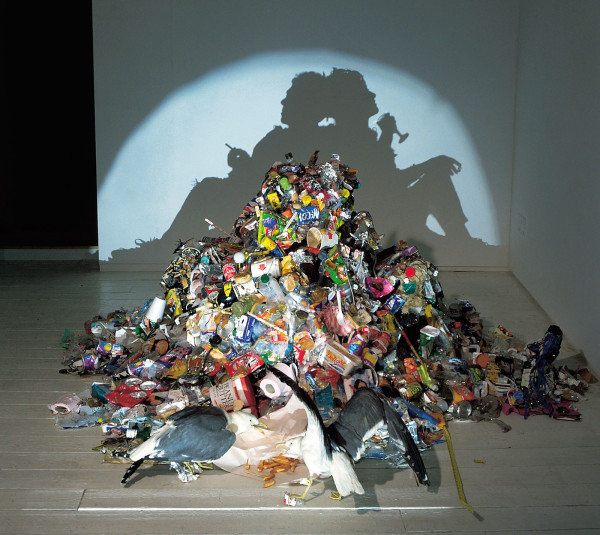
 British duo Tim Noble and Sue Webster create astonishing “shadow sculptures” from heaps of trash. A seemingly chaotic pile of broken objects becomes, under a single beam of light, a precise shadow portrait on the wall. Their famous piece Dirty White Trash (with Gulls) used six months of their personal rubbish to cast the artists’ own silhouettes, cigarettes and wine glasses included. The transformation underscores a central eco-art idea: change your perspective, and even the most unpromising materials reveal beauty.
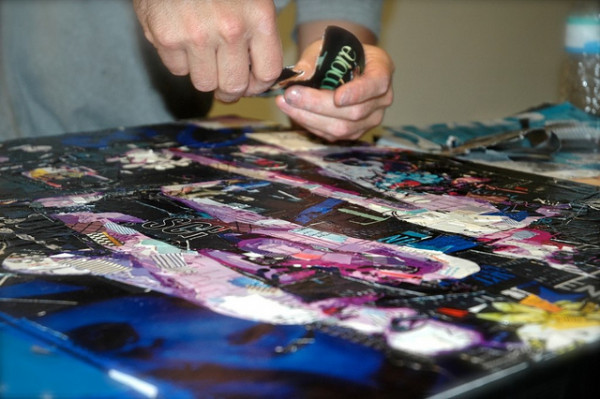
 Other artists continue to reinvent cast-offs with poetic flair. Derek Gores forms elegant collages using scraps of magazines and packaging. Jane Perkins recreates famous images from buttons, beads and toy fragments. Erika Iris Simmons uses unspooled cassette and VHS tape to craft portraits of musicians, letting the material echo the music it once carried. Even beach detritus finds new life in the playful scenes created by Florida duo TC Trash Art, whose daily shoreline finds become brief but charming compositions before being responsibly recycled.
 Seeing Junk in a New Light
Together, these artists reveal the deeper purpose of eco-art. Beyond resourcefulness, beyond ingenuity, the movement embodies transformation—of materials, of perspectives, of possibilities. Trash becomes a vessel for storytelling rather than a symbol of despair. A broken object, reimagined with care, suggests that renewal is always possible.
Eco-art’s greatest impact may lie in the subtle shift it inspires in our everyday habits. After seeing bottle caps stitched into shimmering tapestries or old electronics reborn as intricate sculptures, it becomes harder to view discarded objects as meaningless. A worn-out shirt or empty bottle may instead prompt a moment of curiosity, a recognition of potential.
Across galleries, public spaces and coastlines, eco-artists show that creativity itself is a renewable resource. They challenge us to reconsider the value of the materials around us and to imagine a future where transformation—rather than waste—is the prevailing narrative. Turning trash into treasure is not simply an artistic gesture; it is a vision for a greener, more imaginative, and more hopeful world.
By Emilia Novak
From Waste to Art: The Rise of Eco-Art
Imagine walking into a gallery and spotting a shimmering sea turtle sculpture. Its shell gleams in greens and golds—until you come closer and realize it is crafted entirely from discarded circuit boards and wires. This surprising encounter captures the essence of eco-art, a creative movement in which artists transform the cast-offs of modern society into works that provoke thought and spark delight. In a world increasingly concerned with environmental impact, these artists look to dumps, shorelines, scrapyards and e-waste piles for materials, revealing unexpected beauty in what we usually overlook.
Repurposing discarded objects for art is not new—20th-century innovators like Louise Nevelson built immersive wooden assemblages from urban debris—but today’s eco-artists approach the practice with heightened urgency. They are responding to global issues of waste and overconsumption, yet their tone is often hopeful rather than alarmist. Through imagination and storytelling, they offer a fresh way to consider environmental issues: not as burdens but as opportunities for reinvention.
Circuit Boards and Electronic Trash as Art
Few artists embody this spirit more vividly than Steven Rodrig, who turns to e-waste as his palette. With a background in structural mechanics, Rodrig collects obsolete computer parts—motherboards, wires, fried circuit boards—and reshapes them into sculptural organisms. His 2010 work Sea Turtle Searching for Deep Data, made entirely from scrapped PCBs, required custom tools to bend the stiff material into organic curves. The result is a creature that feels both technological and alive, prompting viewers to reflect on the life cycle of gadgets we replace without thinking.
London artist Nick Gentry also explores the remnants of outdated technology, but through portraiture. He collects floppy disks, film negatives and VHS tapes, arranging them as the textured base for his painted faces. Labels, scratches and notes etched into the disks appear beneath the paint, turning each portrait into a meditation on memory, obsolescence and the pace of technological change.
Brazilian artist Vik Muniz pushes this dialogue further. In the acclaimed project Waste Land, he collaborated with waste pickers at Rio’s Jardim Gramacho landfill, arranging recyclables into large-scale portraits photographed from above. When the resulting works sold at auction, Muniz donated the proceeds to the workers who helped create them. Through both imagery and action, he shows how discarded materials can become tools for social and environmental awareness.
Fashioning Discarded Clothes into Statements
Textile waste—an enormous byproduct of fast fashion—has become a powerful medium for eco-art. The Miami-based duo Guerra de la Paz creates exuberant installations from mountains of discarded clothes. Their piece Indochine rises as a vibrant mushroom cloud of shirts, pants and dresses, transforming forgotten garments into an explosion of color and form. These playful yet pointed works challenge our casual relationship with clothing, questioning why we throw away so much that still holds value.
This lineage echoes the innovations of Louise Nevelson, who used abandoned wood to build sculptural environments. Today’s textile artists expand this tradition: some weave plastic bags into tapestries, others stitch worn denim into contemporary quilts. In all cases, discarded fibers become repositories of stories—past lives woven into new meaning.
Monumental Sculptures from Scrap Metal
Some eco-artists work on a monumental scale, using scrap metal as their medium. Indian artist Subodh Gupta is famous for transforming everyday stainless steel kitchenware—pots, pans, buckets and tiffin boxes—into massive installations. His 26-ton sculpture Line of Control assembles thousands of utensils into the shape of a nuclear mushroom cloud, juxtaposing domestic familiarity with geopolitical dread. Gupta’s work highlights how the ordinary objects of daily life can become symbols of larger cultural tensions.
Playful Reimaginings of Everyday Junk
Not all eco-art is solemn. Belgian sculptor William Sweetlove approaches sustainability with humor, crafting oversized animals from recycled plastics. His neon-blue snails and brightly colored dogs, often wearing boots or carrying water bottles, charm viewers with playful absurdity while hinting at a future shaped by climate change. Sweetlove’s work shows how ecological messaging can be inviting rather than intimidating.
Together, these artists reveal the deeper purpose of eco-art. Beyond resourcefulness, beyond ingenuity, the movement embodies transformation—of materials, of perspectives, of possibilities. Trash becomes a vessel for storytelling rather than a symbol of despair. A broken object, reimagined with care, suggests that renewal is always possible.
Eco-art’s greatest impact may lie in the subtle shift it inspires in our everyday habits. After seeing bottle caps stitched into shimmering tapestries or old electronics reborn as intricate sculptures, it becomes harder to view discarded objects as meaningless. A worn-out shirt or empty bottle may instead prompt a moment of curiosity, a recognition of potential.
Across galleries, public spaces and coastlines, eco-artists show that creativity itself is a renewable resource. They challenge us to reconsider the value of the materials around us and to imagine a future where transformation—rather than waste—is the prevailing narrative. Turning trash into treasure is not simply an artistic gesture; it is a vision for a greener, more imaginative, and more hopeful world.


Related Articles

Popular, Collecting - September 26, 2023
How Will Art Develop in the Future?
Explore the future of art with insights on technology, eco-conscious practices, global influences, and evolving creative trends. Discover what’s next by 2030. Read More

Related Artworks You Might Like

William Sweetlove
Cloned Krocky With Scarf, 2009
Sculpture / Object
Resin
EUR 3,000

William Sweetlove
Cloned Pistachio Dog With Plastic Boots, 2008
Sculpture / Object
Resin
EUR 2,500

Otto Piene
Zyklop Rot, 1984
Limited Edition Print
Mixed Media
EUR 2,400