What is digital art?
Digital art refers to art which is created using digital technology. It can be generated by computer, drawn or scanned with a tablet using a mouse. Video may be downloaded to computers so artists can manipulate images filmed with a video camera.
Show All
- Show All
- Established
- Discoveries
Show All
ARTWORKS RELATED TO DIGITAL ART

Julian Opie
Dancing figure 1, 2023
Digital Art
Mixed Media
USD 5,400

Julian Opie
Dancing figure 2, 2023
Digital Art
Mixed Media
USD 5,400

Julian Opie
Dancing figure 5, 2023
Digital Art
Mixed Media
USD 5,400

Julian Opie
Walk, 2009
Digital Art
Mixed Media
USD 5,750

Julian Opie
View from my bedroom window, 2007
Digital Art
Video art
Currently Not Available

Yaacov Agam
Tactile painting, 2013
Digital Art
Mixed Media
EUR 3,000

Gary Hill
Commentary , 1980
Digital Art
Video art
EUR 3,000

Gary Hill
Figuring Grounds, 1985
Digital Art
Video art
EUR 900
Related Articles

Art Movements - August 05, 2024
8 Key Movements in the World of Digital Art
Discover 8 pivotal movements in digital art! From pixel art to VR and AR innovations, explore how technology is reshaping creativity and expression. Read More

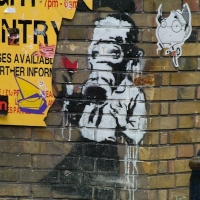
Art Intervention refers to art created with the intention of interacting with an existing situation, structure, artwork, audience, or institution. This form of art gained popularity in the 1960s as artists sought to provoke change within political and social contexts. The concept of Artist-in-Residence programs was influenced by the ideas and practices of this movement.
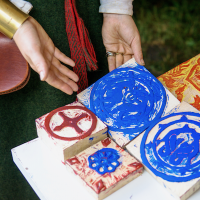
Woodblock printing is a technique that uses a carved wooden surface to create an image on materials such as paper or cloth. Ink or paint is applied thinly to the carved surface, which is then pressed against the material to transfer the image. This method has been historically significant in various cultures for producing prints and textiles.