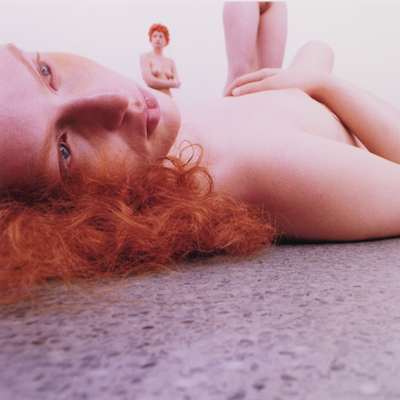
What is a C-print?
A C-type print, also known as a chromogenic print, is a photographic print made from a color negative or slide. The print is created on chromogenic paper, which contains three emulsion layers, each sensitized to a different primary color. After exposure, the paper is processed in a series of chemical baths, where each layer reacts to the chemicals to produce the final image. C-type prints are known for their rich color depth and are widely used in fine art and commercial photography.
Show All
- Show All
- Established
- Discoveries
A,B,C
ARTWORKS RELATED TO C-PRINT

Thomas Ruff
phg.s.01, 2012-2020
Photography
C-Print
EUR 1,350

Nan Goldin
Desert at Night, Aswan, Egypt, 2003
Photography
C-Print
GBP 2,200

David Hockney
Still Life with Hats, 1973
Photography
C-Print
GBP 10,200
Nan Goldin
Suzanne With Mona Lisa, Mexico City 1981, 2025
Photography
C-Print
GBP 3,000
Nan Goldin
Mod Kid With Dog, London 1978, 2025
Photography
C-Print
GBP 1,800
Nan Goldin
Triptyk, Zingaro Equestrian Theater, Paris, 2004, 2025
Photography
C-Print
GBP 5,900
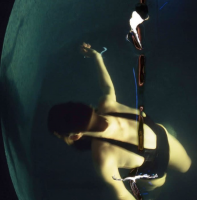
Nan Goldin
Sunny at the spa, distortion. L’Hotel de Paris, 2010/2020
Photography
C-Print
EUR 1,100
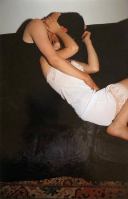
Nan Goldin
Swan-like Embrace, Paris, 2001
Photography
C-Print
GBP 6,950
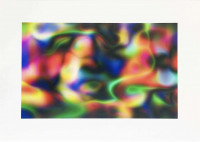
Thomas Ruff
Substrat 21 III, 2003-2019
Photography
C-Print
EUR 1,750
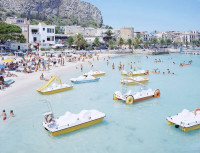
Massimo Vitali
Mondello Paddle Boats, 2007
Photography
C-Print
EUR 20,000

David Shrigley
I Am Deep In Thought, 2003
Limited Edition Print
C-Print
EUR 1,500

Gerhard Richter
Bouquet, 2014
Limited Edition Print
C-Print
Inquire For Price

Nobuyoshi Araki
Bondage Girl, 1997
Photography
C-Print
Inquire For Price

Andreas Gursky
Fotograf, Düsseldorf, 1988
Photography
C-Print
Artwork On Hold

Kiki Smith
Untitled (Head of Kuan Yin), 2002
Photography
C-Print
EUR 7,000

Candida Hofer
Historisch-Geographischer Schul-Atlas, 2009
Photography
C-Print
EUR 1,350
Related Articles
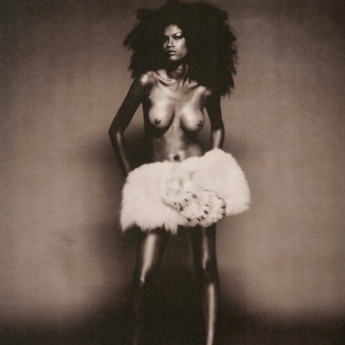
Collecting - March 27, 2025
Collecting Photography: A Beginner’s Guide to Fine Art Photos
Learn how to collect fine art photography—from print types and editioning to care tips and top photographers like Adams, Sherman, and Gursky. Read More
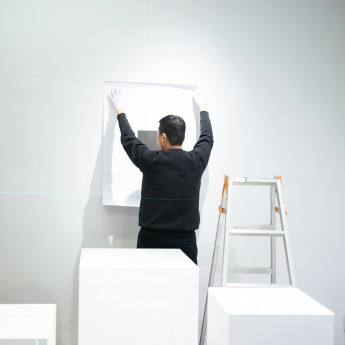

Readymade is the term coined by French artist Marcel Duchamp to describe artworks created from manufactured objects. Duchamp selected ordinary, functional items that he felt had visual indifference, turning them into art simply by choosing and presenting them in a new context. This concept challenged traditional notions of art and continues to influence artists who adopt similar approaches today.
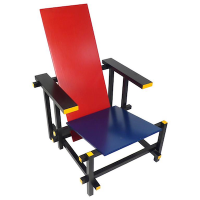
De Stijl, meaning The Style, was a group of Dutch artists who created abstract art based on strict adherence to vertical and horizontal geometry. The group was founded by Piet Mondrian and Theo van Doesburg in 1917. Mondrian eventually left De Stijl when Van Doesburg began incorporating diagonal geometry into his work, which Mondrian felt deviated from the group's principles.