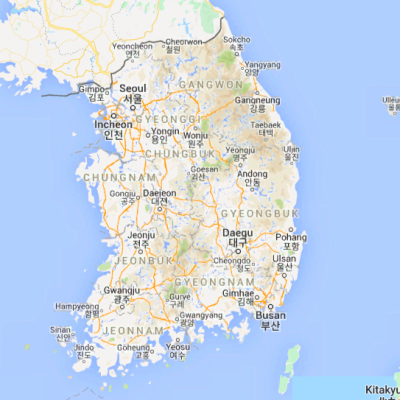
South Korea
South Korea boasts a thriving contemporary art scene that interweaves traditional aesthetics with modern innovation. Esteemed institutions like the National Museum of Modern and Contemporary Art in Seoul offer a platform for thought-provoking exhibitions. Renowned Korean artists like Do Ho Suh and Lee Bul are shaping the landscape of contemporary art. Korea's vibrant art culture is also showcased in the annual Seoul Mediacity Biennale. Dive into the mesmerizing world of Korean contemporary art on Composition Gallery's website.
Show All
- Show All
- Established
- Discoveries
Show All
ARTWORKS RELATED TO SOUTH KOREA

Lee Ufan
Lee UFAN | Dalla Memoria Di Una Citta #3, 1989
Limited Edition Print
Lithograph
Currently Not Available
Related Articles

Art Movements - November 15, 2022
Transavanguardia: an Italian Renaissance, Beyond Neo Expressionism
Explore the Transavanguardia movement, an Italian Neo-Expressionist renaissance. Discover its bold artists and their revival of tradition through modern innovation. Read More
The Bay Area Figurative Movement, which also goes by the names Bay Area Figurative School, Bay Area Figurative Art, or Bay Area Figuration, came to existence in San-Francisco Bay Area. This was in the mid-20th century, when a group of artists from the area stopped working on the then popular Abstract Expressionism for a preference to figuration in painting. The movement lasted a total of two decades during the 1950's and 1960's.

Superflat is an art movement founded by Takashi Murakami, heavily influenced by anime and manga. The term Superflat refers to the flattened forms found in Japanese animation, graphic art, fine arts, and pop culture, as well as the perceived superficiality of Japanese culture. Murakami's movement, which he self-proclaimed, is considered postmodern and critiques both the depth and shallowness of contemporary Japanese society. Superflat has been highly influential in bridging the gap between high art and popular culture.