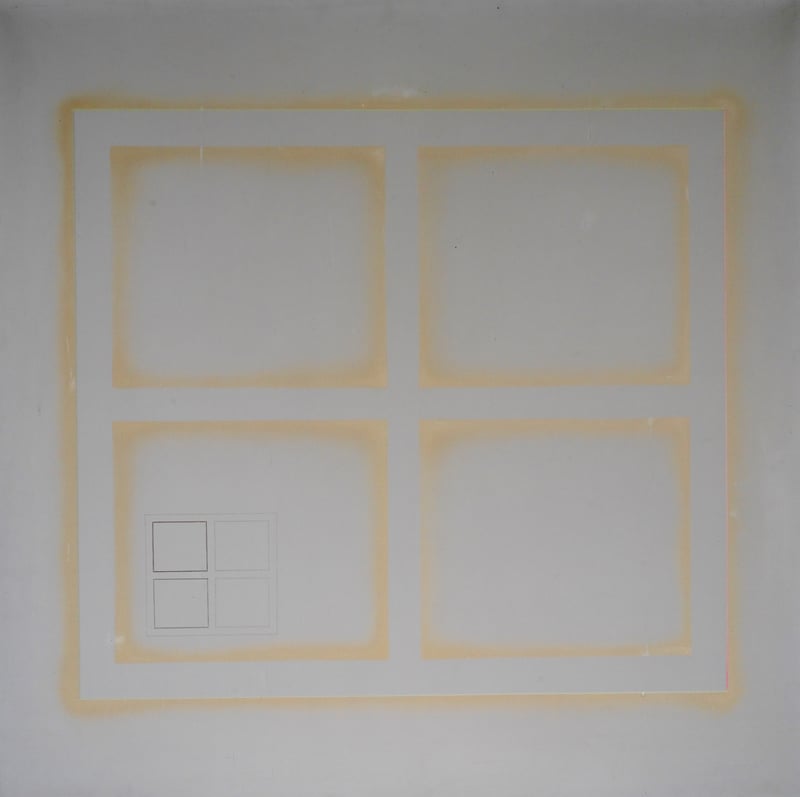
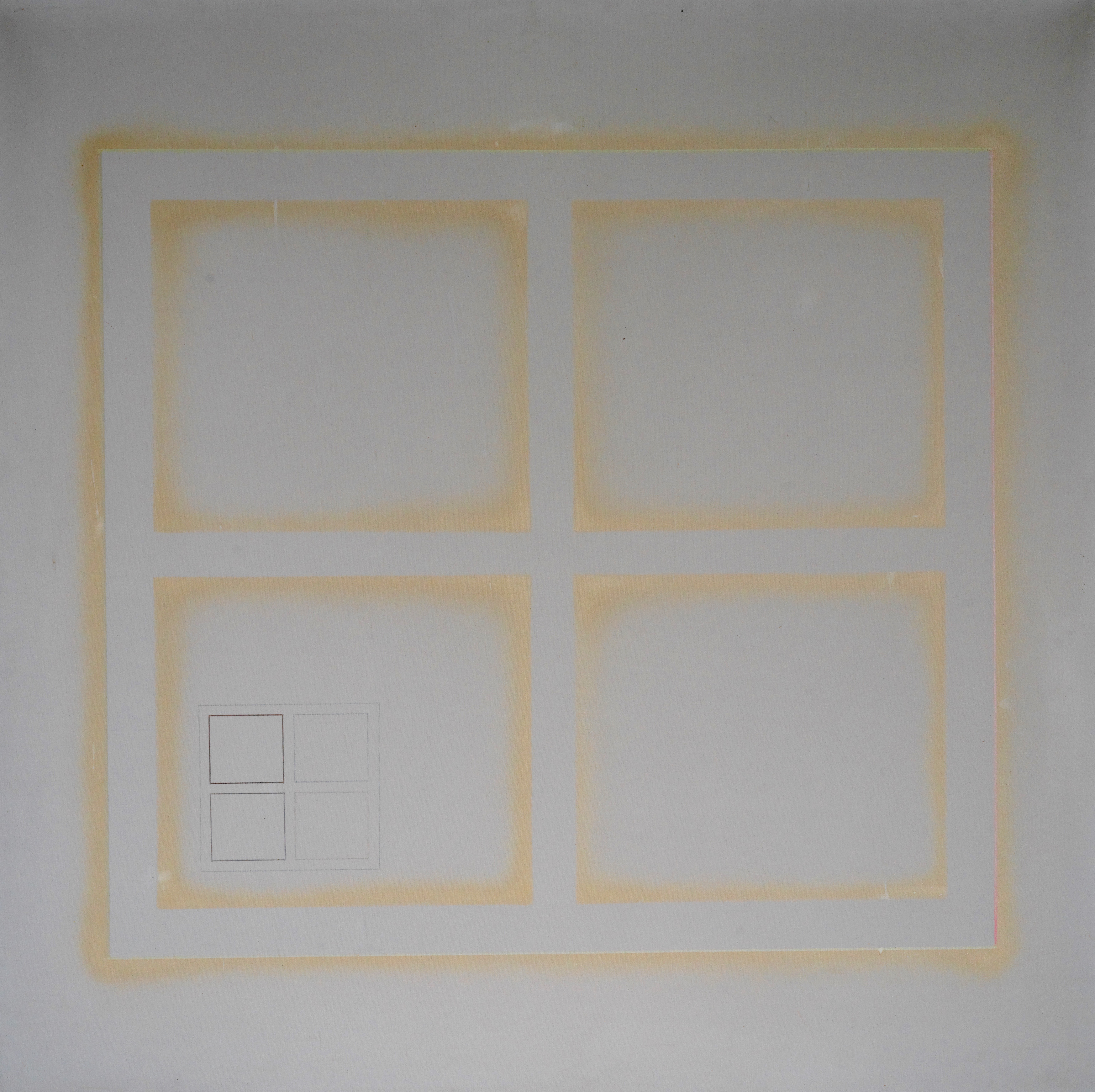
Four Dimensions Exist in One Dimension by Shusaku Arakawa, created in 1965, is a contemplative acrylic painting that explores geometric abstraction through simplicity and subtle gradients. The canvas is dominated by a four-part grid, softened with faint yellow edges, suggesting the blending of boundaries or dimensions. Within one quadrant, a smaller, more intricate grid emphasizes a layered concept of space and multiplicity, drawing the viewer’s attention to the relationship between parts and wholes. Arakawa’s approach evokes ideas of perception, spatial relationships, and the philosophy of dimensional existence, inviting introspection on how we perceive boundaries and dimensions.
Artwork Copyright © Shusaku ArakawaShusaku Arakawa (Japan, 1936–2010) was a visionary artist and architect whose work challenged conventional perceptions of space and existence. Co-creator of 'reversible destiny' architecture, he blended conceptual art with experimental design to provoke thought about life and mortality. Arakawa’s groundbreaking works, often in collaboration with Madeline Gins, continue to influence contemporary art and architecture.
Artwork Copyright © Shusaku ArakawaFour dimensions exist in one dimension, 1965
Form
Medium
Size
- Inches
- Centimeters
Edition
Price
- Authenticity Guaranteed
- Insured Shipping
- Online Since 2005
●Inventory 9842
●Signed
●Comes with gallery invoice and certificate
●Any questions?
Four Dimensions Exist in One Dimension by Shusaku Arakawa, created in 1965, is a contemplative acrylic painting that explores geometric abstraction through simplicity and subtle gradients. The canvas is dominated by a four-part grid, softened with faint yellow edges, suggesting the blending of boundaries or dimensions. Within one quadrant, a smaller, more intricate grid emphasizes a layered concept of space and multiplicity, drawing the viewer’s attention to the relationship between parts and wholes. Arakawa’s approach evokes ideas of perception, spatial relationships, and the philosophy of dimensional existence, inviting introspection on how we perceive boundaries and dimensions.
Artwork Copyright © Shusaku ArakawaShusaku Arakawa (Japan, 1936–2010) was a visionary artist and architect whose work challenged conventional perceptions of space and existence. Co-creator of 'reversible destiny' architecture, he blended conceptual art with experimental design to provoke thought about life and mortality. Arakawa’s groundbreaking works, often in collaboration with Madeline Gins, continue to influence contemporary art and architecture.
Artwork Copyright © Shusaku Arakawa- Recently Added
- Price (Low-High)
- Price (High-Low)
- Year (Low-High)
- Year (High-Low)
Shusaku Arakawa
Four dimensions exist in one dimension, 1965
Painting
Acrylic on canvas
USD 105,000 – 130,000
Shusaku Arakawa
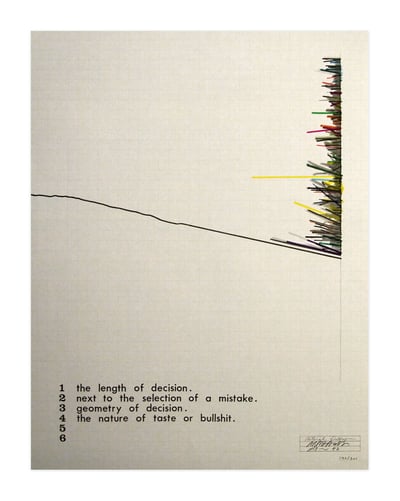
Natural History, 1969
Limited Edition Print
Serigraph
Currently Not Available
Related Artists

Related Articles
Popular, Art Movements - January 24, 2025
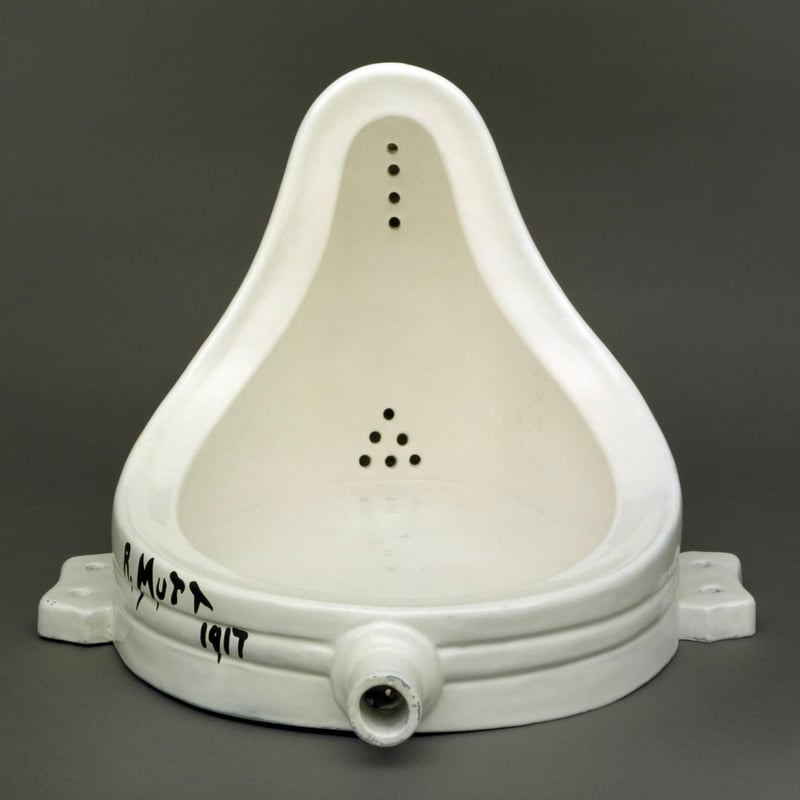
Exploring Dadaism: Art in the Absurd
Discover Dadaism, the radical 20th-century art movement that challenged norms with absurdity and defiance. Explore its origins, techniques, and lasting legacy.Read More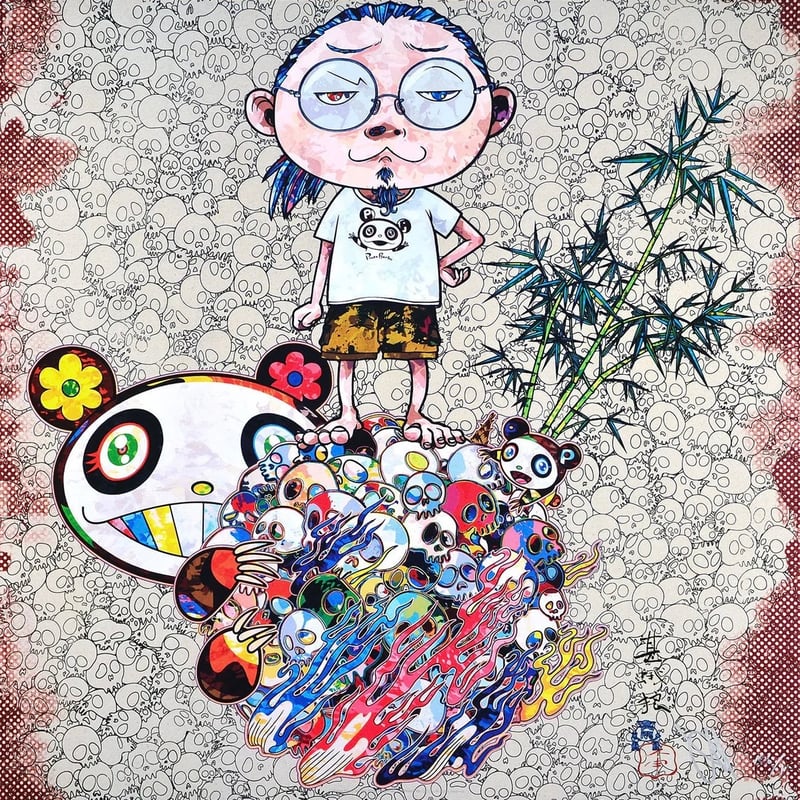
Artists, Art Movements - October 5, 2023
Superflat: A Modern Mirror to Traditional Japanese Art
Explore the Superflat art movement and its blend of traditional Japanese aesthetics with modern culture. Discover Murakami’s iconic works and their impact.Read More
Popular, News, Artists, Collecting - August 12, 2026
In Minor Keys: Finding Intimacy and Identity at the 61st Venice Biennale — and in Your Collection
Explore how Koyo Kouoh’s 61st Venice Biennale vision, In Minor Keys, is shifting contemporary collecting toward quiet introspection, memory, and personal identity.Read More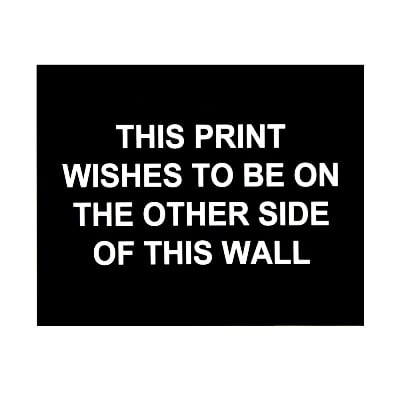
Artwork by Laure Prouvost
What is Lettrism?
Lettrism is an art form that uses letters, words, and symbols to create artwork. The movement was established in Paris in the 1940s and later gained popularity in the 1950s in America. Lettrisme is the French spelling of the movement's name, derived from the French word for letter.

Shusaku Arakawa
Four dimensions exist in one dimension, 1965
127 x 127 cm


