
Details
Artist
Styles
Mirrorstage for Merce From Merce Cunningham Dance Company: 50th Anniversary - Digital Color Coupler Print - Signed, numbered and dated // Olafur Eliasson’s Mirrorstage for Merce (2004) is a digital color coupler print that captures the essence of nature and reflection, a recurring theme in his work. The image shows a small, clear pond nestled within a rocky landscape, perfectly mirroring the sky above. The clouds and blue hues of the sky appear as an inverted reflection within the water, creating a visual interplay between reality and illusion. The composition draws attention to the natural elements and their interaction, emphasizing Eliasson’s interest in perception and the environment. This limited edition print is signed, numbered, and dated, commemorating the 50th Anniversary of the Merce Cunningham Dance Company.
Mirrorstage for Merce, 2004
form
Medium
Size
76.2 x 91.4 cm
- Inches
- Centimeters
Edition
Price
Details
Artist
Styles
Mirrorstage for Merce From Merce Cunningham Dance Company: 50th Anniversary - Digital Color Coupler Print - Signed, numbered and dated // Olafur Eliasson’s Mirrorstage for Merce (2004) is a digital color coupler print that captures the essence of nature and reflection, a recurring theme in his work. The image shows a small, clear pond nestled within a rocky landscape, perfectly mirroring the sky above. The clouds and blue hues of the sky appear as an inverted reflection within the water, creating a visual interplay between reality and illusion. The composition draws attention to the natural elements and their interaction, emphasizing Eliasson’s interest in perception and the environment. This limited edition print is signed, numbered, and dated, commemorating the 50th Anniversary of the Merce Cunningham Dance Company.
- Recently Added
- Price (low-high )
- Price (high-low )
- Year (low-high )
- Year (high-low )

Olafur Eliasson
Studioblick, 2013
Sculpture / Object
Mixed Media
Currently Not Available
Related Artists


Related Articles

Popular, Art Movements - November 25, 2025
Trash to Treasure: Eco-Art and the Beauty of Recycled Materials
Discover how artists turn trash into treasure—transforming e-waste, scrap, and textiles into powerful, sustainable eco-art with global impact. Read More

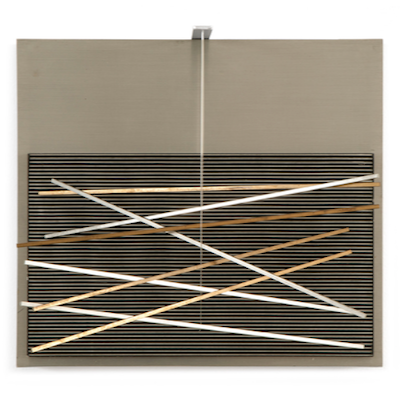
What is kinetic art?
Kinetic art is an international movement that emerged in the 1920s and gained prominence in the 1960s, referring to art that involves both apparent and real motion. It encompasses any medium that includes movement, either relying on actual motion for its effect or being perceived as moving by the viewer. Early examples include canvas paintings designed to create optical illusions of movement. Today, kinetic art often refers to three-dimensional figures and sculptures, such as those operated by machines or those that move naturally. The movement covers a variety of styles and techniques that frequently overlap.