Details
Artist
Styles
Archival pigment print on etching paper. Stamped by artist’s estate.// Double Portrait exemplifies Lucian Freud's sustained investigation into the psychology of human relationship and the specificity of physiognomic documentation. This 1985 archival print, produced in an edition of one hundred ninety-five, demonstrates Freud's penetrating vision of portraiture as existential inquiry. The work stands as a testament to Freud's conviction that the human face remains the ultimate subject for artistic investigation, yielding profound truths about vulnerability, intimacy, and the irreducible specificity of individual being.
Double Portrait, 1985
form
Medium
Size
46.4 x 50 cm
- Inches
- Centimeters
Edition
Range
- USD
- EUR
- GBP
Details
Artist
Styles
Archival pigment print on etching paper. Stamped by artist’s estate.// Double Portrait exemplifies Lucian Freud's sustained investigation into the psychology of human relationship and the specificity of physiognomic documentation. This 1985 archival print, produced in an edition of one hundred ninety-five, demonstrates Freud's penetrating vision of portraiture as existential inquiry. The work stands as a testament to Freud's conviction that the human face remains the ultimate subject for artistic investigation, yielding profound truths about vulnerability, intimacy, and the irreducible specificity of individual being.
- Recently Added
- Price (low-high )
- Price (high-low )
- Year (low-high )
- Year (high-low )

Lucian Freud
Reflection (Self Portrait), 1983
Limited Edition Print
Mixed Media
GBP 5,000 - 6,500

Lucian Freud
Double Portrait, 1985
Limited Edition Print
Archival Print
GBP 5,000 - 6,500

Lucian Freud
Girl With A Kitten, 1947
Limited Edition Print
Archival Print
GBP 5,000 - 6,500
Lucian Freud
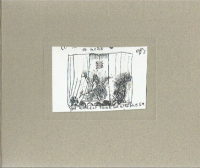
Encore, ca. 1949
Limited Edition Print
Offset Print
Inquire For Price

Lucian Freud
Before The Fourth, 2004
Limited Edition Print
Etching
EUR 27,000

Lucian Freud
Girl Holding Her Foot, 1985
Limited Edition Print
Etching
Currently Not Available
Related Artists


Related Articles
Popular, Artists - October 10, 2025
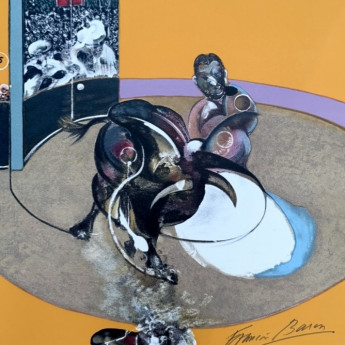
Francis Bacon: Distorted Realities and Raw Emotion
Explore Francis Bacon’s raw, haunting paintings—distorted figures that reveal deep truths about trauma, desire, and the human condition. Read More


What is Surrealism?
Surrealism began in the 1920s as an art and literary movement with the goal of revealing the unconscious mind and unleashing the imagination by exploring unusual and dream-like imagery. Influenced by Sigmund Freud’s theories of psychoanalysis, Surrealist artists and writers sought to bring the unconscious into rational life, blurring the lines between reality and dreams. The movement aimed to challenge conventional perceptions and express the irrational aspects of the human experience.