
Details
Artist
Styles
Mixed Media painting on paper; Signed and Dated. Rainbow Rembrandt III (1977) by Larry Rivers is a mixed media painting on paper measuring 30 x 34.5 inches. This vibrant, layered composition reinterprets a classical equestrian portrait—likely referencing Rembrandt or art historical conventions—through a contemporary lens. Rivers overlays the figure and horse with angled bands of color, breaking the image into spectral segments and disrupting its unity. The lines are annotated with color codes at the top, reinforcing a conceptual mapping of the composition. Blending figuration with abstraction, Rivers merges historical reverence with modern dissection, characteristic of his postmodern approach to image-making. Signed and dated in the lower right.
Rainbow Rembrandt III, 1977
form
Medium
Size
76.2 x 87.6 cm
- Inches
- Centimeters
Edition
Price
Details
Artist
Styles
Mixed Media painting on paper; Signed and Dated. Rainbow Rembrandt III (1977) by Larry Rivers is a mixed media painting on paper measuring 30 x 34.5 inches. This vibrant, layered composition reinterprets a classical equestrian portrait—likely referencing Rembrandt or art historical conventions—through a contemporary lens. Rivers overlays the figure and horse with angled bands of color, breaking the image into spectral segments and disrupting its unity. The lines are annotated with color codes at the top, reinforcing a conceptual mapping of the composition. Blending figuration with abstraction, Rivers merges historical reverence with modern dissection, characteristic of his postmodern approach to image-making. Signed and dated in the lower right.
- Recently Added
- Price (low-high )
- Price (high-low )
- Year (low-high )
- Year (high-low )

Larry Rivers
Patriotic Stamps, 1976
Limited Edition Print
Mixed Media
Inquire For Price

Larry Rivers
Untitled From The New York Collection For Stockholm, 1973
Limited Edition Print
Mixed Media
GBP 2,340

Larry Rivers
Postponderance, 1960
Drawing / Watercolor
Charcoal
Inquire For Price

Larry Rivers
Untitled (King Of Clubs), 1967
Drawing / Watercolor
Mixed Media
Inquire For Price

Larry Rivers
Golden Tales, 1990
Limited Edition Print
Lithograph
Inquire For Price

Larry Rivers
Madame Butterfly, From Metropolitan Opera Fine Art I, 1978
Limited Edition Print
Mixed Media
USD 1,150

Larry Rivers
For Adults Only, 1971
Limited Edition Print
Offset Print
USD 7,200

Larry Rivers
Queen Of Clubs, 1960
Painting
Oil On Canvas
Inquire For Price

Larry Rivers
Webster, 1978
Drawing / Watercolor
Collage
USD 7,200

Larry Rivers
Fred And Ginger, 1999
Limited Edition Print
Mixed Media
USD 11,400

Larry Rivers
Untitled (Fragmented Portrait), 1982
Limited Edition Print
Silkscreen
EUR 2,850

Larry Rivers
Early Chaplin, 1991
Limited Edition Print
Screen-print
USD 1,500

Larry Rivers
House Of Cards - Blue, 1990
Limited Edition Print
Screen-print
USD 1,550

Larry Rivers
Sky Music Over Carnegie Hall, 1990
Limited Edition Print
Screen-print
USD 1,875

Larry Rivers
Make Believe Ballroom, 1989
Limited Edition Print
Mixed Media
Currently Not Available
Related Artists


Related Articles
Art Movements - November 28, 2022
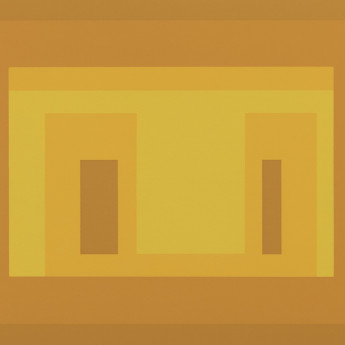
Shadow Play and Geometry: The Optical Phenomena of Hard Edge Painting
Discover the world of Hard Edge Painting, where geometry and optical effects meet. Explore the movement's pioneers and its influence on abstraction. Read More

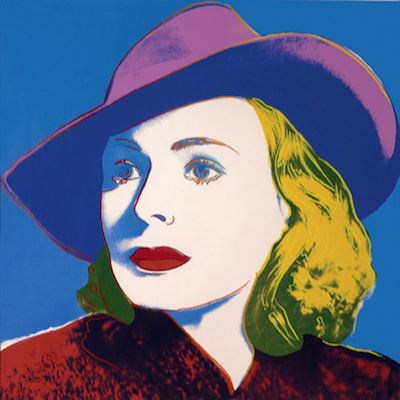
What is pop-art?
Pop Art is an art movement that began in Britain in 1955 and in the late 1950s in the U.S. It challenged traditional fine arts by incorporating imagery from popular culture, such as news, advertising, and comic books. Pop Art often isolates and recontextualizes materials, combining them with unrelated elements. The movement is more about the attitudes and ideas that inspired it than the specific art itself. Pop Art is seen as a reaction against the dominant ideas of Abstract Expressionism, bringing everyday consumer culture into the realm of fine art.