Details
Artist
Styles
Screen-print and hot stamping -Published by Noblet Serigraphie Inc. New York -Suite: Leo Castellis 90th Birthday -Hand Signed by the Artist // Joseph Kosuth’s Titled Quotation (for L.C.) is a limited edition screen-print created in 1997, combining text and conceptual art to engage the viewer in philosophical reflection. The piece features the phrase “One only finishes the finished work,” attributed to the 19th-century French artist Jean-Auguste-Dominique Ingres, rendered in metallic silver lettering on a dark background. The stark contrast emphasizes the text's contemplative tone, encouraging a deeper exploration of the creative process and the notion of completion in art. This work, produced in honor of art dealer Leo Castelli’s 90th birthday, exemplifies Kosuth’s focus on language as a central element in visual art.
Titled Quotation (for L.C.), 1997
form
Medium
Size
94 x 68.6 cm
- Inches
- Centimeters
Edition
Price
Details
Artist
Styles
Screen-print and hot stamping -Published by Noblet Serigraphie Inc. New York -Suite: Leo Castellis 90th Birthday -Hand Signed by the Artist // Joseph Kosuth’s Titled Quotation (for L.C.) is a limited edition screen-print created in 1997, combining text and conceptual art to engage the viewer in philosophical reflection. The piece features the phrase “One only finishes the finished work,” attributed to the 19th-century French artist Jean-Auguste-Dominique Ingres, rendered in metallic silver lettering on a dark background. The stark contrast emphasizes the text's contemplative tone, encouraging a deeper exploration of the creative process and the notion of completion in art. This work, produced in honor of art dealer Leo Castelli’s 90th birthday, exemplifies Kosuth’s focus on language as a central element in visual art.
- Recently Added
- Price (low-high )
- Price (high-low )
- Year (low-high )
- Year (high-low )

Joseph Kosuth
Titled Quotation (for L.C.) From The Portfolio Of Leo Castelli's 90th Birthday, 1997
Limited Edition Print
Screen-print
USD 1,650

Joseph Kosuth
El Mapa De Miranda Y La Disciplina De Nietzsche, 2004
Sculpture / Object
Engraving
USD 6,000

Joseph Kosuth
Wittgenstein's Colour, 1989
Sculpture / Object
Mixed Media
EUR 29,300

Joseph Kosuth
Titled Quotation (for L.C.), 1997
Limited Edition Print
Screen-print
Currently Not Available
Related Artists


Related Articles

Art Movements - May 05, 2022
The Dusseldorf School and the birth of modern photography
Discover the Düsseldorf School of Photography, its roots in objectivity, and its legacy in modern art. Explore works by Gursky, Höfer, and the Bechers. Read More

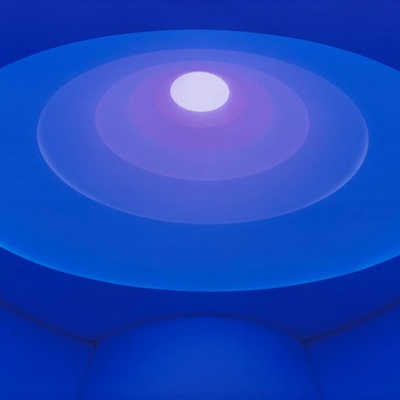
What is ‘light and space’?
The Light and Space Movement refers to loosely affiliated art movements connected to minimalism, geometric abstraction, and op art that originated in Southern California in the 1960s. Greatly influenced by artist John McLaughlin, these artists focused on sensory phenomena such as light, perception, and space as central elements of their work. They also incorporated cutting-edge technologies from the aerospace and engineering industries to develop light-filled and sensuous objects, creating immersive experiences that emphasize the viewer's perception.