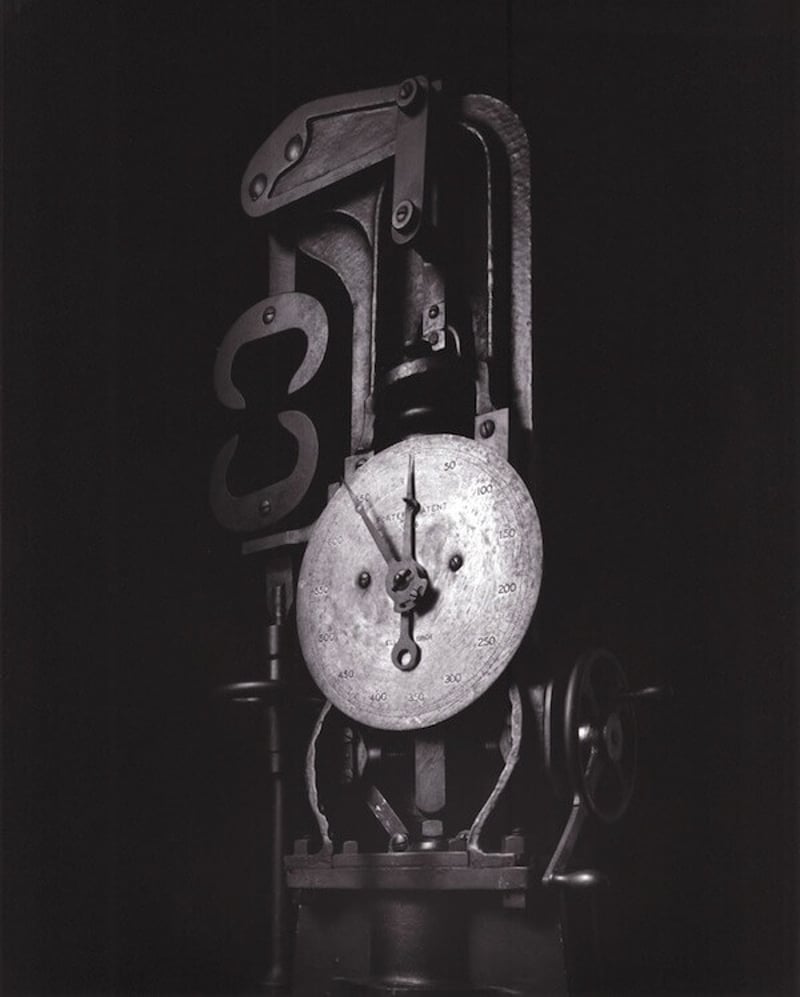
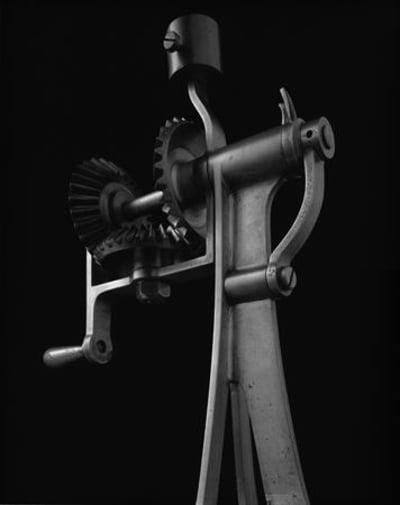
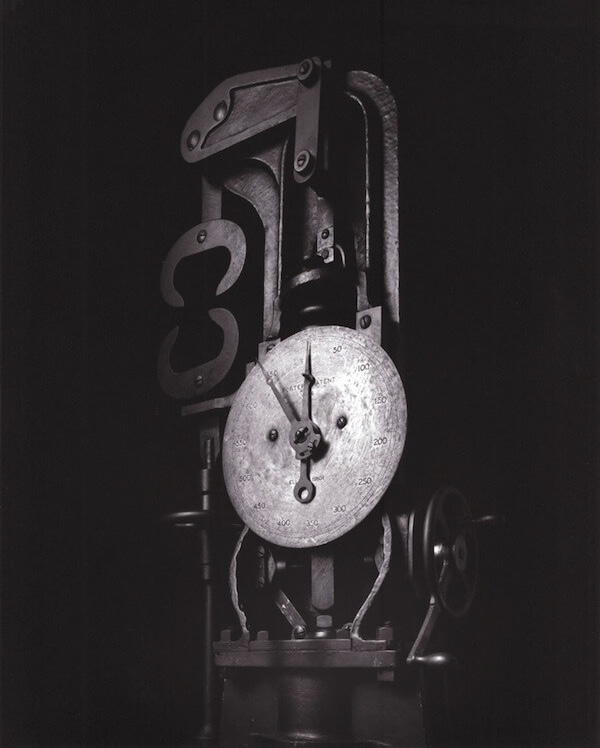
Mechanical Form 0046, Material Testing Machine (2005) by Hiroshi Sugimoto is a gelatin silver print measuring 25 × 20 cm, signed, numbered, and produced in an edition of 25. Part of Sugimoto’s Mechanical Forms series, the photograph captures a vintage material testing machine with striking clarity and dramatic lighting. The metallic dials, gears, and levers emerge from the surrounding darkness, elevating an industrial tool into an almost sculptural presence. Sugimoto’s work often transforms objects of science and technology into meditations on time, history, and the essence of form, bridging functional design and aesthetic contemplation.
Artwork Copyright © Hiroshi SugimotoHiroshi Sugimoto (Japan, 1948) is a celebrated photographer and multidisciplinary artist, renowned for his black-and-white series that explore time, memory, and perception. Iconic works include 'Seascapes,' capturing serene horizons, and 'Theaters,' long exposures of illuminated screens. His art bridges conceptual and minimalist traditions, with pieces held in top museums worldwide.
Artwork Copyright © Hiroshi SugimotoMechanical Form 0046, Material Testing Machine, 2005
Form
Medium
Size
- Inches
- Centimeters
Edition
Price
- USD
- EUR
- GBP
- CHF
- Authenticity Guaranteed
- Insured Shipping
- Online Since 2005
●Inventory 16180
●Signed
●Comes with gallery invoice and certificate
●Sell Us a Similar Artwork. Learn more.
Mechanical Form 0046, Material Testing Machine (2005) by Hiroshi Sugimoto is a gelatin silver print measuring 25 × 20 cm, signed, numbered, and produced in an edition of 25. Part of Sugimoto’s Mechanical Forms series, the photograph captures a vintage material testing machine with striking clarity and dramatic lighting. The metallic dials, gears, and levers emerge from the surrounding darkness, elevating an industrial tool into an almost sculptural presence. Sugimoto’s work often transforms objects of science and technology into meditations on time, history, and the essence of form, bridging functional design and aesthetic contemplation.
Artwork Copyright © Hiroshi SugimotoHiroshi Sugimoto (Japan, 1948) is a celebrated photographer and multidisciplinary artist, renowned for his black-and-white series that explore time, memory, and perception. Iconic works include 'Seascapes,' capturing serene horizons, and 'Theaters,' long exposures of illuminated screens. His art bridges conceptual and minimalist traditions, with pieces held in top museums worldwide.
Artwork Copyright © Hiroshi Sugimoto- Recently Added
- Price (Low-High)
- Price (High-Low)
- Year (Low-High)
- Year (High-Low)
Hiroshi Sugimoto
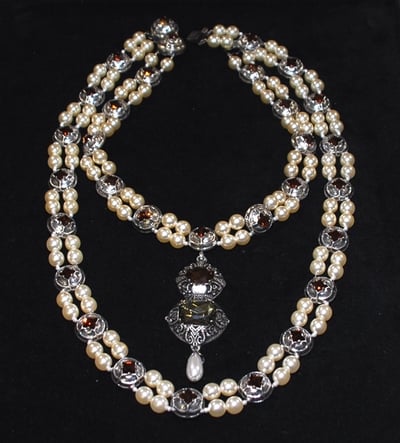
Necklace of Jane Seymour, 2000
Sculpture / Object
Mixed Media
EUR 1,100
Hiroshi Sugimoto
Mechanical Form 0046, Material Testing Machine, 2005
Photography
Gelatin Silver Print
EUR 12,250
Hiroshi Sugimoto
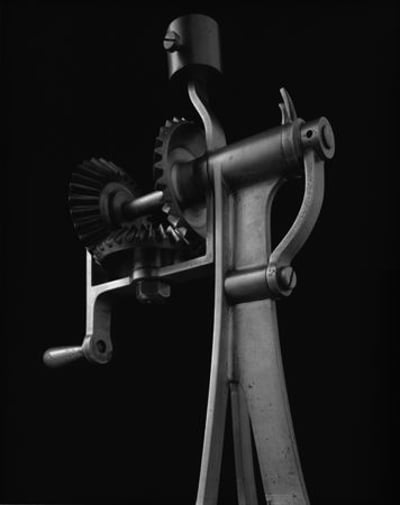
Differential bevel gear, 2004
Photography
Gelatin Silver Print
EUR 21,400
Hiroshi Sugimoto
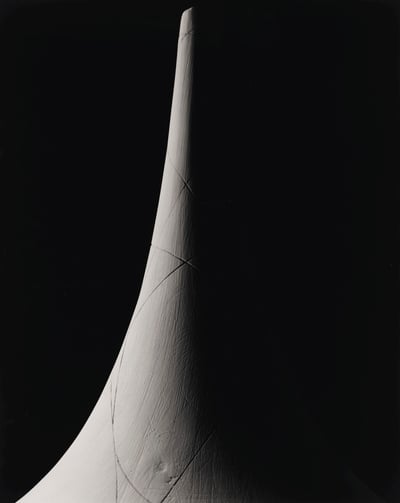
Surface of revolution with constant negative curvature, 2004
Photography
Gelatin Silver Print
EUR 21,400
Related Artists

Related Articles

Collecting - March 27, 2025
Collecting Photography: A Beginner’s Guide to Fine Art Photos
Learn how to collect fine art photography—from print types and editioning to care tips and top photographers like Adams, Sherman, and Gursky.Read More
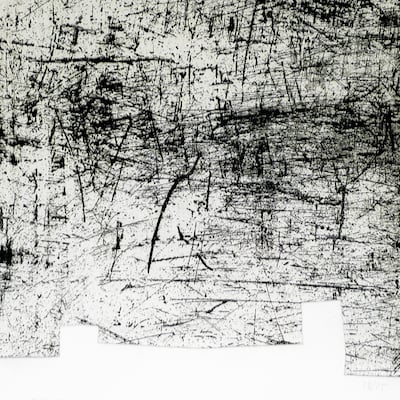
Artwork by Eduardo Chillida
What is abstract art?
Abstract art uses form, shape, line, and color to create a visual experience without attempting to represent external reality. The composition exists independently of the world's visual references, focusing on expressing ideas and emotions through non-representational means.
Hiroshi Sugimoto
Mechanical Form 0046, Material Testing Machine, 2005
25 x 20 cm


