Details
Artist
Styles
Original Lithograph on Paper - Hand signed and numbered by Moore in pencil // Fjord by Henry Moore, created in 1974, is a limited edition lithograph that captures the quiet, contemplative beauty of a landscape. The black-and-white composition consists of rich textures and intricate crosshatching that evoke the rugged terrain and reflective waters of a fjord. Moore's use of shading and line creates a sense of depth and contrast, suggesting the meeting of land and water. The minimalistic style is a departure from Moore’s well-known sculptures, yet it retains his mastery of form and structure. This lithograph conveys a serene and almost abstract interpretation of nature, reflecting Moore's deep appreciation for landscapes.
Details
Artist
Styles
Original Lithograph on Paper - Hand signed and numbered by Moore in pencil // Fjord by Henry Moore, created in 1974, is a limited edition lithograph that captures the quiet, contemplative beauty of a landscape. The black-and-white composition consists of rich textures and intricate crosshatching that evoke the rugged terrain and reflective waters of a fjord. Moore's use of shading and line creates a sense of depth and contrast, suggesting the meeting of land and water. The minimalistic style is a departure from Moore’s well-known sculptures, yet it retains his mastery of form and structure. This lithograph conveys a serene and almost abstract interpretation of nature, reflecting Moore's deep appreciation for landscapes.
- Recently Added
- Price (low-high )
- Price (high-low )
- Year (low-high )
- Year (high-low )

Henry Moore
Reclining Figure Pointed C. 543, 1979
Limited Edition Print
Lithograph
USD 6,790

Henry Moore
Album Internacional, 1973
Limited Edition Print
Lithograph
EUR 1,150

Henry Moore
Fjord, 1974
Limited Edition Print
Lithograph
Inquire For Price

Henry Moore
Elephant Skull (Plate A), 1969
Limited Edition Print
Etching And Aquatint
EUR 1,550

Henry Moore
Two Heads, 1973
Limited Edition Print
Lithograph
USD 1,100

Henry Moore
Head, 1975
Limited Edition Print
Lithograph
USD 1,100

Henry Moore
Reclining Figure With Red Stripes, 1973
Limited Edition Print
Lithograph
USD 1,350

Henry Moore
Girl Doing Homework II, 1974
Limited Edition Print
Etching
USD 3,700

Henry Moore
Two Women Seated, 1967
Limited Edition Print
Lithograph
USD 7,200

Henry Moore
Girl Seated At Desk IV, 1974
Limited Edition Print
Lithograph
USD 4,250

Henry Moore
Mother And Child XV, 1983
Limited Edition Print
Mixed Media
EUR 2,200

Henry Moore
Recling Mother And Child II, 1979
Limited Edition Print
Mixed Media
EUR 1,750

Henry Moore
Seated Figure IV - Reverse Lighting, 1974
Limited Edition Print
Lithograph
EUR 2,250

Henry Moore
Shipwreck II, 1973
Limited Edition Print
Lithograph
EUR 2,300

Henry Moore
Male Figure In Landscape C.470, 1977
Limited Edition Print
Lithograph
USD 4,860

Henry Moore
Ideas For Sculptures C. 365
Limited Edition Print
Lithograph
USD 3,650

Henry Moore
Group In Industrial Landscape C. 418, 1975
Limited Edition Print
Lithograph
USD 3,650

Henry Moore
Figures In A Forest, 1976
Limited Edition Print
Lithograph
EUR 1,650
Related Artists


Related Articles

Collecting - March 25, 2025
Understanding Editioned Sculptures: What Collectors Need to Know
Explore the value of editioned sculptures, from bronze to electric art. Learn how edition size, material, and artist impact collectability. Read More
What is late modernism?
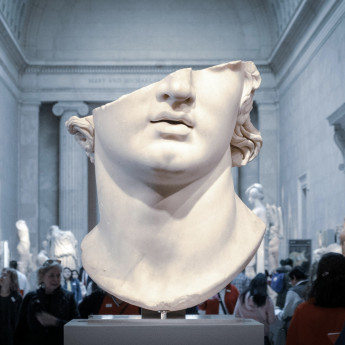
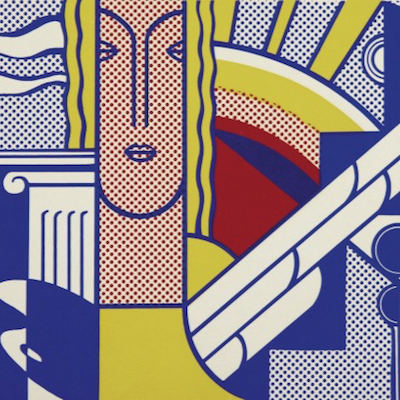
Late Modernism refers to the continuation and evolution of Modernist principles in art, architecture, and literature from the mid-20th century into the late 20th century. This movement maintains a focus on form, abstraction, and the rejection of traditional styles, but it often incorporates more complexity and ambiguity compared to early Modernism. Late Modernism explores themes such as alienation, identity, and the fragmentation of reality, reflecting the social and cultural shifts of the post-war period. It is seen in the works of architects like Louis Kahn and artists like Francis Bacon, who pushed the boundaries of Modernism while responding to the changing world around them.