
Details
Künstler
Stile
Bronze sculpture, incised with the artist's signature and numbered with foundry mark 'Arman bocquel Fd. Edition on 100' (on the base). 23¼ x 11 x 11in. (59 x 30 x 30cm.). - Executed in 2004, this work is numbered on an edition of one hundred plus ten HC plus twenty artist's proof, plus thirty (XXX). Literature: D. Durand-Ruel and M. Moreau, Catalogue Raisonné des Multiples 1, Geneva 2014, no. 86 (another from the edition illustrated).
La Fenice n. 1 (Phoenix), 2004
Form
Mittel
Größe
59 x 30 X 30 cm
- Inch
- Zentimeter
Edition
Preis
Details
Künstler
Stile
Bronze sculpture, incised with the artist's signature and numbered with foundry mark 'Arman bocquel Fd. Edition on 100' (on the base). 23¼ x 11 x 11in. (59 x 30 x 30cm.). - Executed in 2004, this work is numbered on an edition of one hundred plus ten HC plus twenty artist's proof, plus thirty (XXX). Literature: D. Durand-Ruel and M. Moreau, Catalogue Raisonné des Multiples 1, Geneva 2014, no. 86 (another from the edition illustrated).
- Zuletzt Hinzugefügt
- Preis (niedrig-hoch )
- Preis (hoch-niedrig )
- Jahr (niedrig-hoch )
- Jahr (hoch-niedrig )

Fernandez Arman
Venus Hairspray, 1996
Skulptur / Objekt
Bronze
USD 28,000

Fernandez Arman
Trompettes Découpées, 1989
Skulptur / Objekt
Bronze
EUR 9,500

Fernandez Arman
What Happened To The Flowers - Homage To Warhol
Skulptur / Objekt
Mischtechnik
USD 45,000 - 50,000

Fernandez Arman
Candy, 1970
Skulptur / Objekt
Montage
EUR 14,850

Fernandez Arman
Violin, 1999
Skulptur / Objekt
Bronze
EUR 25,000 - 35,000

Fernandez Arman
Violon Spiralé, 2001-2002
Skulptur / Objekt
Bronze
EUR 17,000 - 20,000

Fernandez Arman
Paintbrushes, 1990
Skulptur / Objekt
Montage
EUR 14,500
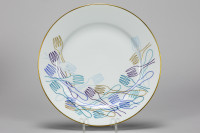
Fernandez Arman
Plate, 1992
Skulptur / Objekt
Teller
EUR 570
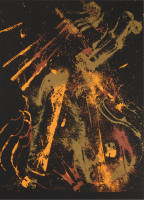
Fernandez Arman
Romanticism In Gold, 1978
Limitierte Druck Auflage
Siebdruck
Preis Anfragen
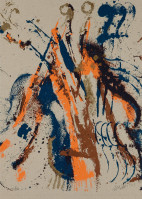
Fernandez Arman
Grey Mood Variation, 1977
Limitierte Druck Auflage
Siebdruck
Preis Anfragen

Fernandez Arman
Aesculapius Hammer, 1977
Limitierte Druck Auflage
Lithographie
EUR 640

Fernandez Arman
Hypored, 1977
Limitierte Druck Auflage
Lithographie
EUR 640

Fernandez Arman
Inside Story, 1977
Limitierte Druck Auflage
Lithographie
EUR 640

Fernandez Arman
Rien Ne Bat Plus, 1977
Limitierte Druck Auflage
Lithographie
EUR 640
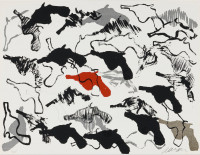
Fernandez Arman
Boom Boom, 1966
Limitierte Druck Auflage
Siebdruck
Preis Anfragen

Fernandez Arman
Shortened Trip
Skulptur / Objekt
Mischtechnik
USD 4,550

Fernandez Arman
Untitled (Allegro Vivaldi), 1978
Limitierte Druck Auflage
Siebdruck
EUR 1,290

Fernandez Arman
Gothic, 1977
Limitierte Druck Auflage
Lithographie
Preis Anfragen

Fernandez Arman
Passe Temps, 1971
Limitierte Druck Auflage
Mischtechnik
EUR 4,000

Fernandez Arman
Red Tubes, 1980
Gemälde
Mischtechnik
EUR 34,000

Fernandez Arman
Candélabre Africain, 2003
Skulptur / Objekt
Bronze
EUR 6,000

Fernandez Arman
Colere De Paganini / Paganini's Anger, 2004
Skulptur / Objekt
Mischtechnik
EUR 14,500

Fernandez Arman
Cavaquinho, 2002
Skulptur / Objekt
Metall
EUR 5,970

Fernandez Arman
Accumulation, Tee, 1994
Skulptur / Objekt
Montage
Zur Zeit Nicht Verfügbar

Fernandez Arman
Venus Au Violon, 1991
Skulptur / Objekt
Bronze
Zur Zeit Nicht Verfügbar
Verwandte Künstler


Verwandte Artikel

Sammeln - March 25, 2025
Editionierte Skulpturen verstehen: Was Sammler wissen müssen
Edition, Material und Künstler: So erkennen Sammler den Wert von Skulpturen – von Bronze bis zu elektrischer Kunst. Mehr Lesen
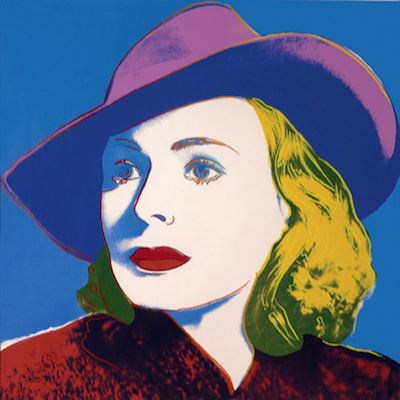
Was ist Popart?
Pop-Art ist eine Kunstbewegung, die 1955 in Großbritannien und Ende der 1950er Jahre in den USA begann. Sie stellte die Tradition der schönen Künste infrage, indem sie Bilder aus der Populärkultur, wie Nachrichten, Werbung und Comics, einbezog. Pop-Art isoliert oft Materialien und stellt sie in neue Kontexte, indem sie sie mit nicht verwandten Elementen kombiniert. Die Bewegung bezieht sich eher auf die Einstellungen und Ideen, die sie hervorgebracht haben, als auf die Kunst selbst. Pop-Art wird als Reaktion auf die dominanten Ideen des abstrakten Expressionismus interpretiert und bringt die Alltagskultur in den Bereich der bildenden Kunst.