ghana
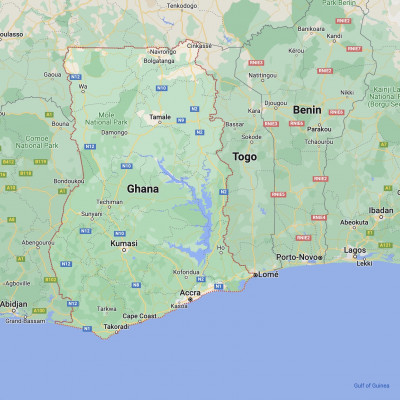
Ghana's contemporary art scene brims with creativity, reflecting its rich traditions and current realities. Accra's Gallery 1957 and the annual Chale Wote Street Art Festival offer platforms for artists' expression. El Anatsui, renowned for his bottle-cap tapestries, and Serge Attukwei Clottey, noted for his performance and plastic works, exemplify Ghana's artistic dynamism. Explore Ghana's contemporary art at Composition Gallery's website.
Show All
- Show All
- Established
- Discoveries
Show All
ARTWORKS RELATED TO GHANA

El Anatsui
Black & Silver, 2018
Limited Edition Print
Pigment print
USD 18,000
Related Articles

Artists, Art Movements - August 15, 2024
The Flourishing of African Art: Celebrating Diversity and Cultural Exchange in the Art World
Celebrate the diversity of African art! Explore how cultural heritage and contemporary innovation shape its global influence and vibrant future. Read More

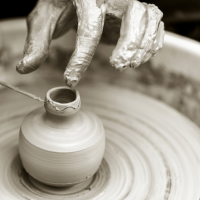
Ceramics is an art form that involves creating objects from clay. The clay is shaped, molded, and formed by hand or with specialized tools, then baked (or fired) in a high-temperature oven called a kiln. Decorative colors and special glazes can be applied to the surface, which are then fired again to finish the piece.
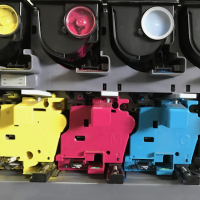
A laser print is created by using red, blue, and green lasers to expose photographic silver halide paper. After exposure, the paper is processed with photographic chemicals to produce an archival-quality print. This digital technology results in sharp images with highly uniform color and excellent detail.