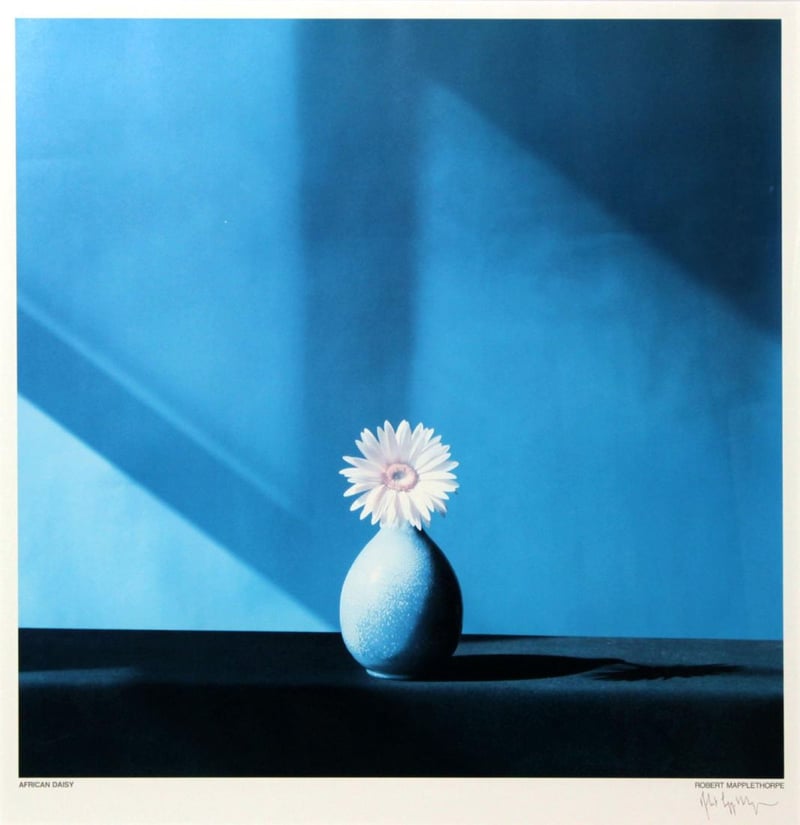
Original color photolithograph on paper, signed by the artist.
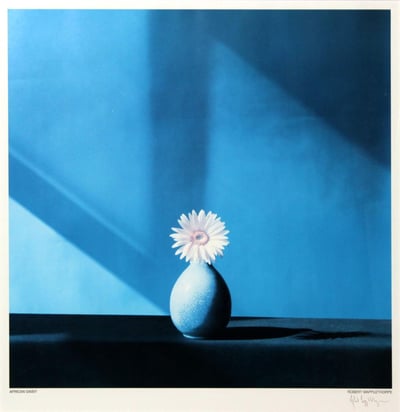
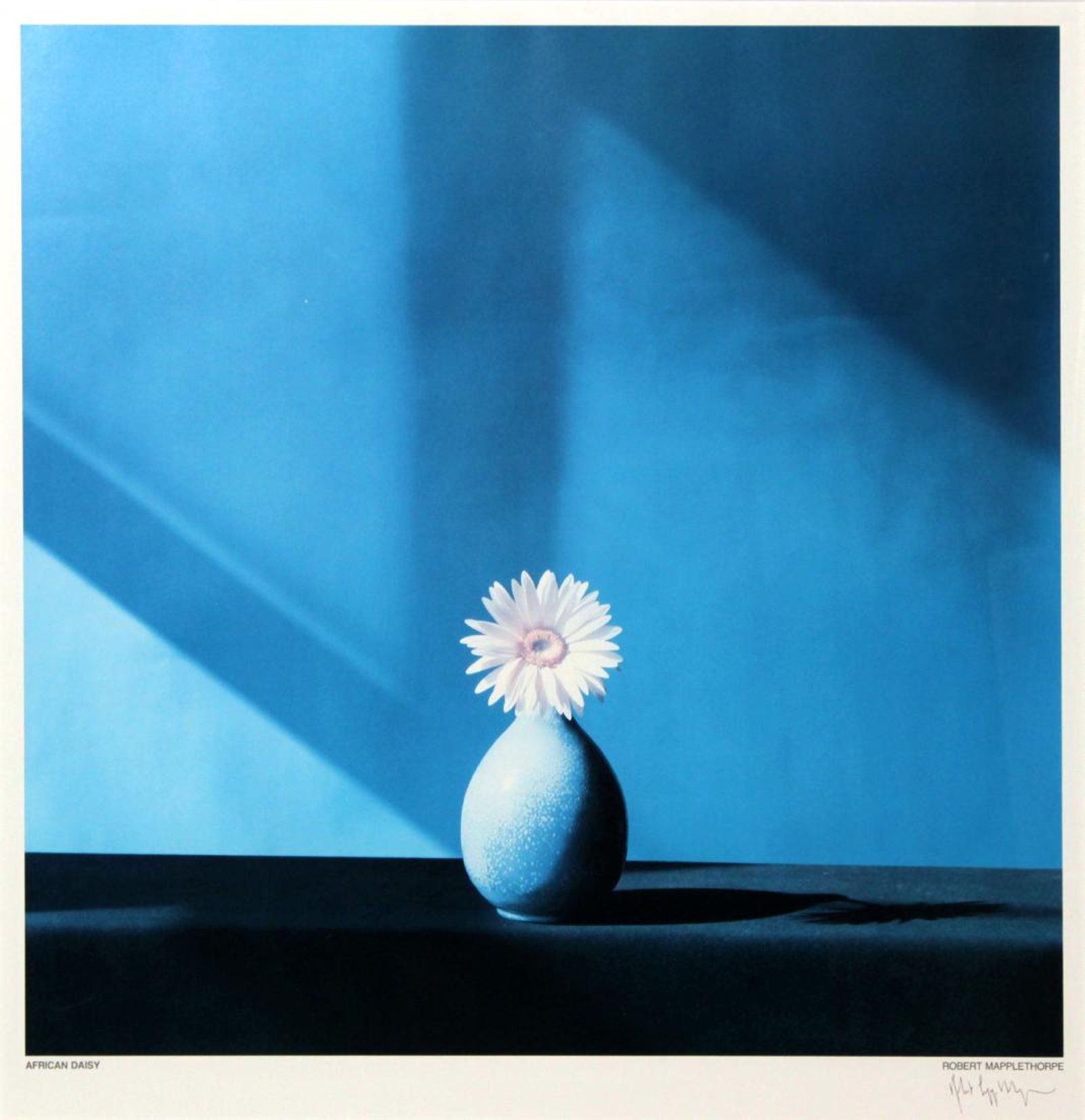
African Daisy by Robert Mapplethorpe, created in 1982, is a striking color photolithograph that captures the artist’s meticulous approach to composition and lighting. The image centers on a single daisy, delicately arranged in a smooth, rounded vase, set against a vivid blue backdrop. The simplicity of the composition is elevated by dramatic lighting, casting deep shadows and creating a sense of depth and calm. Mapplethorpe’s precise use of light and color transforms the daisy from a simple flower to an emblem of elegance and purity, highlighting his mastery of transforming everyday objects into refined, almost sculptural forms. This work reflects his aesthetic of minimalism and beauty through precise, formal arrangements.
Artwork Copyright © Robert MapplethorpeRobert Mapplethorpe (United States, 1946–1989) was a photographer renowned for his black-and-white images that explore themes of sexuality, identity, and the human form. His work includes portraits, nudes, and still lifes, often characterized by classical composition and lighting. Mapplethorpe's provocative subjects sparked significant debate on art and censorship.
Artwork Copyright © Robert MapplethorpeAfrican Daisy, 1982
Form
Medium
Size
- Inches
- Centimeters
Price
Available works →
- Authenticity Guaranteed
- Insured Shipping
- Online Since 2005
●
●Inventory 4854
●Signed
●Comes with gallery invoice and certificate
●Sell Us a Similar Artwork. Learn more.
Original color photolithograph on paper, signed by the artist.
African Daisy by Robert Mapplethorpe, created in 1982, is a striking color photolithograph that captures the artist’s meticulous approach to composition and lighting. The image centers on a single daisy, delicately arranged in a smooth, rounded vase, set against a vivid blue backdrop. The simplicity of the composition is elevated by dramatic lighting, casting deep shadows and creating a sense of depth and calm. Mapplethorpe’s precise use of light and color transforms the daisy from a simple flower to an emblem of elegance and purity, highlighting his mastery of transforming everyday objects into refined, almost sculptural forms. This work reflects his aesthetic of minimalism and beauty through precise, formal arrangements.
Artwork Copyright © Robert MapplethorpeRobert Mapplethorpe (United States, 1946–1989) was a photographer renowned for his black-and-white images that explore themes of sexuality, identity, and the human form. His work includes portraits, nudes, and still lifes, often characterized by classical composition and lighting. Mapplethorpe's provocative subjects sparked significant debate on art and censorship.
Artwork Copyright © Robert Mapplethorpe- Recently Added
- Price (Low-High)
- Price (High-Low)
- Year (Low-High)
- Year (High-Low)
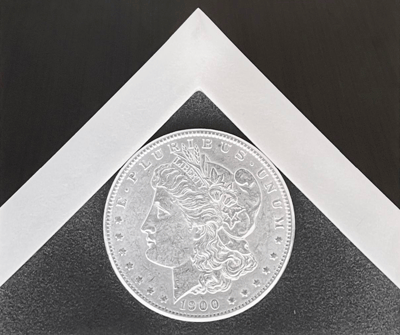
Robert Mapplethorpe
Silver Dollar, 1988
Limited Edition Print
Gelatin Silver Print
USD 10,200
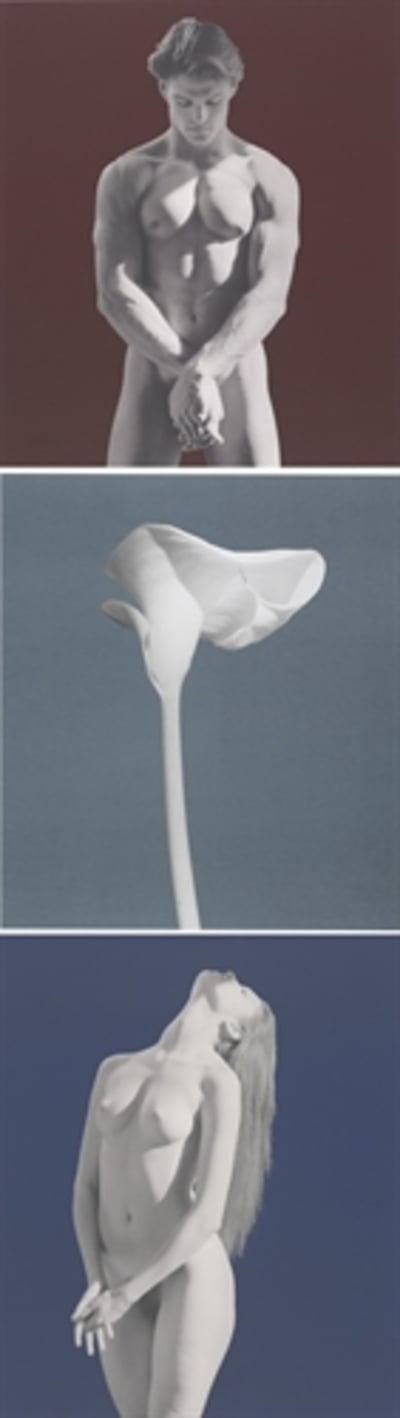
Robert Mapplethorpe
America 3 piece Suite, 1988
Limited Edition Print
Lithograph
USD 20,000 – 25,000
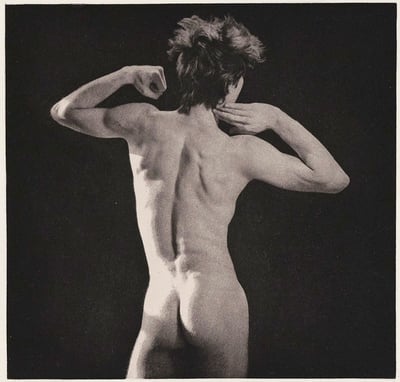
Robert Mapplethorpe
A Season in Hell, 1986
Photography
Photogravure
USD 1,550
Robert Mapplethorpe
African Daisy, 1982
Limited Edition Print
Photogravure
Currently Not Available
Related Artists
Related Articles
Art Movements - September 15, 2025
Documenting the Undocumented: Photography as Social Commentary
Explore how artists like Nan Goldin and Thomas Ruff use photography to challenge norms, reveal hidden truths, and reframe cultural narratives.Read More

Artwork by Miles Aldridge
What is contemporary art?
Contemporary art refers to avant-garde or innovative art created in the recent past or present day. The exact starting point of contemporary art varies depending on the institution, often tied to the founding year of museums or galleries that showcase the style. Contemporary art is characterized by its focus on current ideas, diverse media, and the exploration of new concepts and techniques.

Robert Mapplethorpe
African Daisy, 1982
58.42 x 58.42 cm


