Details
Artist
Styles
Original lithograph in colors on BFK Rives - Published by Tandem Press University of Wisconsin - Suite: An American Alphabet // Robert Cottingham's The Letter W, a lithograph from his 2001 An American Alphabet series, demonstrates his fascination with typography and architectural signage. This artwork captures the three-dimensional, bold style of the letter W, emphasizing its vintage neon and metal aesthetic. The piece showcases Cottingham's meticulous attention to shadow and light, creating a dynamic sense of depth and texture. The warm, gold tones contrast with dark and shadowed areas, evoking the look of classic American storefronts and advertising signs. Published by Tandem Press on BFK Rives paper, this limited edition print is a compelling representation of Cottingham’s exploration of the visual language embedded in urban American culture.
The Letter W, 2001
form
Medium
Size
77.5 x 63.5 cm
- Inches
- Centimeters
Edition
Price
- USD
- EUR
- GBP
Details
Artist
Styles
Original lithograph in colors on BFK Rives - Published by Tandem Press University of Wisconsin - Suite: An American Alphabet // Robert Cottingham's The Letter W, a lithograph from his 2001 An American Alphabet series, demonstrates his fascination with typography and architectural signage. This artwork captures the three-dimensional, bold style of the letter W, emphasizing its vintage neon and metal aesthetic. The piece showcases Cottingham's meticulous attention to shadow and light, creating a dynamic sense of depth and texture. The warm, gold tones contrast with dark and shadowed areas, evoking the look of classic American storefronts and advertising signs. Published by Tandem Press on BFK Rives paper, this limited edition print is a compelling representation of Cottingham’s exploration of the visual language embedded in urban American culture.
- Recently Added
- Price (low-high )
- Price (high-low )
- Year (low-high )
- Year (high-low )

Robert Cottingham
Art , 1973
Limited Edition Print
Offset Print
USD 1,350

Robert Cottingham
NITE, 2009
Limited Edition Print
Serigraph
USD 1,150

Robert Cottingham
The Letter Z, 2001
Limited Edition Print
Lithograph
USD 1,350

Robert Cottingham
The Letter Y, 2001
Limited Edition Print
Lithograph
USD 1,350

Robert Cottingham
American Hi-Fi, 2009
Limited Edition Print
Screen-print
Inquire For Price

Robert Cottingham
Fox, 2009
Limited Edition Print
Screen-print
Inquire For Price

Robert Cottingham
Rialto, 2009
Limited Edition Print
Screen-print
Inquire For Price

Robert Cottingham
Blues, 2009
Limited Edition Print
Screen-print
Inquire For Price

Robert Cottingham
Art, 2009
Limited Edition Print
Serigraph
USD 1,350

Robert Cottingham
The Letter N, 2001
Limited Edition Print
Lithograph
USD 1,350

Robert Cottingham
The Letter X, 2001
Limited Edition Print
Lithograph
USD 1,100

Robert Cottingham
The Letter T, 2001
Limited Edition Print
Lithograph
USD 1,100

Robert Cottingham
The Letter M, 2001
Limited Edition Print
Lithograph
USD 1,100

Robert Cottingham
The Letter W, 2001
Limited Edition Print
Lithograph
USD 1,100

Robert Cottingham
The Letter V, 2001
Limited Edition Print
Lithograph
USD 1,100

Robert Cottingham
Hi, 2009
Limited Edition Print
Silkscreen
USD 1,350

Robert Cottingham
The Letter P, 2001
Limited Edition Print
Lithograph
USD 1,100

Robert Cottingham
Star, 2009
Limited Edition Print
Silkscreen
USD 6,000

Robert Cottingham
Empire (Vertical), 2012
Limited Edition Print
Lithograph
USD 1,200

Robert Cottingham
M, 2009
Limited Edition Print
Silkscreen
USD 4,850

Robert Cottingham
Hot, 2009
Limited Edition Print
Silkscreen
USD 4,850

Robert Cottingham
Switzerland Everybody´s Bookshop, 1975
Limited Edition Print
Lithograph
EUR 1,200

Robert Cottingham
Union Pacific Railraod, 1987
Painting
Mixed Media
USD 30,000

Robert Cottingham
Reading Lines, 1987
Painting
Mixed Media
USD 25,000

Robert Cottingham
B & O, 1987
Painting
Mixed Media
USD 25,000

Robert Cottingham
PRR Railroad, 1987
Painting
Mixed Media
USD 25,000

Robert Cottingham
Santa Fe, 1987
Painting
Mixed Media
USD 35,000

Robert Cottingham
Barber Shop, 1989
Limited Edition Print
Lithograph
USD 6,500
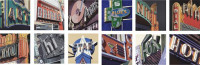
Robert Cottingham
American Signs, 2009
Limited Edition Print
Screen-print
USD 15,000 - 20,000

Robert Cottingham
Boulevard Drinks, 2009
Limited Edition Print
Screen-print
Currently Not Available

Robert Cottingham
Barrera-Rosa's, 1986
Limited Edition Print
Linocut
Currently Not Available
Related Artists


Related Articles

Popular, Art Movements - May 01, 2020
Reinvention of the Art world: The Insurgency of Pop Art
Explore the rise of Pop Art, from its roots in 1950s Britain to its global impact. Discover iconic works by Warhol, Lichtenstein, and others redefining culture. Read More
What is Lettrism?
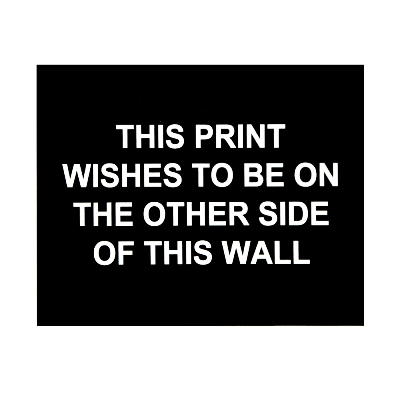
Lettrism is an art form that uses letters, words, and symbols to create artwork. The movement was established in Paris in the 1940s and later gained popularity in the 1950s in America. Lettrisme is the French spelling of the movement's name, derived from the French word for letter.