Details
Artist
Styles
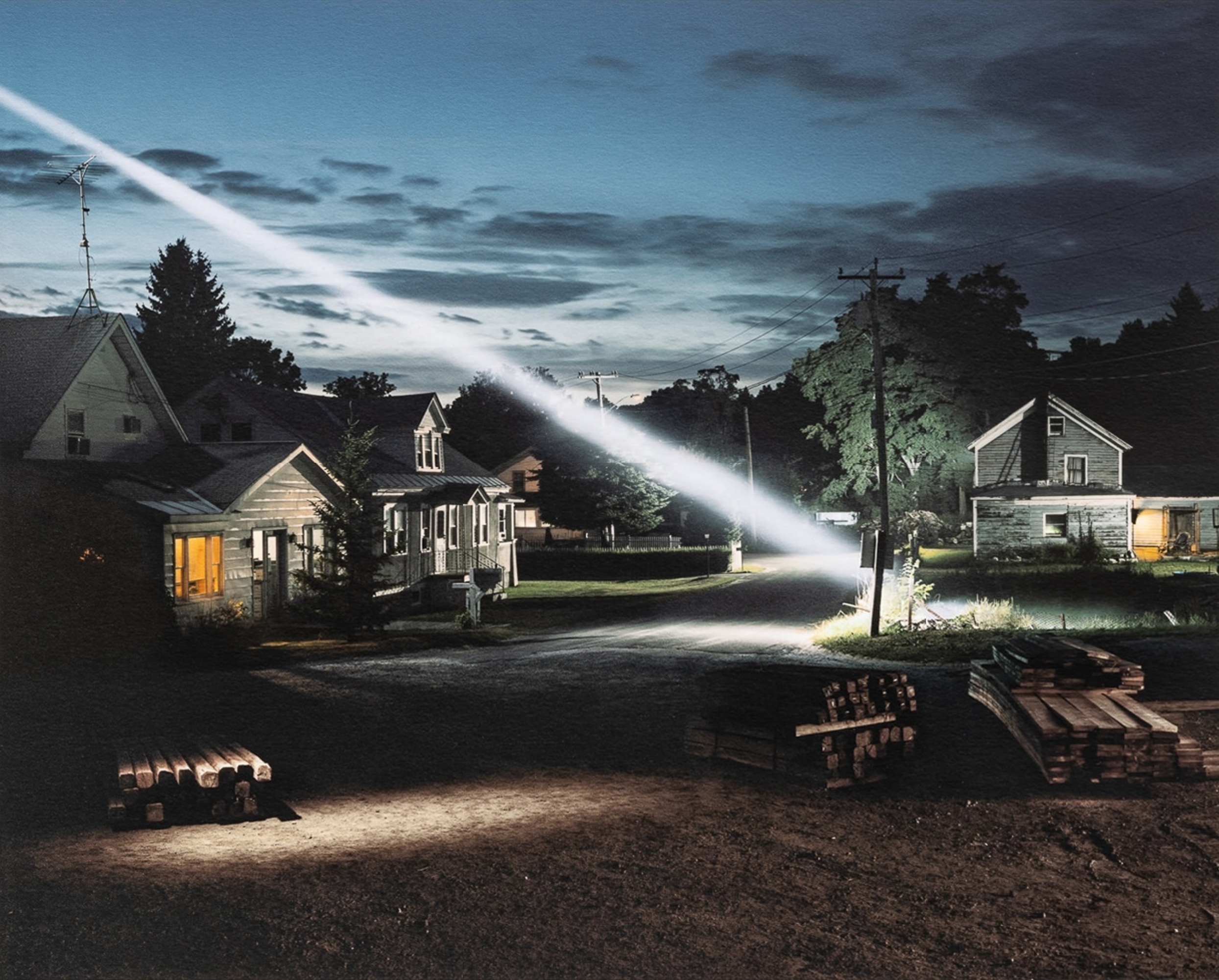
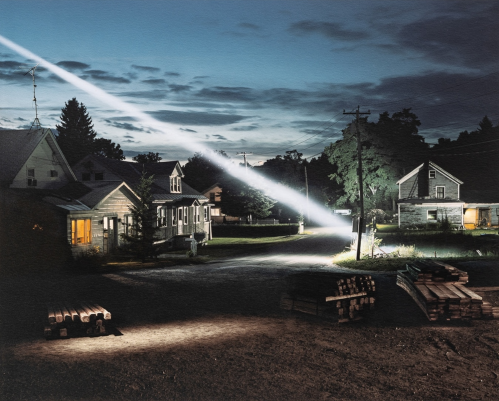
Digital colour coupler print mounted on aluminium. Signed 'Gregory Crewdson' (on a paper label affixed to the reverse). Untitled (Ray of Light) by Gregory Crewdson, created in 2001, is a cinematic digital colour coupler print that captures a moment of eerie suburban stillness disrupted by a single, intense beam of light. Set in a quiet neighborhood at twilight, the composition reveals rows of modest houses and neatly stacked lumber, all rendered with Crewdson’s trademark hyperreal precision. The dramatic shaft of light piercing diagonally across the scene evokes themes of surveillance, divine intervention, or extraterrestrial presence, adding psychological tension to the ordinary. As with much of Crewdson’s work, the image blurs the boundary between photography and staged narrative cinema.
Untitled (Ray of Light), 2001
form
Medium
Size
121.9 x 152.4 cm
- Inches
- Centimeters
Edition
Price
Details
Artist
Styles
Digital colour coupler print mounted on aluminium. Signed 'Gregory Crewdson' (on a paper label affixed to the reverse). Untitled (Ray of Light) by Gregory Crewdson, created in 2001, is a cinematic digital colour coupler print that captures a moment of eerie suburban stillness disrupted by a single, intense beam of light. Set in a quiet neighborhood at twilight, the composition reveals rows of modest houses and neatly stacked lumber, all rendered with Crewdson’s trademark hyperreal precision. The dramatic shaft of light piercing diagonally across the scene evokes themes of surveillance, divine intervention, or extraterrestrial presence, adding psychological tension to the ordinary. As with much of Crewdson’s work, the image blurs the boundary between photography and staged narrative cinema.
- Recently Added
- Price (low-high )
- Price (high-low )
- Year (low-high )
- Year (high-low )
Gregory Crewdson
Untitled (Ray Of Light), 2001
Photography
Digital Print On Paper
Inquire For Price

Gregory Crewdson
Untitled Document Shot , 2004
Photography
Digital Print On Paper
Currently Not Available

Gregory Crewdson
Brightview, 2005
Photography
C-Print
Currently Not Available
Related Artists


Related Articles

Popular, Artists - November 19, 2024
Marina Abramovic: The Art of Endurance and Performance
Dive into Marina Abramovic’s world of endurance and performance art. Explore her powerful works that redefine vulnerability and human limits. Read More


What is contemporary art?
Contemporary art refers to avant-garde or innovative art created in the recent past or present day. The exact starting point of contemporary art varies depending on the institution, often tied to the founding year of museums or galleries that showcase the style. Contemporary art is characterized by its focus on current ideas, diverse media, and the exploration of new concepts and techniques.