
Details
Artist
Styles
Laminated MDF wall clock. Printed title verso, not signed. Edition of unknown size. Too Big to Fail by Barbara Kruger, created in 2021, transforms a functional wall clock into a platform for socio-political commentary. Made from laminated MDF and measuring 10 inches square, the piece features bold white text on black reading “TOO BIG TO FAIL,” with the word “FAIL” inverted and partially obscured by the red clock hands. The phrase, widely associated with financial institutions during the 2008 economic crisis, becomes a critique of unchecked corporate power and systemic inequality. True to Kruger’s style, the work uses striking typography and minimal color to provoke reflection through visual simplicity and conceptual weight.
Too Big to Fail, 2021
form
Medium
Size
25.5 x 25.5 cm
- Inches
- Centimeters
Edition
Price
Details
Artist
Styles
Laminated MDF wall clock. Printed title verso, not signed. Edition of unknown size. Too Big to Fail by Barbara Kruger, created in 2021, transforms a functional wall clock into a platform for socio-political commentary. Made from laminated MDF and measuring 10 inches square, the piece features bold white text on black reading “TOO BIG TO FAIL,” with the word “FAIL” inverted and partially obscured by the red clock hands. The phrase, widely associated with financial institutions during the 2008 economic crisis, becomes a critique of unchecked corporate power and systemic inequality. True to Kruger’s style, the work uses striking typography and minimal color to provoke reflection through visual simplicity and conceptual weight.
- Recently Added
- Price (low-high )
- Price (high-low )
- Year (low-high )
- Year (high-low )

Barbara Kruger
Too Big To Fail, 2021
Sculpture / Object
Mixed Media
Inquire For Price
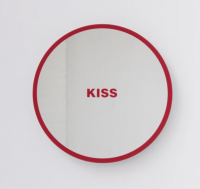
Barbara Kruger
Untitled (2Kiss), 2024
Sculpture / Object
Mixed Media
EUR 1,850
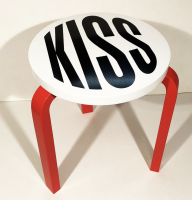
Barbara Kruger
Untitled (Kiss), 2019
Sculpture / Object
Wood
USD 4,000 - 6,000
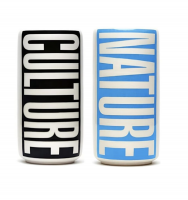
Barbara Kruger
Untitled (Vase), 2020
Sculpture / Object
Ceramic
GBP 1,800

Barbara Kruger
Untitled (Flag), 2020
Tapestry
Mixed Media
GBP 1,800

Barbara Kruger
Untitled (Mirror), 2024
Limited Edition Print
Screen-print
Currently Not Available

Barbara Kruger
Knowledge Is Power, 1989
Limited Edition Print
Lithograph
Currently Not Available
Related Artists


Related Articles

Popular, Artists - October 05, 2022
10 Women in 20th Century Art
Explore the contributions of 10 influential women in 20th-century art, from Louise Bourgeois to Cindy Sherman. Discover their groundbreaking creativity and legacy. Read More


What is appropriation?
Appropriation in art involves using pre-existing images or objects with little or no modification. This technique has played a significant role across various art forms, including visual arts, music, performance, and literature. In visual arts, appropriation refers to the practice of adopting, sampling, recycling, or borrowing elements—or even entire forms—of existing visual culture, integrating them into new works to create meaning or critique.