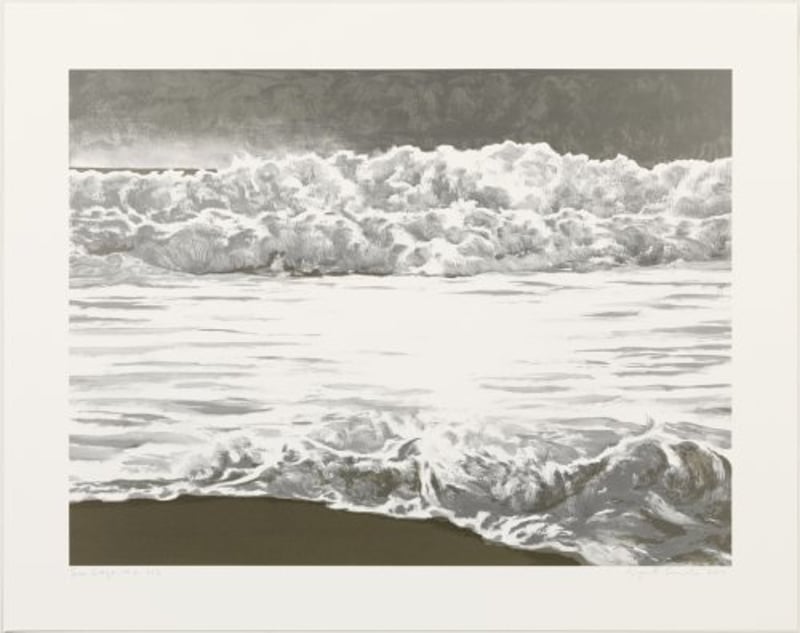
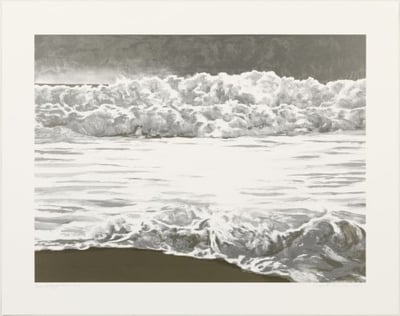
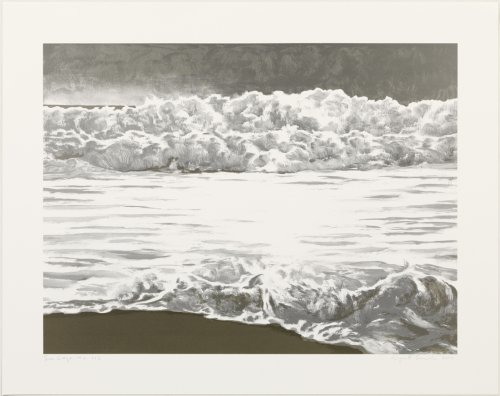
April Gornik’s Sea Edge from 2011 is a limited-edition lithograph that captures the tranquil yet powerful edge of the ocean as waves softly crest and recede. This monochromatic piece, rendered in shades of gray and white, emphasizes the natural patterns formed by water as it meets the shore. Gornik’s skillful use of light and shadow accentuates the textures of the foam and ripples, inviting viewers to sense the gentle movement and rhythmic pulse of the sea. The composition evokes a quiet strength, a moment of calm at the boundary where land and water converge, illustrating the timeless allure of the ocean’s edge.
Artwork Copyright © April GornikApril Gornik (United States, 1953) is an American artist renowned for her luminous landscape paintings that blend realism with dreamlike qualities. Her works often depict serene yet dramatic natural scenes, exploring the interplay between light and atmosphere. Gornik's art invites viewers to reflect on the beauty and complexity of the natural world.
Artwork Copyright © April GornikSea edge, 2011
Form
Medium
Size
- Inches
- Centimeters
Edition
Price
Available works →
- Authenticity Guaranteed
- Insured Shipping
- Online Since 2005
●
●Inventory 2975
●Signed
●Comes with gallery invoice and certificate
●Sell Us a Similar Artwork. Learn more.
April Gornik’s Sea Edge from 2011 is a limited-edition lithograph that captures the tranquil yet powerful edge of the ocean as waves softly crest and recede. This monochromatic piece, rendered in shades of gray and white, emphasizes the natural patterns formed by water as it meets the shore. Gornik’s skillful use of light and shadow accentuates the textures of the foam and ripples, inviting viewers to sense the gentle movement and rhythmic pulse of the sea. The composition evokes a quiet strength, a moment of calm at the boundary where land and water converge, illustrating the timeless allure of the ocean’s edge.
Artwork Copyright © April GornikApril Gornik (United States, 1953) is an American artist renowned for her luminous landscape paintings that blend realism with dreamlike qualities. Her works often depict serene yet dramatic natural scenes, exploring the interplay between light and atmosphere. Gornik's art invites viewers to reflect on the beauty and complexity of the natural world.
Artwork Copyright © April Gornik- Recently Added
- Price (Low-High)
- Price (High-Low)
- Year (Low-High)
- Year (High-Low)
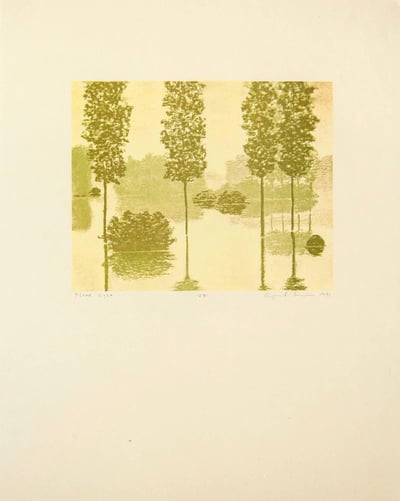
April Gornik
Flood Light, from Art Pro-Choice II, 1991
Limited Edition Print
Relief printing
Inquire For Price
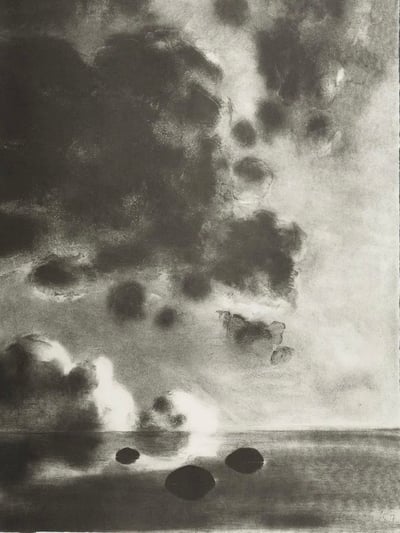
April Gornik
Remember the Sabbath Day, 1987
Limited Edition Print
Lithograph
Currently Not Available
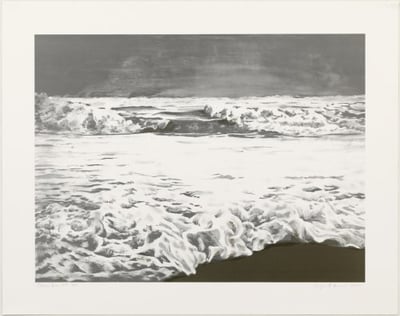
April Gornik
Storm sea, 2011
Limited Edition Print
Lithograph
Currently Not Available
April Gornik
Sea edge, 2011
Limited Edition Print
Lithograph
Currently Not Available
Related Artists
Related Articles
Popular, Art Movements - November 25, 2025
Trash to Treasure: Eco-Art and the Beauty of Recycled Materials
Discover how artists turn trash into treasure—transforming e-waste, scrap, and textiles into powerful, sustainable eco-art with global impact.Read More

Artwork by Tracey Emin
What is feminist art?
Feminist art refers to the art that emerged from the feminist art movement during the 1960s and 1970s. It developed with the intention of critiquing 20th-century gender ideals and challenging the traditional canon of art history. Feminist art seeks to create a dialogue between the artwork and the viewer through a feminist lens, often addressing issues of gender, identity, and social justic
April Gornik
Sea edge, 2011
50 x 73 cm


