
Détails
Artiste
Styles
From the leading edition of the book Farandole by Hans Hartung. Farandole 19, 1971. - Edition in 75 copies on Guarro paper. - Sheet: 86.5 cm x 59.5 cm - Dimensions of the work: 46.5 x 31.
Lithographie Farandoles V, 1971
forme
Méthode
Taille
59.5 x 86.5 cm
- Pouces
- Centimètres
Édition
Prix
Détails
Artiste
Styles
From the leading edition of the book Farandole by Hans Hartung. Farandole 19, 1971. - Edition in 75 copies on Guarro paper. - Sheet: 86.5 cm x 59.5 cm - Dimensions of the work: 46.5 x 31.
- Ajouté Récemment
- Prix (elevé - bas )
- Prix (bas - elevé )
- Année (elevé - bas )
- Année (bas - elevé )

Hans Hartung
Las Estampas De La Cometa 5, 1971
Édition Limitée
Gravure
EUR 1,550

Hans Hartung
Las Estampas De La Cometa 4, 1971
Édition Limitée
Gravure
EUR 1,550

Hans Hartung
Las Estampas De La Cometa 1, 1971
Édition Limitée
Gravure
EUR 1,550

Hans Hartung
L 1973-46, 1973
Édition Limitée
Lithographie
EUR 2,050

Hans Hartung
G 1973-2, 1973
Édition Limitée
Gravure
EUR 2,250

Hans Hartung
Lithograph V From Farandole, 1971
Édition Limitée
Lithographie
USD 1,280

Hans Hartung
Lithograph XII From Farandole, 1971
Édition Limitée
Lithographie
USD 1,280
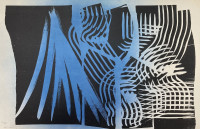
Hans Hartung
Lithograph XIV From Farandole, 1971
Édition Limitée
Lithographie
Actuellement Indisponible

Hans Hartung
L-1971-1, 1971
Édition Limitée
Lithographie
Actuellement Indisponible

Hans Hartung
L-19, 1974
Édition Limitée
Lithographie
Actuellement Indisponible
ARTiSTES ASSOCIÉS À


Articles Liés

Populaire, Mouvements - November 20, 2024
L'Expressionnisme Abstrait : Une Mouvement d'Émotion et de Geste
Plongez dans l’émotion de l’Expressionnisme Abstrait! Découvrez comment Pollock et Rothko ont utilisé gestes et couleurs pour exprimer la complexité humaine. Lire Plus

Quelle est l'abstraction lyrique?
L'abstraction lyrique est un terme descriptif qui caractérise un type de peinture abstraite étroitement lié à l'expressionnisme abstrait et utilisé depuis les années 1940 jusqu'à aujourd'hui. Le terme peut également désigner deux tendances distinctes mais liées dans la peinture moderniste d'après-guerre. Ce mouvement artistique est né à Paris, en France, après la guerre, mettant l'accent sur l'expression personnelle, la spontanéité et l'utilisation émotionnelle de la couleur et de la forme.