Details
Artist
Styles
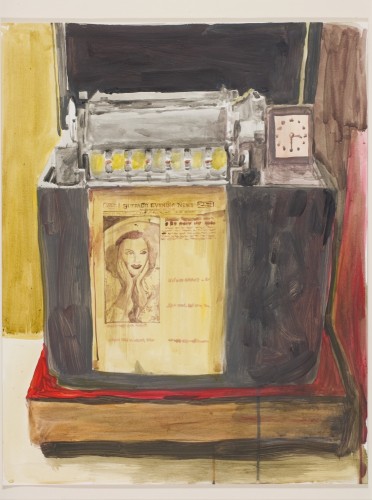
Watercolor and tempera on paper cm. 60x48 - Signed on the reverse - Label of the Art Studio Raffaelli, Trento on the reverse // Tony Oursler's Fax Up (2002) is a mixed-media painting using watercolor and tempera on paper, depicting an old-fashioned fax machine with a vintage aesthetic. The machine, painted in muted tones, displays a faded image of a woman's face on its surface, adding a nostalgic touch. The scene is rendered with loose, expressive brushstrokes that give the work a sense of warmth and imperfection, capturing the analog feel of the technology. Oursler’s focus on outdated media reflects themes of communication, memory, and obsolescence, inviting viewers to reflect on the transient nature of technology and its impact on our lives. The piece is signed on the reverse, with a label from the Art Studio Raffaelli in Trento.
Details
Artist
Styles
Watercolor and tempera on paper cm. 60x48 - Signed on the reverse - Label of the Art Studio Raffaelli, Trento on the reverse // Tony Oursler's Fax Up (2002) is a mixed-media painting using watercolor and tempera on paper, depicting an old-fashioned fax machine with a vintage aesthetic. The machine, painted in muted tones, displays a faded image of a woman's face on its surface, adding a nostalgic touch. The scene is rendered with loose, expressive brushstrokes that give the work a sense of warmth and imperfection, capturing the analog feel of the technology. Oursler’s focus on outdated media reflects themes of communication, memory, and obsolescence, inviting viewers to reflect on the transient nature of technology and its impact on our lives. The piece is signed on the reverse, with a label from the Art Studio Raffaelli in Trento.
- Recently Added
- Price (low-high )
- Price (high-low )
- Year (low-high )
- Year (high-low )

Tony Oursler
Private Listing
Drawing / Watercolor
Mixed Media
Request Info

Tony Oursler
Ear Worm, 1976/2013
Limited Edition Print
Digital Print On Paper
EUR 500

Tony Oursler
Fax Up, 2002
Painting
Mixed Media
EUR 4,850

Tony Oursler
“Studio (self-Portrait In Green)”, 2005
Limited Edition Print
Digital Print On Paper
Currently Not Available
Related Artists


Related Articles
Popular, Art Movements - November 25, 2025
Trash to Treasure: Eco-Art and the Beauty of Recycled Materials
Discover how artists turn trash into treasure—transforming e-waste, scrap, and textiles into powerful, sustainable eco-art with global impact. Read More


Artwork by Miles Aldridge
What is contemporary art?
Contemporary art refers to avant-garde or innovative art created in the recent past or present day. The exact starting point of contemporary art varies depending on the institution, often tied to the founding year of museums or galleries that showcase the style. Contemporary art is characterized by its focus on current ideas, diverse media, and the exploration of new concepts and techniques.
RECENTLY VIEWED
-->