Details
Artist
Styles
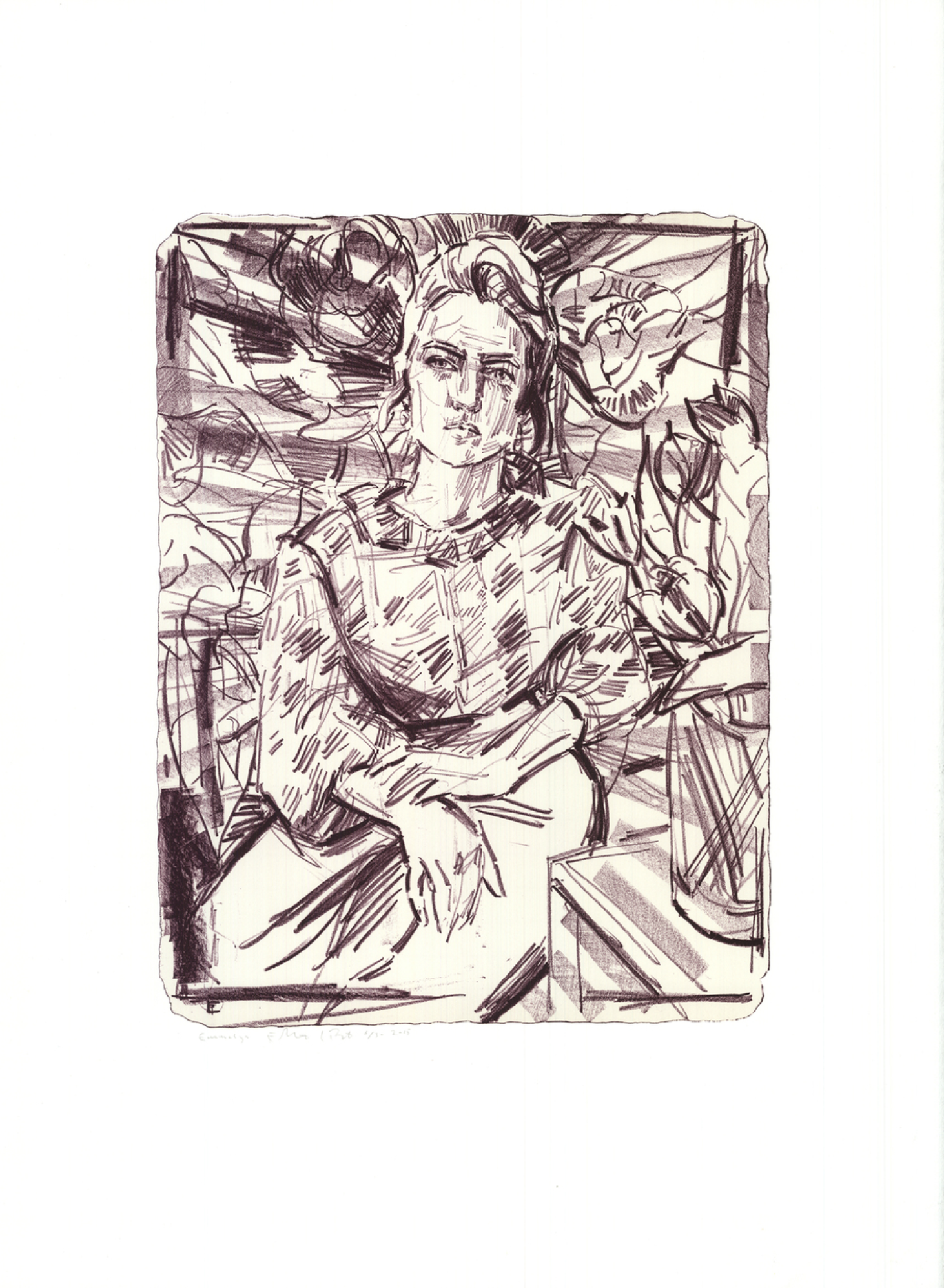
Original lithograph printed on 300 gr. Velin d'arches paper. Signed and numbered. Printed by Editions Copenhagen. Emmelyn Butterfield-Rosen (2014) by Elizabeth Peyton is a lithograph portraying an introspective seated figure, composed in her distinctively linear, gestural style. The portrait is rendered in shades of burgundy, built from sharp, calligraphic strokes that define both the subject and a richly patterned background. Peyton captures the sitter in a reflective moment, framed by abstracted elements—floral motifs and spatial cues—that create a sense of interiority. The work emphasizes psychological presence over strict realism, offering a personal, contemplative mood. This edition is limited to just 30 prints.
Emmelyn Butterfield-Rosen, 2014
form
Medium
Size
69.9 x 51.4 cm
- Inches
- Centimeters
Edition
Range
- USD
- EUR
- GBP
Details
Artist
Styles
Original lithograph printed on 300 gr. Velin d'arches paper. Signed and numbered. Printed by Editions Copenhagen. Emmelyn Butterfield-Rosen (2014) by Elizabeth Peyton is a lithograph portraying an introspective seated figure, composed in her distinctively linear, gestural style. The portrait is rendered in shades of burgundy, built from sharp, calligraphic strokes that define both the subject and a richly patterned background. Peyton captures the sitter in a reflective moment, framed by abstracted elements—floral motifs and spatial cues—that create a sense of interiority. The work emphasizes psychological presence over strict realism, offering a personal, contemplative mood. This edition is limited to just 30 prints.
- Recently Added
- Price (low-high )
- Price (high-low )
- Year (low-high )
- Year (high-low )
Elizabeth Peyton
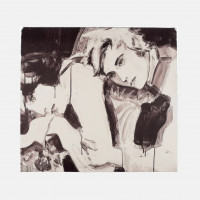
Oscar And Bosie (for Parkett 53), 1998
Limited Edition Print
Lithograph
GBP 6,000 - 8,000
Elizabeth Peyton
Emmelyn Butterfield-Rosen, 2014
Limited Edition Print
Lithograph
USD 5,000 - 6,000
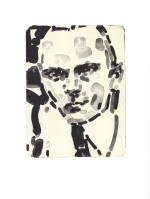
Elizabeth Peyton
Kristian, 2014
Limited Edition Print
Lithograph
USD 4,000 - 6,000
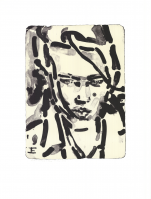
Elizabeth Peyton
Elias, 2014
Limited Edition Print
Lithograph
Inquire For Price
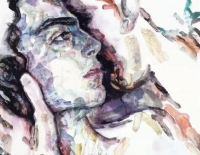
Elizabeth Peyton
Elio, Oliver (Call Me By Your Name), 2023
Limited Edition Print
Silkscreen
GBP 3,350

Elizabeth Peyton
Frederick Douglass, 2023
Limited Edition Print
Linocut
EUR 1,750

Elizabeth Peyton
Jackie And John, 2000
Limited Edition Print
Lithograph
Currently Not Available
Related Artists


Related Articles

Art Movements - July 01, 2022
The Rise of NFTs: The New Phenomenon Taking The Art World By Storm
Explore NFTs and their impact on the art world. Learn how blockchain supports authenticity, ownership, and innovation in digital art and collectibles. Read More
What is new figuration?
Neo-Figurative Art is a collective term that refers to the revival of figurative art in America and Europe during the 1960s, following a period dominated by abstraction. Michel Ragon, a French art critic, argued that this resurgence of figuration occurred during a critical time of social and political upheaval in both regions.