
Detalles
Artista
Estilos
This color lithograph on velin paper was created in 2006. Signed by the artist in pencil and numbered, from the edition of 75 + 9 AP measuring 19.63 x 24 in. (50 x 61 cm.).
Two Indeterminate Lines, 2006
Forma
Técnica
Tamaño
50 x 61 cm
- Pulgadas
- Centímetros
Edición
Precio
Detalles
Artista
Estilos
This color lithograph on velin paper was created in 2006. Signed by the artist in pencil and numbered, from the edition of 75 + 9 AP measuring 19.63 x 24 in. (50 x 61 cm.).
- Recientemente Añadido
- Precio (de menor a mayor )
- Precio (de mayor a menor )
- Año (de menor a mayor )
- Año (de mayor a menor )

Bernar Venet
Two Undetermined Lines , 1990
Print De Edición Limitada
Técnica Mixta
USD 44,000

Bernar Venet
Uneven Collapse: 11 Arcs, 2022
Escultura / Objeto
Metal
Consultar Precio

Bernar Venet
Position Of Three Major Arcs Of 265.5° Each, 1981
Print De Edición Limitada
Técnica Mixta
EUR 3,700

Bernar Venet
218.5 Arc X 13, 2007
Escultura / Objeto
Metal
Actualemente No Disponible

Bernar Venet
149.5º Arc X 10, 2015
Escultura / Objeto
Técnica Mixta
Actualemente No Disponible

Bernar Venet
Combination Of Random Indeterminate Lines, 2004
Print De Edición Limitada
Screen-print
Actualemente No Disponible
Artistas relacionados


Artículos relacionados

Popular, Coleccionar - February 21, 2025
Escultura 101: De la Arcilla al Bronce – Cómo se Hacen las Esculturas
¡Explora el arte de la escultura! Desde el tallado en piedra y la fundición en bronce hasta la impresión 3D. Un viaje fascinante por la creatividad. Saber Más
¿Qué es el nuevo realismo?
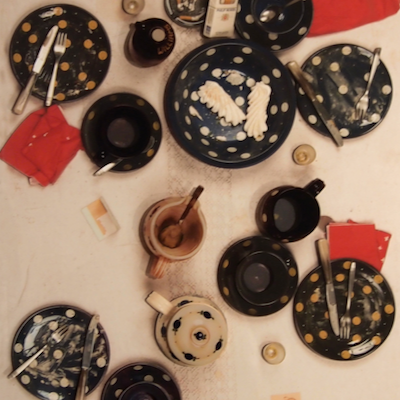
Nouveau Réalisme es un movimiento artístico fundado en 1960 por el crítico de arte Pierre Restany y el pintor Yves Klein durante una exposición colectiva en una galería de Milán. Restany escribió el manifiesto original en abril de 1960, proclamando el movimiento. En octubre de ese año, nueve artistas, incluidos Martial Raysse, Yves Klein, Daniel Spoerri, Jean Tinguely, Arman, Pierre Restany y tres Ultra-Letristas—Jacques de la Villeglé, François Dufrêne y Raymond Hains—firmaron la declaración. En 1961, el movimiento se expandió para incluir a Mimmo Rotella, Niki de Saint Phalle, Gérard Deschamps y César. El movimiento enfatizaba un retorno a la realidad en el arte, a menudo incorporando objetos cotidianos y explorando los límites entre el arte y la vida.